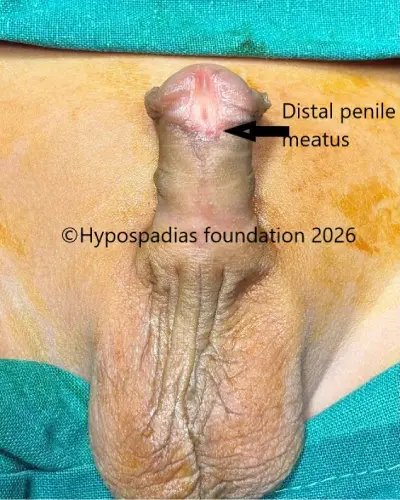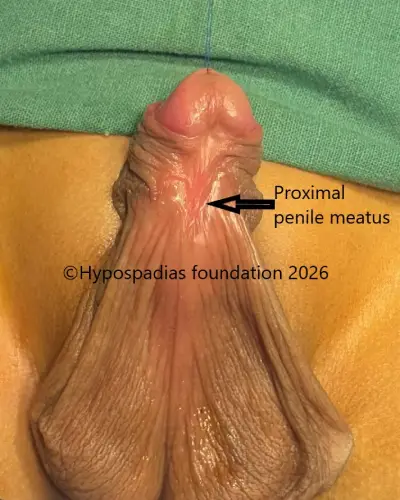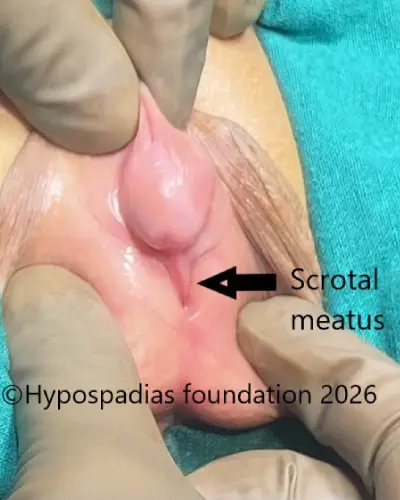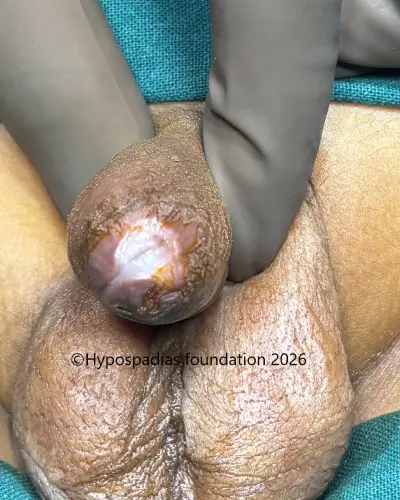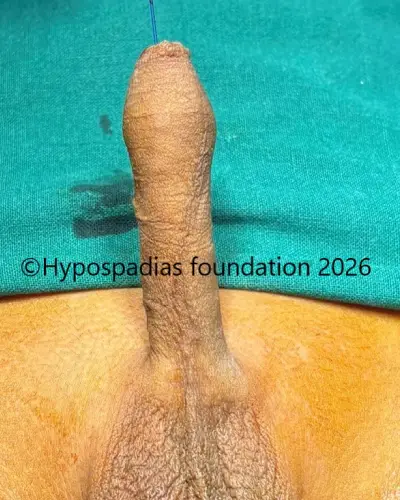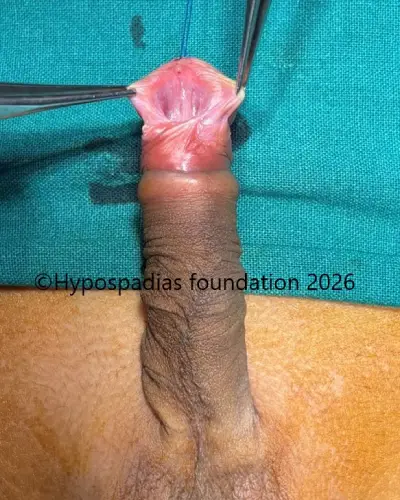
Is there an age limit for hypospadias repair surgery?

Hypospadias is a congenital condition in which the urinary opening (meatus) is located on the underside of the penis instead of at the tip. Hypospadias repair surgery is a well-established and successful procedure that can be performed in infants, children, adolescents, and adults. However, choosing the best age for hypospadias repair plays an important role in healing, recovery, and long-term outcomes.

What Is the Best Age for Hypospadias Surgery?

Most expert hypospadias surgeons recommend performing surgery between 6 and 18 months of age. Surgery before 3 years of age is considered ideal, and if someone misses this period, surgery before 8 years of age is still strongly recommended if early repair was not possible.

Hypospadias Surgery in Infants (6–18 Months)

The ideal age for hypospadias surgery is between 6 and 18 months. At this age:

  • Penile tissues are soft, elastic, and heal faster
  • Scarring is minimal due to high tissue regeneration
  • Infants are unaware of their genitalia and body image
  • There is no psychological impact or memory of surgery

Early hypospadias repair also allows normal toilet training and smooth bladder control development. Post-operative care is easier in infants, as diaper changes simplify wound care and recovery is less stressful for parents.

Pic 1 for blog

Hypospadias Surgery Before 3 Years of Age

If surgery cannot be done in infancy, completing hypospadias repair before 3 years of age still provides excellent results. Children recover well, healing is fast, and long-term functional and cosmetic outcomes remain very good.

Hypospadias Surgery in Older Children

Hypospadias surgery in older children is safe and effective, though recovery can be more challenging.

Older children:

  • Are more aware of their genitalia and may feel shy or anxious
  • Experience more fear and perceived pain after surgery
  • May find dressing changes difficult
  • Sometimes hold urine after catheter removal due to fear of pain

Despite these challenges, healing and success rates remain high when surgery is performed by an experienced hypospadias surgeon.

Hypospadias Surgery in Teenagers

Teenage boys with untreated or failed hypospadias often feel embarrassed and reluctant to undergo surgery. In cases of hypospadias with chordee (penile curvature), we recommend delaying surgery until penile growth is complete. Avoiding surgery during active growth may prevent interference with natural penile development

Hypospadias Surgery in Adults

Hypospadias repair in adults is possible and can be highly successful. However, recovery is slower compared to children because:

  • Adult penile skin is thicker and less elastic
  • Healing takes longer
  • Pubic hair can affect wound care
  • Night-time erections may stress sutures and increase complication risk
  • Infection issues are higher
  • Urethral and extra safety supra-pubic catheter are also needed.

Even in adulthood, good outcomes are achievable in expert hands. Adult hypospadias surgery success rates at Hypospadias Foundation India are over 95%, which are best in the world.

Is There an Age Limit for Hypospadias Surgery?

There is no upper age limit for hypospadias surgery. The success of repair depends more on the experience of the hypospadias surgeon than the age of the patient. With proper evaluation and surgical expertise, excellent results can be achieved even in adulthood.

Importance of Choosing an Expert Hypospadias Surgeon

Before planning hypospadias surgery, it is essential to consult a specialist hypospadias surgeon. An experienced surgeon will:

  • Carefully examine the child or adult
  • Assess severity, chordee, and previous surgeries
  • Recommend the best timing and surgical technique

At Hypospadias Foundation, children and adults from over 30 countries undergo hypospadias repair. The oldest successfully treated patient was a 50-year-old man with failed hypospadias repair and urethral stricture, operated without complications. This highlights the importance of choosing a specialized center for hypospadias treatment.

Dr A K Singal is a highly experienced and internationally renowned hypospadias surgeon in India, widely regarded as one of the leading experts in hypospadias repair for both children and adults. He has dedicated his professional life to the treatment of complex and failed hypospadias cases, helping patients achieve excellent functional and cosmetic outcomes.

With decades of focused experience in primary and redo hypospadias surgery, Dr Singal’s expertise has contributed to consistently high success rates in infants, older children, adolescents, and adults with hypospadias.

Dr Ashwitha Shenoy is an expert pediatric surgeon with a special interest in pediatric urology and hypospadias surgery. Her training and experience in managing hypospadias in children ensure meticulous surgical care, age-appropriate planning, and excellent long-term outcomes.

Together, Dr A K Singal and Dr Ashwitha Shenoy work as a dedicated team to provide comprehensive hypospadias treatment in India. Their combined expertise allows them to manage simple to complex hypospadias cases, including failed repairs and adult hypospadias, delivering some of the best outcomes for hypospadias surgery in India.

Contact us:

For appointment kindly contact us at the contact details given below.

MITR hospital & Hypospadias Foundation, Kharghar, Navi Mumbai, India – Tue/Saturday 4:00pm-6:00pm, Call for appointments: +91-6262840940. Or email us at hypospadiasfoundationindia@gmail.com

Contact Form for Hypospadias Foundation

Please fill all clinical details and upload pictures and clinical summaries (if available)
    Attach Documents (pdf | jpeg | mp4)
    (upload size upto 5mb)

    Can there be urinary problems after hypospadias repair?

    Hypospadias is a condition in which the urinary opening is located on the underside of the penis. Surgery is required to correct this condition. Because the surgery involves reconstruction of the urethra there may be a change in urinary patterns or some urinary complications to occur during recovery. The body needs time to heal and adapt to the newly formed urethra.

    Urinary issues may occur while the catheter is in place or after catheter removal.

    Short-term recovery issues (with catheter in situ)

    Children may experience the following during the post-operative period while the urinary catheter is in place:

    1. Bladder spasms
    These may feel like sharp cramping pain in the lower abdomen or a sudden urge to urinate. Bladder spasms are commonly caused by irritation of the bladder lining from the urinary catheter. To reduce discomfort, anticholinergic medications are routinely prescribed after surgery, and the dose may be increased if symptoms persist.

    2. Leakage around the urinary catheter
    Some urine may leak from the tip of the penis around the catheter. This is usually normal if urine is draining well through the catheter and there are no signs of blockage.

    3. Blood in the urine
    A few drops of blood may occasionally be seen in the urine while the catheter is in place. This is generally expected in the early post-operative period and usually resolves on its own.

    4. Whitish material in urine: Sometimes there may be whitish flakes in otherwise clear urine. These oay be due to mucus, minerals or bladder lining cells. Doctor may ask to increase water intake. If the urine is clear, there is smell or pus, nothing needs to be done except increasing hydration.

    If urinary problems persist or appear months after hypospadias surgery, further evaluation may be required. Some children may develop symptoms after few months of hypospadias repair which can be poor urinary stream, urine leakage, painful urination, or difficulty emptying the bladder. These issues may indicate a late surgical complication of hypospadias repair.

    Common surgical complications after hypospadias repair

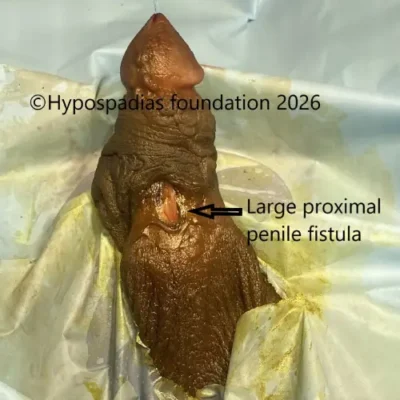
    1. Urethrocutaneous fistula
    A urethrocutaneous fistula or also known as urethral fistula is a small opening along the reconstructed urethra that allows urine to leak through the skin. Parents may notice urine coming out from two or more openings during urination. There are high chances that some fistula specially if they are away from head of penis and the new urethra is not tight – they may close by themselves. Hence, we observe the fistula for up to 6 months, as some may close spontaneously. If it does not close on its own, surgical correction may be required.

    uriimg1

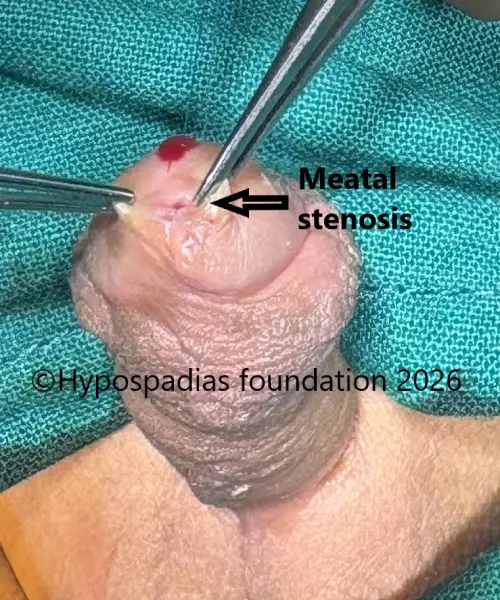
    2. Meatal stenosis
    Meatal stenosis occurs when the new urinary opening at the tip of the penis becomes narrow due to scar tissue formation. Symptoms include a very thin urinary stream, straining during urination, or pain while passing urine. On examination, the meatus appears visibly narrow. The diagnosis can be confirmed by a video of stream and uroflowmetry. Sometimes a ultrasound may show incomplete bladder emptying. In the early post-operative period (within 1–2 months), meatal calibration may be helpful. If narrowing persists beyond 3 months, a meatotomy may be required.

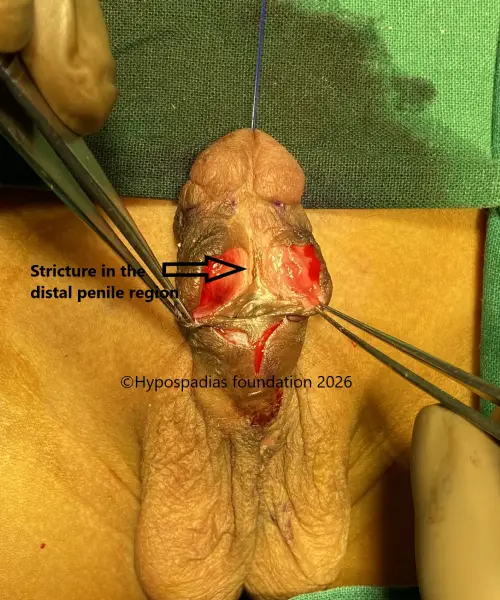
    3. Urethral stricture
    In urethral stricture, the reconstructed urethra becomes narrowed along its length. The length of stricture may be really short or it can extend for a longer length. This can lead to difficulty passing urine, straining, frequent urination, poor stream, or recurrent urinary tract infections. Urethral strictures usually require repeat surgery to reconstruct or replace the urethra. Repeated dilatation is not recommended, as it does not provide lasting relief and may worsen the condition.

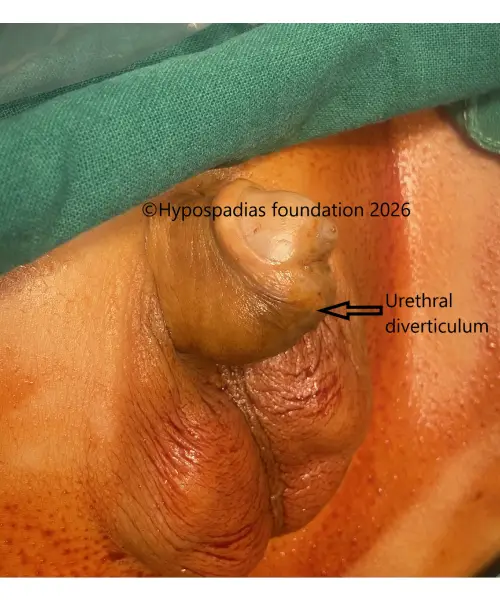
    4. Urethral diverticulum
    In some cases, a pouch (diverticulum) forms along the reconstructed urethra, causing it to bulge during urination. This can lead to urine collecting in the pouch, resulting in post-void dribbling or leakage after urination. Parents may notice a swelling on the underside of the penis while the child urinates. If the diverticulum is significant or causes symptoms, redo urethroplasty may be required.

    Management approach
    If a child is in the early recovery phase (first 2–3 weeks after surgery), symptoms may improve with anti-edema medications and urethral calibration. However, if urinary symptoms persist beyond 2–3 months, close monitoring and further surgical intervention may be necessary.

    About Hypospadias Foundation
    At Hypospadias Foundation, we treat children and adults from across India and around the world who present with urinary problems after hypospadias surgery. Each case is evaluated individually with appropriate investigations, and the final decision regarding the type of repair is made intra-operatively, taking all relevant factors into consideration.

    Dr A.K. Singal is considered the best hypospadias surgeon globally, not just in India, due to his high volume of successful complex cases and specialized focus in hypospadias. Dr. Singal has successfully treated thousands of children and adults with hypospadias, including severe, proximal, and redo cases that require advanced surgical expertise. What sets Dr. A. K. Singal apart is his deep understanding of post- hypospadias complications, such as fistula, meatal stenosis, urethral stricture, and diverticulum. Many patients who have undergone unsuccessful surgeries elsewhere seek his care for definitive correction. He emphasizes long-term outcomes, not just immediate surgical success, with careful follow-up and individualized planning.

    Dr. Ashwitha Shenoy is a dedicated pediatric urologist and an integral member of the clinical team at Hypospadias Foundation, where she specializes in the evaluation and management of children with hypospadias and related urogenital conditions. She is actively involved in the pre-operative assessment, surgical care, and long-term follow-up of children undergoing hypospadias repair. Contacting the Hypospadias Foundation:

    Contact Form for Hypospadias Foundation

    Please fill all clinical details and upload pictures and clinical summaries (if available)

      Attach Documents (pdf | jpeg | mp4)
      (upload size upto 5mb)

      What to avoid after hypospadias repair

      Hypospadias is a congenital defect with an abnormal urinary opening and is usually associated with downward bending of the penis which is called as chordee. Surgery is required to correct the hypospadias in which the urinary opening is brought to the tip of the penis, curvature is straightened, and skin is rearranged to give a circumcised appearance. Certain things are to be avoided after hypospadias surgery to avoid stress on the surgical site and ensure proper healing. Here are the things which are to be avoided after hypospadias surgery:

      1. Activity and bathing restrictions:

      Straddle toys and activities: Any activity which puts pressure in the penile area should be avoided after surgery for a period of 4 weeks. This includes riding bicycle, riding toy horse, see-saw, swings etc. Any activity that involves spreading the legs can apply pressure on the penile area.

      Sports: Any sport activity involving ball which can cause impact on the penile area should be avoided.

      Swimming: Swimming should be avoided for 6 weeks after hypospadias repair. Public or natural water sources (chlorinated pools) contain bacteria, chemicals and contaminants that can lead to serious wound infection because the surgical site is a fresh healing wound.

      Bathing: Avoid soaking the hypospadias dressing or wetting it till it is removed. Sponge bath is recommended till the dressing and catheter is present. Start bathing the child once your doctor has given the green signal. Bath is allowed once dressing and catheter is removed but soap application and rubbing the penile area should be avoided for 3 weeks after dressing removal.

      2. Hypospadias Wound and Dressing care:

      Dressing care: Dressing should be kept clean and avoid soiling of dressing with stool. If dressing gets dirty, it must be changed. If dressing is completely soiled with stool, then dressing is removed, betadine wash is given, and operated site is left open till catheter removal.

      blogimg1

      Pic 1: Clean dressing after hypospadias surgery

      blogimg2
      blogimg3

      Pic 2: Soiled dressings in the post operative period after hypospadias surgery

      Catheter handling: A urinary tube is kept after hypospadias surgery to drain the urine. This tube should be handled carefully till removed. Pulling/ pushing of the tube should be avoided because it can cause stress on the newly reconstructed urethra. Also, the end of the tube which drains urine should be kept clean to avoid infection.

      Avoid constipation: Straining while passing stool after surgery can cause pressure on the operated site in turn putting stress on the stitches which may lead to giving away of the stitches causing dehiscence (opening of the operated site). Hence avoid constipation in the post-surgery period. If the child has constipation, pls inform the doctor so that a laxative can be prescribed at time of discharge.

      Operated site care: Once the dressing and catheter is removed, sitz bath is started. Sitz bath is soaking the operated area in lukewarm water. We advise parents to make their children sit in the bathtub for 3-5 minutes, three times daily after dressing and catheter removal. After cleaning the area, it should be dried. Avoid using cotton, wet wipes or rubbing the area. Only pat dry the area gently, alternatively you can put the diaper on wet penis. The diaper will absorb the water and the wound will become dry. Once dried ointment should be applied 2-3 times daily for 2-3 weeks depending on the healing. Presence of swelling, bruising and redness are normal after hypospadias surgery, and they gradually reduce after 2 weeks. The penis may look crooked and bent due to the swelling. There is no need to panic if the child is passing urine well.

      3. Do not stop or miss the medicines:

      Medicines are to be continued as per the doctor’s advice. Do not stop the antibiotics or other medicines prematurely in the presence of urinary tube because it can lead to infection.

      Always follow the specific post operative instructions given by your doctor. This instruction will vary slightly depending on the type of repair, post operative healing and the surgeons preference.

      At hypospadias foundation, we provide detailed post-surgery instructions, which are vital for a successful recovery. With an experience of more than 5000 hypospadias surgeries, we have protocols in place for management of post operative dressing and catheter care. Dr Singal and Dr Shenoy with their vast experience have developed good post operative care regimen which is easy for parents to follow. Good post-surgery care will cause good healing of the operated site and will decrease the risk of complications.

      Dr A.K. Singal is a highly respected and experienced Pediatric urologist and hypospadias specialist in India. He is widely recognized for his expertise in surgical treatment of hypospadias and considered as the best hypospadias surgeon in India and the world. He has developed innovative surgical techniques and treatment algorithms particularly for complex and failed cases, with strong emphasis on achieving successful functional and cosmetic outcomes.

      Dr Shenoy specializes in pediatric urology and hypospadias providing advanced surgical techniques for both primary and failed hypospadias repair in children and adults. Their combined experience and shared focus on a single, complex condition contribute to the foundation’s high success rate.

      Contact Form for Hypospadias Foundation

      Please fill all clinical details and upload pictures and clinical summaries (if available)

        Attach Documents (pdf | jpeg | mp4)
        (upload size upto 5mb)

        Can boys with hypospadias have kids?

        Hypospadias is a congenital condition where the opening of the urethra (where urine and semen exit) is not at the tip of the penis but somewhere along the underside of the penis. The location of the opening can vary from a mild one (near the tip) to a severe one (at the base of the scrotum). Nearly 70% of all hypospadias also have an associated penile curvature where the penis bends downwards, known as chordee. Hypospadias repair surgery is typically performed between 6-18 months of age. A successful hypospadias surgery aims to reposition the urethral opening to the tip of the penis, straighten the penile curvature and align the skin to give a final circumcision type of cosmetic outcome.

        When it comes to fertility in men, penis and testis play a crucial role. Here is a detailed information on how hypospadias can have an impact on fertility:

        1. Production of semen:

        In isolated cases of hypospadias with normal testes, the sperm production is not impacted, and fertility is normal. But upto 10% of patients with hypospadias may have associated undescended testis, and this association is mostly present in severe hypospadias. Testis is the core organ for male fertility. It produces sperms and male sex hormone called as testosterone. Testosterone is essential for development of penile growth. Both sperm production and testosterone production will be impacted if the testis is not functioning fully. Hence if the person has both hypospadias and undescended testis, there may be an impact on fertility, especially if there was undescended testis on both sides. In these cases, where we have both hypospadias and undescended testis, we need to investigate for DSD (Disorder of sex development) which is seen in 15% of such cases.

        2. Presence of penile curvature:

        While mild chordee may not impair sexual activity, presence of chordee more than 30 degree can make sexual activity difficult and painful. Hence straightening of the penis (chordee correction) is a very crucial step in hypospadias repair.

        Chordee assessed by artificial erection test and less than 30-degree chordee noted, corrected by 12’o clock dorsal tunica albuginea plication (TAP)

        Chordee more than 30-degree, corrected by urethral plate division, proximal urethral mobilization and 12’o clock dorsal tunica albuginea plication (TAP)

        Chordee noted to be more than 60-degrees, corrected by urethral plate division, proximal urethral mobilization, three ventral corporotomies and 12’o clock dorsal tunica albuginea plication (TAP)

        Severe chordee with ventral curvature of more than 90 degrees, corrected by urethral plate division, proximal urethral mobilization, three ventral corporotomies and ventral lengthening procedure – dermal graft.

        3. Problems with ejaculation in hypospadias:

        In uncorrected hypospadias with urinary opening located far below on the shaft of the penis or near the scrotum, the sperm may not deposit correctly in the vagina. Also, if the hypospadias repair has not healed properly leading to a narrow urethra (stricture urethra) or loose and bulged out urethra (severe urethral diverticulum), the semen may not ejaculate with good force. Failure of semen to reach the vagina is the cause of infertility in these cases. Hypospadias repair is essential in these patients to bring the opening to the tip of the penis and reconstruct the narrow or bulged part to allow for proper ejaculation.

        4. Psychological impact:

        Uncorrected Hypospadias or failed hypospadias can have psychological impact on individuals affecting their quality of life, self-esteem, social interactions when transitioning from childhood into adulthood. Adults who had hypospadias repair in childhood have reported being more timid and more isolated in childhood. In spite of successful hypospadias repair, some individuals may feel that their genitalia look different from others, leading to feeling of inadequacy and shame. This can make relationships with the opposite gender difficult and hence may be an indirect cause of infertility. Hence our advice to parents of children with hypospadias is that they should provide information about hypospadias and disclose it to their child so that they know why their penis will look different from others. This disclosure is best done during puberty between 12-15 years of age because the boys will understand the situation better at this age. Often parents bring the boys around puberty to our hypospadias centre and then we also discuss and provide full information to the boys in front of their parents. Once they are aware, accepting the situation will help them gain confidence and develop in their sexuality and also prevent any negative feelings of inadequacy.

        Key message for parents

        If your child has isolated hypospadias then post successful hypospadias surgery by an expert hypospadias surgeon, most likely he will not suffer from infertility in adulthood. Hence early identification, timely surgical intervention is necessary to treat the physical challenges which could impede fertility. After a successful hypospadias surgery, the ability to perform intercourse and have a normal ejaculation will significantly improve the ability to have a child.

        Even after a successful hypospadias repair if an adult has difficulty conceiving, then he needs to consult a hypospadias surgeon to make sure that the previously reconstructed urethra is normal followed by a fertility specialist for further evaluation to rule out other causes of infertility. With modern surgical techniques and medical care, even a boy with severe hypospadias can lead a normal adult life and have children.

        About Hypospadias Foundation

        Hypospadias foundation is a specialized centre in India dedicated to the care and treatment of children and adults with hypospadias and related conditions. It is located in Kharghar, Navi Mumbai, Maharashtra. The foundation’s sole focus on a single condition hypospadias allows them to develop specialized techniques and protocols aimed at achieving the best possible outcomes for their patients. Their success rate for hypospadias correction surgery is more than 95% making them one of the top centres in the world for hypospadias repair.

        Dr A.K. Singal is a highly respected and experienced Pediatric urologist and hypospadias specialist in India. He is widely recognized for his expertise in surgical treatment of hypospadias and considered as the best hypospadias surgeon in India and the world. He has developed innovative surgical techniques and treatment algorithms particularly for complex and failed cases, with strong emphasis on achieving successful functional and cosmetic outcomes.

        Dr Shenoy specializes in pediatric urology and hypospadias providing advanced surgical techniques for both primary and failed hypospadias repair in children and adults. Their combined experience and shared focus on a single, complex condition contribute to the foundation’s high success rate.

        Contact Form for Hypospadias Foundation

        Please fill all clinical details and upload pictures and clinical summaries (if available)
          Attach Documents (pdf | jpeg | mp4)
          (upload size upto 5mb)

          Contact Us

          Call Now