Does Hypospadias cause male infertility?

For some men with hypospadias, a congenital condition where the urethral opening lies somewhere on the underside of the penis, questions about fertility can loom large. While hypospadias itself doesn’t directly impact sperm production, its associated complications can sometimes pose challenges. Hypospadias cause male infertility in certain cases due to these complications. But remember, this doesn’t mean that all men with hypospadias will necessarily be infertile. Let’s delve into the link between hypospadias and fertility, exploring potential concerns, available solutions, and fostering hope for fatherhood.

Understanding Hypospadias:

During fetal development, normally the urethra forms by folding of tissues from scrotum to the base of the penis to the tip of the penis. The failure of this urethral closure leads to hypospadias. The severity of hypospadias varies, with the opening appearing anywhere from the scrotum (scrotal hypospadias) to the base of the penis (penoscrotal hypospadias) to near the tip of the penis (distal hypospadias). Besides the misplaced opening, most men with hypospadias also have a downward bending of the penis during erection – called chordee. Hypospadias can cause male infertility as 5% of cases may also have an associated undescended or absent testis, which can lead to lower sperm production. Such men need to be investigated for a disorder of sex development (DSD) or intersex.

Hypospadias and Fertility: the Possible Connections:

In isolated hypospadias with both normal testes, the sperm production usually remains unaffected, yet certain hypospadias-related factors can influence fertility:
 Urethral location: In severe unrepaired hypospadias cases such as scrotal or perineal or penoscrotal hypospadias, ejaculation might not be able to reach the vaginal introitus, hindering fertilization.
 Penile curvature: Significant curvature can make intercourse physically difficult. Sometimes erection can also be painful when there is significant chordee
 Meatal stenosis: abnormal hypospadias opening may be very small leading to urinary and sperm flow obstruction.
 Prostatic utricular diverticulum: Some men with severe hypospadias may also have a large sac near their prostate gland where sperm tubes (vas deferens) open. In such cases sperms may not flow out easily for fertilisation.
 Post hypospadias surgery issues: At Hypospadias foundation, we see lot of men who have had repairs done earlier and have poor fertility though they have a normal sperm production. The common reasons for this are complications of hypospadias surgery such as: residual curvature or chordee, stricture in new passage, diverticulum or baggy new urethra or fistulae in the urethra.

 Psychological considerations: Emotional concerns about body image or sexual function can sometimes affect intimacy and overall fertility.

Hypospadias Treatment Options: Paving the Way for having children
Fortunately, advancements in hypospadias surgery and infertility treatment offer effective solutions for addressing hypospadias-related fertility concerns:
 Hypospadias repair surgery: This procedure reconstructs the urethra and corrects penile curvature, often restoring normal ejaculation and improving sexual function. If there are complications from previous hypospadias surgeries such as stricture, residual chordee, fistula or a diverticulum- these can be repaired by an expert hypospadias surgeon leading to cure for infertility.
 Assisted reproductive technologies (ART): In cases where natural conception proves challenging, sperm retrieval techniques like testicular biopsy or micro epididymal sperm aspiration (MESA) can be combined with IUI, IVF, or ICSI to achieve pregnancy.

Maintaining Hope: Fatherhood is Within Reach for people with Hypospadias:
Do consult an expert and best hypospadias surgeon first. The hypospadias surgeon will check and confirm that the hypospadias repair is proper and there is no structural issue in repair. If there is some residual issue in hypospadias surgery, then that needs to be corrected first. If the infertility persists, and you suspect hypospadias cause male infertility, then you must visit an andrologist for assisted reproductive techniques.

It’s crucial to remember:
 The majority of men with hypospadias have normal fertility.
 Early surgical intervention significantly improves the chances of successful fatherhood.
 Advanced treatments like ART offer alternative paths to parenthood. Open communication with your hypospadias doctor is key to understanding your unique
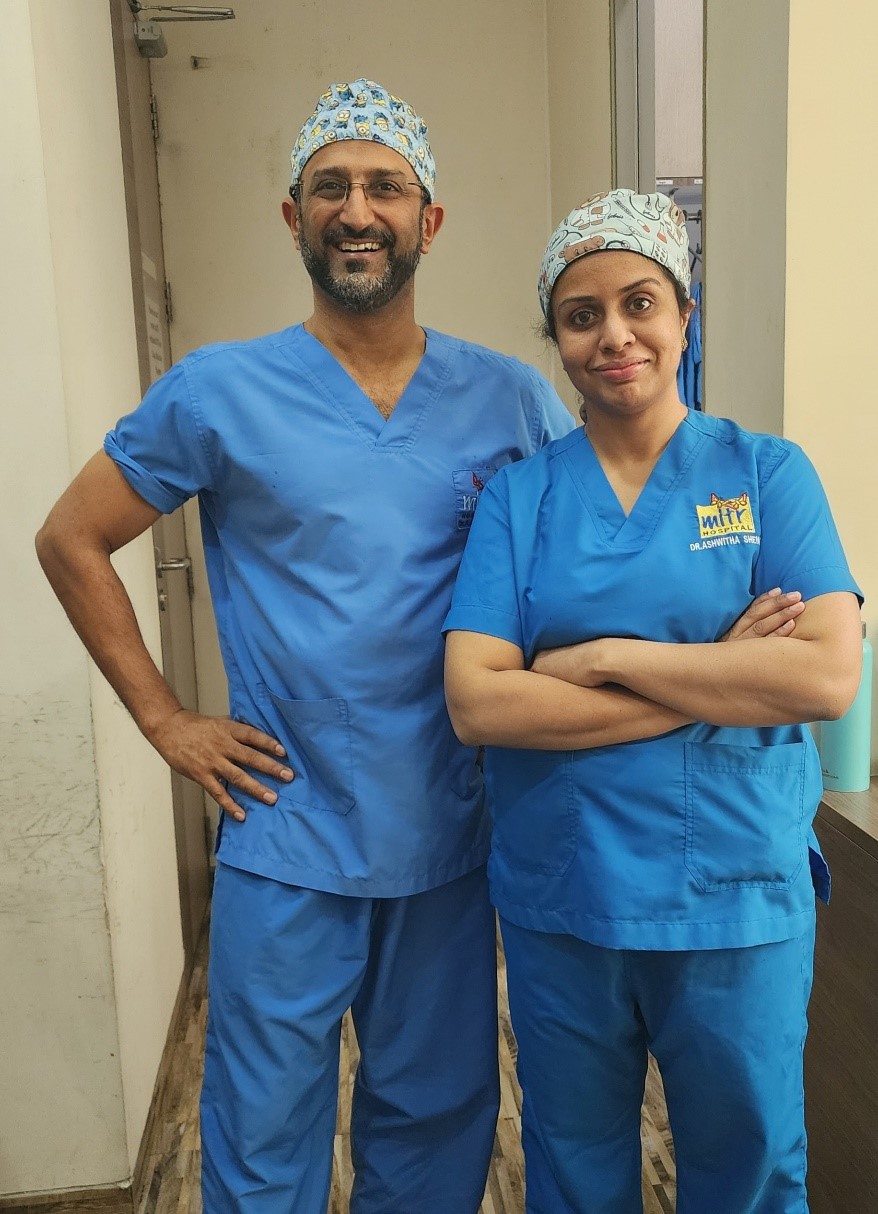
situation and exploring suitable fertility options. Remember, hypospadias does not define your potential as a father. With proper support and available treatments, you can navigate this journey and realize your dreams of having babies and building a family. At Hypospadias foundation, we treat hundreds of children and adults with hypospadias every year. Since 2008, Dr A.K.Singal, rated as the best pediatric urologist and hypospadias surgeon in India and the world, has devoted his life to helping people with hypospadias get best results and normal life. Along with Dr Ashwitha Shenoy, pediatric surgeon and hypospadias surgeon and a partner at Hypospadias foundation, the team at Hypospadias foundation, has deep expertise in diagnosing and treating complex hypospadias.

References:
 American Urological
Association: https://university.auanet.org/core/pediatric/hypospadias/index.cfm
 National Institutes of Health: https://www.ncbi.nlm.nih.gov/books/NBK482122/
 Mayo Clinic: https://www.mayoclinic.org/diseases-
conditions/hypospadias/diagnosis-treatment/drc-20355153

If you wish to have a teleconsult or a second opinion from Dr Singal/ Dr Shenoy, please write to us hypospadiasfoundationindia@gmail.com or fill up this contact form: https://www.hypospadiasfoundation.com/contact/

Guide to choose the best hypospadias surgeon for your child

Hypospadias is a common congenital anomaly diagnosed at birth. Most of the children will need repair surgery for hypospadias and this surgery should be done by 18 months of age in a child who is born full term and is otherwise healthy. The hypospadias surgery, when done, should be carried out by an expert hypospadias surgeon. The hypospadias surgeon should be trained in hypospadias surgeries and have extensive experience and dedication to hypospadias-related work. 

As a parent of a child with hypospadias, you may be confused about how to choose the best hypospadias surgeon. Any pediatric urologist or pediatric surgeon can operate on a child with hypospadias, but every surgeon may not get the desired and best post-surgery results. Here are a few tips that will help you shortlist the best hypospadias surgeon for your child.

  1. Ask your pediatrician: Pediatricians and pediatric urologists or surgeons often know each other well and work closely. Pediatricians are the first doctors to diagnose hypospadias and they can guide you to an experienced hypospadias surgeon who does lot of such surgeries and has good results for hypospadias surgery. Pediatricians often also get to see the children post-surgery and hence know the outcomes for each surgeon. Ask your pediatrician to guide you to seek the best hypospadias surgeon for your child. 
  2. Connect with parents of children with hypospadias: A parent of a child with hypospadias goes through a great deal of experience when it comes to hypospadias surgery. From pre-surgery OPD visits to post-surgery care, they become experts on how to manage their child in the hospital and after surgery. New parents can discuss with other parents whose child has already completed hypospadias repair and get an honest opinion regarding the hypospadias surgeon, experience in the hospital, and their overall experience. This will help other parents gain confidence and decide what’s best for their child.
  3. Search online for the best centres of expertise for Hypospadias Surgery: Most of the good centres for hypospadias treatment have a comprehensive website and a knowledge centre. Key things to look online are- qualification of the hypospadias doctor, years of experience, kind of cases they have managed, their success stories, their online reviews, the surgery videos, their publications and whether they are so good that they are training other surgeons. In the best hypospadias centres, their website will have enough information on all these points.
  4. Visit your hypospadias surgeon in the OPD: Make sure you visit your hypospadias surgeon or connect with them online for a hypospadias consultation at least once before you plan the surgery. In the Outpatient department (OPD) of a hypospadias surgeon you will find many other children with hypospadias which indicates hypospadias surgery is performed regularly at that hospital. Ask your hypospadias surgeon about the cases done so far, the success rate and similar cases done in the past which will help you gain confidence in the surgeon and take a decision if he/she is the right surgeon for your child.
  5. Success rate of hypospadias repair surgery: Every surgery has its own set of complications but when it comes to hypospadias the complication rates vary widely at various centers. The best hypospadias surgeon should have a success rate of more than 90% with a complication rate of under 10%.  When you visit your hypospadias surgeon do ask them about the success rate of surgery at their center. 
  6. Expertise in managing complex hypospadias: Complex hypospadias such as perineal, scrotal hypospadias and redo hypospadias (hypospadias after multiple previous failed attempts) need to be managed very differently. If your child has such a hypospadias, make sure that you ask your hypospadias surgeon about their experience in managing such cases and the technique which is going to be done in your child so that you are prepared for the post-surgery period. An experienced hypospadias surgeon will be well versed in managing complex cases as well as primary ones. 

The first surgery is the best chance for a complete cure from hypospadias. Once the first surgery fails, subsequent surgeries become difficult. Hence, it is important that you do full research and choose wisely. Choosing the right hypospadias surgeon is not an easy decision for any parent. Every parent wants the best surgeon for their child. 

At hypospadias foundation, we treat more than 200 children and adults every year with hypospadias. Our dedication and expertise in hypospadias makes us one of the leading centers for hypospadias repair in the world. Do not hesitate to write to us or visit us for more information on our expert hypospadias surgeons. We will be happy to offer a second opinion or help you with understanding hypospadias treatment for your child or yourself (adult hypospadias)


Fill up contact form: https://www.hypospadiasfoundation.com/contact/

Contact Form for Hypospadias Foundation

Please fill all clinical details and upload pictures and clinical summaries (if available)
    Attach Documents (pdf | jpeg | mp4)
    (upload size upto 5mb)

    Typical worries in parents of boys with hypospadias

    Hypospadias though common is still unknown to the general population. When a parent finds out that their child has a genital abnormality (hypospadias) they get very worried thinking of the child’s future, which often leads to heightened parental worries. Due to limited resources which are available in the online platform, parents do not get a clear idea when it comes to hypospadias. This blog is directed to parents who have children with hypospadias, to ease their concern and improve the knowledge surrounding hypospadias and parental worries.

    1. Is surgery needed for Hypospadias? Surgery is required in hypospadias to correct the chordee, to create a urinary passage and bring the opening to the tip of the penis. The repair can be staged or single stage depending on the degree of chordee (downward bent of the penis) and severity of hypospadias. The risk of complications following surgery at our centre is less than 5%. The most common complications which we encounter are wound infection, fistula formation, diverticulum formation and meatal stenosis. An additional surgery may be required in some of these complications. Following hypospadias surgery, the cosmetic result will be similar to a circumcised penis. The meatus will be at the tip on the glans and the child would be able to pass urine in a single straight stream.
    2. Anaesthesia during hypospadias surgery: Hypospadias surgeries are done under general anaesthesia. It is important that besides a pediatric urologist, a pediatric anesthesiologist doctor is available to give anesthesia safely to children. Right from dosage of medications to managing airway is very different in children when compared to adults. Hence, at Hypospadias Foundation we have 3 skilled pediatric anesthesia experts who give anesthesia for hypospadias surgery. In addition to general anaesthesia the anaesthetist will also give an injection in the lower spine (caudal anaesthesia) which gives good pain relief to children for 12 hours after the surgery. Pain relief is our priority after surgery so that children can be comfortable after surgery and don’t remember hospitalisation as a painful episode. Besides caudal anaesthesia(during the surgery), we provide adequate pain relief with analgesics for a few days post-surgery.
    3. Pain after hypospadias surgery: Besides common surgical pain, which is easily manageable with pain killer medicines, two main reasons why children can develop pain in the post operative period are either due to bladder spasms or erections. Bladder spasms are controlled by a tablet oxybutynin which is started after the surgery and is continued till the catheter removal. Erection in the penis mainly occurs during early morning hours but can occur anytime in the day. Mostly the pain which occurs during erection is also managed well by the painkillers. The pain decreases significantly once the dressing and catheter are removed. However, penis continues to be sensitive for 2-3 weeks after the hypospadias repair surgery.
    4. Infertility in hypospadias:  Hypospadias can cause male infertility due to various reasons. They may be due to abnormal location of the meatus, presence of chordee and low semen count. The altered opening of the urethra can cause problems in ejaculation, hence causing infertility. Presence of chordee can make sexual intercourse difficult or painful. Presence of an associated undescended testis may be associated with a low sperm count. We need to understand that not all men with hypospadias will have fertility problems. The severity of hypospadias and the success of surgical repair will ultimately decide if they will be able to father a child. Hence in men with hypospadias suffering from infertility they need to get in touch with a hypospadias surgeon because getting the hypospadias repaired will increase their chances of having children.  
    5. Risk of hypospadias in future generation: The risk of hypospadias in future generations is influenced by a number of factors such as genetic and environmental factors. Some studies suggest that the risk of hypospadias may be increasing. The prevalence of hypospadias in the United states has increased by 10% from 1970 and 2000 as per the study published in the journal Nature in 2011. Hypospadias is a condition that can be inherited from the parents. If the father has hypospadias, then the risk of developing hypospadias in future generations will be 5-10%. Similarly, if first child has hypospadias, the risk in second boy is almost 5%. 
    6. Cost of surgery and insurance coverage/cashless/mediclaim: Hypospadias being a penis birth defect is classified as an external birth defect which can be easily diagnosed as soon as the baby is born. Hence, if parents take an insurance policy after the baby is born, hypospadias surgery treatment costs as cashless Mediclaim are not covered by most of the insurance companies in India atleast while in USA, UK it is covered under insurance benefits. The situation is different for some of the corporate insurance group policy holders. Some big corporates issue very employee friendly mediclaim policies which cover all medical and surgical treatments for the employees and their families. Such mediclaim policies may cover all pre-existing as well as birth defects for their employees and hence hypospadias repair procedure may be covered by the insurance companies in these circumstances.

    At Hypospadias foundation, we see almost 500 children and adults with hypospadias every year. The counselling in clinic, before surgery and after surgery focussing on making the families and patients comfortable, increasing their knowledge, and solving their queries regarding Hypospadias and parental worries. While there may be information available with pediatricians or on google, it is always better to consult a specialist hypospadias surgeon to have genuine answers to all the questions.


    Fill up contact form: https://www.hypospadiasfoundation.com/contact/

    Contact Form for Hypospadias Foundation

    Please fill all clinical details and upload pictures and clinical summaries (if available)

      Attach Documents (pdf | jpeg | mp4)
      (upload size upto 5mb)

      Why circumcision should be avoided in boys with hypospadias

      Circumcision is a procedure done to remove the foreskin over the glans. The definite indications for circumcision in a child are recurrent balanoposthitis (foreskin infections), failure of local steroid therapy in phimosis and infant boys with recurrent urinary infection. Another important reason why parents choose circumcision for their child is for religious or cultural reasons.

      During circumcision it is necessary to retract the foreskin completely and check for the position of the meatus. This is necessary because hypospadias can be sometimes missed and once the foreskin is excised, hypospadias repair becomes challenging. The hypospadias variants which can be missed are glanular hypospadias, MIP (megameatus intact prepuce) variant and chordee without hypospadias. Any surgeon performing the circumcision in a child should be vigilant and circumcision
      should be avoided at all costs in children with hypospadias.

      The reasons to avoid doing circumcision in children with hypospadias are as follows:
      1. Foreskin is required for skin closure in hypospadias: Hypospadias is generally associated with deficient penile ventrally and excess foreskin dorsally. During hypospadias repair if the child has already undergone circumcision, then we may encounter difficulty in skin closure.
      2. Dartos flap from foreskin is used in urethroplasty: In any urethroplasty we suture multiple layers of tissues over the urethroplasty to decrease the chance of fistula formation. This includes local tissues and dartos flap. In children who have undergone circumcision, dartos flap is unavailable to cover the urethroplasty.
      3. Use of prepuce in urethroplasty: Foreskin may be required for urethroplasty in children with poor urethral plate and shallow glans groove. Prepucial onlay flap urethroplasty is a good choice in these children. This is possible only if the foreskin is available. Hence in children who have undergone circumcision this technique will not be possible.

      Circumcision, though a simple procedure, has its specific indications in children. Not all boys with hypospadias need circumcision, and when deemed necessary, it should be approached cautiously. Identifying hypospadias during circumcision requires surgeons with keen observation skills to diagnose the condition accurately. The procedure should be abandoned if there’s any doubt, and the child should be referred to a specialist pediatric urologist for further management.

      Do consult a specialist pediatric urologist before planning circumcision for your child if you have doubt or your doctor has told you that there may be hypospadias or chordee.
      At Hypospadias foundation, we get children from all over India and from more than 25 countries all over the world in search of cure for hypospadias. At our centre we treat adults and children after multiple previous unsuccessful surgeries. Our experience clearly shows that previous circumcision makes subsequent hypospadias repair surgery difficult.


      Fill up contact form: https://www.hypospadiasfoundation.com/contact/

      Contact Form for Hypospadias Foundation

      Please fill all clinical details and upload pictures and clinical summaries (if available)

        Attach Documents (pdf | jpeg | mp4)
        (upload size upto 5mb)

        Contact Us

        Call Now