Hypospadias vs Circumcision

Hypospadias vs Circumcision: Why Circumcision Alone Cannot Fix Hypospadias

One of the most common questions parents ask when their child is diagnosed with hypospadias is: “Can circumcision alone correct hypospadias?”

The simple answer is no. Circumcision and hypospadias repair are two very different surgical procedures, and understanding the distinction is crucial for achieving the best outcome for your child.

What is Hypospadias?

Hypospadias is a congenital condition in which the urinary opening (meatus) is located on the underside of the penis instead of at the tip. It is often associated with:

 A hooded foreskin (foreskin present on the upper side but deficient on the
underside)
 Penile curvature (chordee)
 Abnormal urinary stream

The goals of hypospadias surgery are to straighten the penis, reconstruct the urethra, and create a normal appearance.
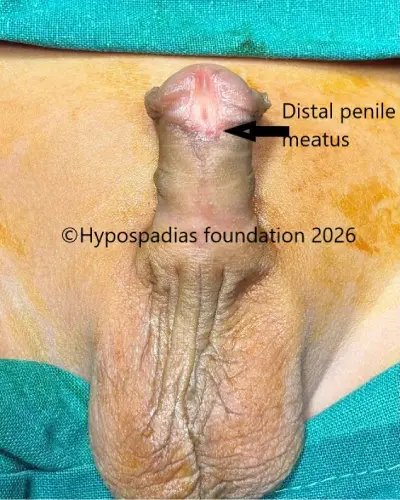
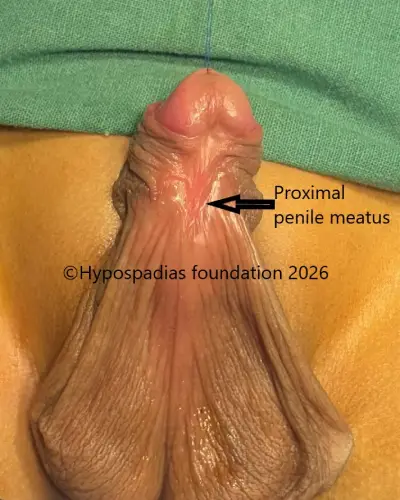
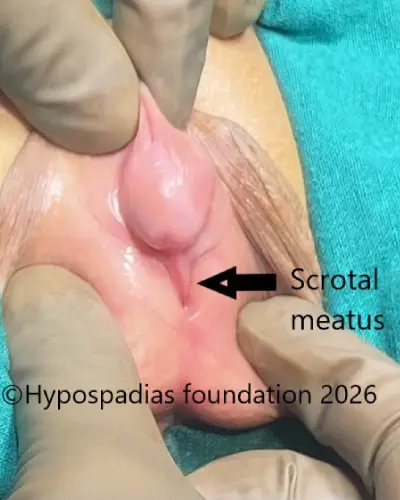
Pic 1: Case of distal penile, proximal penile and scrotal hypospadias

What Does Hypospadias Repair Involve?

Hypospadias surgery is a reconstructive procedure that is far more extensive than a circumcision. Depending on the severity of the condition, the surgery involves the following steps:

1. Degloving

The penile skin is carefully mobilized around the shaft to release adhesions, fibrotic strands and correct any skin-related curvature.

2. Chordee Assessment

An artificial erection test is performed during surgery to assess the degree of penile curvature. The severity of chordee helps determine whether a single-stage or two-stage repair is required.

 Chordee less than 30 degrees: Usually suitable for single-stage repair.
 Chordee greater than 30 degrees: Often requires more extensive reconstruction and sometimes a staged approach.

3. Chordee Correction

Depending on the degree of curvature, correction may be achieved through:

 Dorsal tunica albuginea plication for mild curvature
 Urethral plate division
 Urethral mobilization
 Corporotomies
 Ventral lengthening procedures using dermal grafts or pericardial patches for severe curvature

4. Urethroplasty

Once the penis is straightened, the urethra is reconstructed to bring the urinary opening to the tip of the penis.

5. Circumcision

The foreskin is frequently used during hypospadias reconstruction to create the new urethra and provide skin coverage on the underside of the penis. As a result, the foreskin is usually consumed during the repair process, making circumcision a component of the surgery rather than the treatment itself.

Why Circumcision Alone Cannot Correct Hypospadias

Circumcision simply removes the foreskin. It does not:

 Correct penile curvature
 Reconstruct the urethra
 Move the urinary opening to the tip of the penis

Therefore, circumcision alone cannot treat hypospadias.

In fact, performing circumcision before a planned hypospadias repair can create significant challenges because the foreskin is often needed for reconstruction. Loss of this tissue may limit surgical options and can sometimes convert a straightforward single-stage repair into a more complex two-stage procedure.

What to Expect After Hypospadias Surgery

Following hypospadias repair:

 A dressing is placed around the penis.
 A urinary catheter is usually left in place to drain urine.
 The dressing and catheter are typically removed after 7–10 days, depending on the type of repair performed.

The final appearance is usually that of a circumcised penis because the foreskin has been used during reconstruction. The foreskin does not regrow, as it was either deficient from birth or utilized during surgery.

Attempts to reconstruct the foreskin solely for cosmetic purposes may increase the risk of complications such as tightness, scarring, or breakdown of the repair.

How is Circumcision Different?

Circumcision is a relatively minor procedure involving removal of the foreskin covering the glans penis. Common indications include:

 Recurrent phimosis
 Recurrent foreskin infections
 Balanitis Xerotica Obliterans (BXO)
 Failure of medical treatment for phimosis
 Religious or cultural reasons

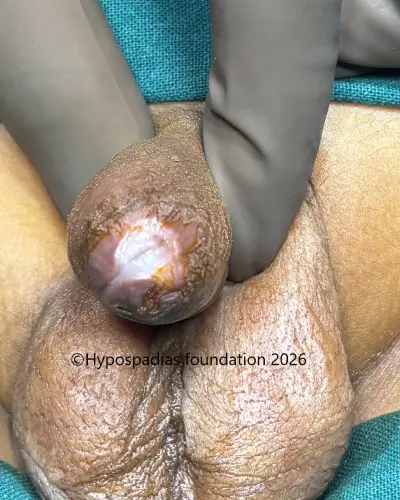
Pic 2: BXO (Balanitis Xerotica Obliterans) changes noted at the tip of foreskin

Unlike hypospadias repair, circumcision generally does not require urethral reconstruction or urinary catheterisation.

The Important Exception: MIP Variant of Hypospadias

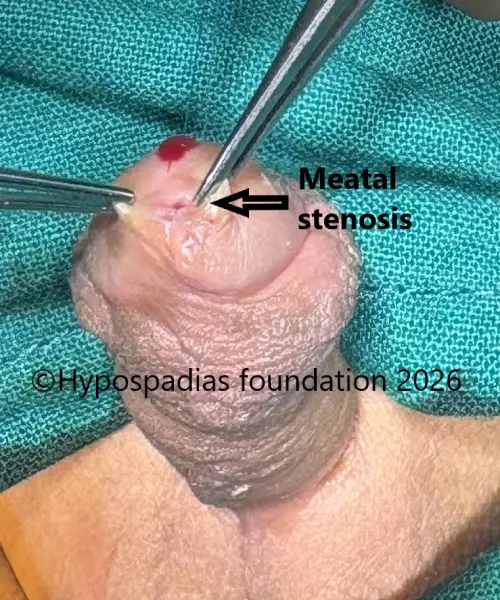
Not all hypospadias cases present with a hooded foreskin. A special subtype called the Megameatus Intact Prepuce (MIP) variant may have a completely normal foreskin.
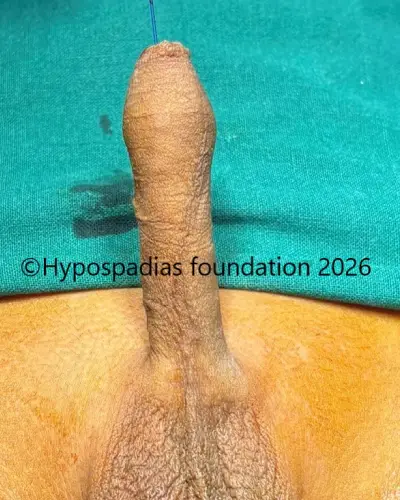
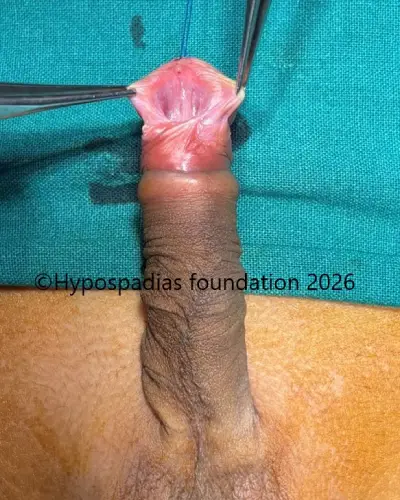
Pic 3: MIP variant of hypospadias with complete prepuce

Because the foreskin appears normal, the diagnosis can occasionally be missed before circumcision. For this reason, surgeons should always retract the foreskin and examine the position of the urinary opening before beginning a circumcision procedure.

Take-Home Message

Circumcision does not correct hypospadias. Hypospadias is a reconstructive condition that requires correction of penile curvature and relocation of the urinary opening to the tip of the penis. In many cases, the foreskin plays an essential role in reconstruction and should be preserved until evaluation by an experienced hypospadias surgeon.

If your child has hypospadias or there is any doubt about the position of the urinary opening, consult a pediatric urologist or an experienced hypospadias specialist before proceeding with circumcision.

Hypospadias foundation is a centre located in Kharghar, Navi Mumbai, Maharashtra, India with surgeons having expertise in hypospadias repair in children and adults. We regularly manage both primary hypospadias repairs and complex cases including those with previous multiple failed repairs. A significant focus of our patient base consists of children and adults who have had failed hypospadias surgeries elsewhere. Our approach involves not just good surgical technique but also diligent pre-operative assessment, focussed post-surgery care and critical decision making for good long-term outcomes.

Dr A.K. Singal is the founder and head of hypospadias foundation, India. He is considered the best hypospadias surgeon in India and the world and has successfully treated thousands of children and adults with hypospadias with excellent results.

Dr Ashwitha Shenoy is an expert hypospadias surgeon with special interest in the field of hypospadias and pediatric urology. Both Dr Singal and Dr Shenoy strive toachieve excellent outcomes in adults and children with hypospadias. Our success rate at hypospadias foundation for all types of repairs including complex and failed repairs are more than 95%.

Contact Form for Hypospadias Foundation

Please fill all clinical details and upload pictures and clinical summaries (if available)
    Attach Documents (pdf | jpeg | mp4)
    (upload size upto 5mb)

    When and How to Talk to Your Child About Hypospadias Surgery

    Hypospadias is a common congenital condition in boys where the urinary opening (urethral opening) is located on the underside of the penis instead of the tip. Hypospadias surgery is usually performed in early childhood, ideally before the age of five.

    After successful hypospadias repair, the penis appears similar to a circumcised penis with urinary opening on tip and no curvature. The child will be able to pass urine in a single straight stream from the tip of the penis without pain or difficulty.

    Because the surgery is performed very early in life, many children do not remember the condition or the procedure. As a result, many parents wonder:

    Should we tell our child about his hypospadias surgery?

    The answer is yes—open communication is important for your child’s long-term emotional and medical well-being.

    Why parents have difficulty in talking to their son about hypospadias?

    Many parents struggle with discussing hypospadias with their child due to social and emotional concerns such as

    1. Cultural Taboo Around Genital Health

    In many families, conversations about genitals or sexual health are considered uncomfortable or inappropriate. Parents who grew up in such environments may find it difficult to discuss these topics openly.

    2. Fear of disclosure leading to social judgement and stigma

    Parents often hesitate to disclose such conditions to their child due to fear that the child might share it with others, leading to social judgment. They may worry about teasing, stigma, or misunderstandings from peers, relatives, or the wider community. Concerns about how
    the information could affect the child’s social relationships, self-esteem, and even future aspects like marriage or fertility can make parents cautious. As a result, some choose to delay or limit discussions, hoping to protect the child from potential negative reactions.

    3. Concern About the Child’s Emotional Reaction

    Some parents fear that their child may feel embarrassed, feel different from others, or become emotionally distressed if he learns about his hypospadias condition. Although these concerns are understandable, keeping the condition completely hidden may lead to problems later in life.

    Why It Is Important to Tell Your Child About Hypospadias

    1. Prevents Trust Issues

    Children may eventually discover their medical history through records, online searches, or medical consultations. Learning about hypospadias surgery later in life from another source may make them feel betrayed or confused. Hence open communication is necessary to build trust and prevent unnecessary anxiety.

    2. Reduces Body Image Concerns

    As boys grow into adolescence, they naturally become more aware of their bodies. If they notice that their penis looks slightly different without understanding the reason, it may lead to unnecessary insecurity.

    3. Prevents Anxiety During Puberty

    Puberty brings many physical and emotional changes. Understanding their medical history helps adolescents feel confident and reduces anxiety about their bodies.

    4. Helps With Healthy Relationships in Adulthood

    Men who are unaware of their hypospadias repair history may feel worried or embarrassed about their appearance during intimate relationships. Knowing the truth early helps build confidence and reduces fear of judgment.

    5. Seek help if they have medical issues

    While with current hypospadias surgery techniques, the long-term results are very good, some of the children may develop issues in adulthood related to hypospadias or surgery done in childhood. These issues may include stricture, diverticulum, recurrent chordee or rarely urinary infections. Hence, it is important that the parents handover the medical records and tell their child about surgery so that they can seek proper help should anything happen.

    6. Future urological interventions

    Even in men without prior hypospadias, some of them develop kidney stones or prostate issues in late adulthood. At time of intervention, there is often cystoscopy done via urethra. Hence, it is important for them to know that they have a reconstructed urethra and share the same surgery record with their treating adult urologist.

    What Is the Right Age to Talk About Hypospadias?

    The best time to discuss about hypospadias with your child is during adolescence. At this stage, teenagers are mature enough to understand medical information and can process the explain logically.

    Parents can explain that:
     He was born with a small difference in the position of the urinary opening.
     A hypospadias surgery was performed in childhood to correct it.

    The condition has been successfully treated. It will not affect his normal life, urination, or future relationships. Having this conversation in a calm and supportive manner helps the child feel reassured and informed.

    Why Medical Records of Hypospadias Surgery Are Important

    When your child becomes an adult, it is important to provide him with all documents related to his hypospadias repair surgery. These records can help doctors if he ever needs medical evaluation later in life. Although most boys who undergo hypospadias surgery in childhood live completely normal lives, some rare complications can occur in adulthood, including:

    1. Urethral Stricture: The reconstructed urethra may become narrow over time, affecting urine flow.
    2. Urethral Diverticulum: The reconstructed urethra may become slightly dilated or relaxed.
    3. Residual Chordee: A mild curvature of the penis that was not fully corrected in childhood may become more noticeable in adulthood.

    Having the surgical history and medical records helps doctors provide appropriate treatment if any issue arises.

    Who Should Explain about Hypospadias to the Child?

    The best approach is for parents to have the conversation along with the hypospadias surgeon.

    Together, they can reassure the child that:
     The condition was corrected successfully.
     He can lead a completely normal life.
     If he has questions or concerns, he can discuss them privately with the doctor.

    We also recommend a follow-up consultation around 18 years of age so that the young adult fully understands his medical history and can address any concerns.

    Final Thoughts

    Talking to your child about hypospadias and hypospadias surgery may feel uncomfortable at first, but open and honest communication is important. When parents discuss the condition At the right age, it helps build trust, confidence, and a healthy body image. Providing accurate information ensures that your child grows into adulthood feeling reassured, informed, and comfortable with his medical history.

    About hypospadias foundation

    Hypospadias Foundation, located at MITR Hospital in Kharghar, Navi Mumbai in the state of Maharashtra, India is a centre specialized for the treatment of children and adults with hypospadias. Our expertise in hypospadias makes us one of the best centres for hypospadias repair in the world. We treat children from more than 30 countries in the world and from all over India. Our dedication in this field has helped us achieve excellent outcomes.

    Dr A K Singal is an expert and top hypospadias surgeon in India. He is a gifted surgeon and his expertise in this area has helped us achieve excellent outcomes in primary and failed hypospadias in children as well as adults. Dr Ashwitha Shenoy is an expert hypospadias surgeon with a special interest in hypospadias and pediatric urology. Both Dr Singal and Dr Shenoy work together to give best results for hypospadias surgery in India for both children and adults.

    Contact Form for Hypospadias Foundation

    Please fill all clinical details and upload pictures and clinical summaries (if available)

      Attach Documents (pdf | jpeg | mp4)
      (upload size upto 5mb)

      Is there an age limit for hypospadias repair surgery?

      Hypospadias is a congenital condition in which the urinary opening (meatus) is located on the underside of the penis instead of at the tip. Hypospadias repair surgery is a well-established and successful procedure that can be performed in infants, children, adolescents, and adults. However, choosing the best age for hypospadias repair plays an important role in healing, recovery, and long-term outcomes.

      What Is the Best Age for Hypospadias Surgery?

      Most expert hypospadias surgeons recommend performing surgery between 6 and 18 months of age. Surgery before 3 years of age is considered ideal, and if someone misses this period, surgery before 8 years of age is still strongly recommended if early repair was not possible.

      Hypospadias Surgery in Infants (6–18 Months)

      The ideal age for hypospadias surgery is between 6 and 18 months. At this age:

      • Penile tissues are soft, elastic, and heal faster
      • Scarring is minimal due to high tissue regeneration
      • Infants are unaware of their genitalia and body image
      • There is no psychological impact or memory of surgery

      Early hypospadias repair also allows normal toilet training and smooth bladder control development. Post-operative care is easier in infants, as diaper changes simplify wound care and recovery is less stressful for parents.

      Pic 1 for blog

      Hypospadias Surgery Before 3 Years of Age

      If surgery cannot be done in infancy, completing hypospadias repair before 3 years of age still provides excellent results. Children recover well, healing is fast, and long-term functional and cosmetic outcomes remain very good.

      Hypospadias Surgery in Older Children

      Hypospadias surgery in older children is safe and effective, though recovery can be more challenging.

      Older children:

      • Are more aware of their genitalia and may feel shy or anxious
      • Experience more fear and perceived pain after surgery
      • May find dressing changes difficult
      • Sometimes hold urine after catheter removal due to fear of pain

      Despite these challenges, healing and success rates remain high when surgery is performed by an experienced hypospadias surgeon.

      Hypospadias Surgery in Teenagers

      Teenage boys with untreated or failed hypospadias often feel embarrassed and reluctant to undergo surgery. In cases of hypospadias with chordee (penile curvature), we recommend delaying surgery until penile growth is complete. Avoiding surgery during active growth may prevent interference with natural penile development

      Hypospadias Surgery in Adults

      Hypospadias repair in adults is possible and can be highly successful. However, recovery is slower compared to children because:

      • Adult penile skin is thicker and less elastic
      • Healing takes longer
      • Pubic hair can affect wound care
      • Night-time erections may stress sutures and increase complication risk
      • Infection issues are higher
      • Urethral and extra safety supra-pubic catheter are also needed.

      Even in adulthood, good outcomes are achievable in expert hands. Adult hypospadias surgery success rates at Hypospadias Foundation India are over 95%, which are best in the world.

      Is There an Age Limit for Hypospadias Surgery?

      There is no upper age limit for hypospadias surgery. The success of repair depends more on the experience of the hypospadias surgeon than the age of the patient. With proper evaluation and surgical expertise, excellent results can be achieved even in adulthood.

      Importance of Choosing an Expert Hypospadias Surgeon

      Before planning hypospadias surgery, it is essential to consult a specialist hypospadias surgeon. An experienced surgeon will:

      • Carefully examine the child or adult
      • Assess severity, chordee, and previous surgeries
      • Recommend the best timing and surgical technique

      At Hypospadias Foundation, children and adults from over 30 countries undergo hypospadias repair. The oldest successfully treated patient was a 50-year-old man with failed hypospadias repair and urethral stricture, operated without complications. This highlights the importance of choosing a specialized center for hypospadias treatment.

      Dr A K Singal is a highly experienced and internationally renowned hypospadias surgeon in India, widely regarded as one of the leading experts in hypospadias repair for both children and adults. He has dedicated his professional life to the treatment of complex and failed hypospadias cases, helping patients achieve excellent functional and cosmetic outcomes.

      With decades of focused experience in primary and redo hypospadias surgery, Dr Singal’s expertise has contributed to consistently high success rates in infants, older children, adolescents, and adults with hypospadias.

      Dr Ashwitha Shenoy is an expert pediatric surgeon with a special interest in pediatric urology and hypospadias surgery. Her training and experience in managing hypospadias in children ensure meticulous surgical care, age-appropriate planning, and excellent long-term outcomes.

      Together, Dr A K Singal and Dr Ashwitha Shenoy work as a dedicated team to provide comprehensive hypospadias treatment in India. Their combined expertise allows them to manage simple to complex hypospadias cases, including failed repairs and adult hypospadias, delivering some of the best outcomes for hypospadias surgery in India.

      Contact us:

      For appointment kindly contact us at the contact details given below.

      MITR hospital & Hypospadias Foundation, Kharghar, Navi Mumbai, India – Tue/Saturday 4:00pm-6:00pm, Call for appointments: +91-6262840940. Or email us at hypospadiasfoundationindia@gmail.com

      Contact Form for Hypospadias Foundation

      Please fill all clinical details and upload pictures and clinical summaries (if available)

        Attach Documents (pdf | jpeg | mp4)
        (upload size upto 5mb)

        Can there be urinary problems after hypospadias repair?

        Hypospadias is a condition in which the urinary opening is located on the underside of the penis. Surgery is required to correct this condition. Because the surgery involves reconstruction of the urethra there may be a change in urinary patterns or some urinary complications to occur during recovery. The body needs time to heal and adapt to the newly formed urethra.

        Urinary issues may occur while the catheter is in place or after catheter removal.

        Short-term recovery issues (with catheter in situ)

        Children may experience the following during the post-operative period while the urinary catheter is in place:

        1. Bladder spasms
        These may feel like sharp cramping pain in the lower abdomen or a sudden urge to urinate. Bladder spasms are commonly caused by irritation of the bladder lining from the urinary catheter. To reduce discomfort, anticholinergic medications are routinely prescribed after surgery, and the dose may be increased if symptoms persist.

        2. Leakage around the urinary catheter
        Some urine may leak from the tip of the penis around the catheter. This is usually normal if urine is draining well through the catheter and there are no signs of blockage.

        3. Blood in the urine
        A few drops of blood may occasionally be seen in the urine while the catheter is in place. This is generally expected in the early post-operative period and usually resolves on its own.

        4. Whitish material in urine: Sometimes there may be whitish flakes in otherwise clear urine. These oay be due to mucus, minerals or bladder lining cells. Doctor may ask to increase water intake. If the urine is clear, there is smell or pus, nothing needs to be done except increasing hydration.

        If urinary problems persist or appear months after hypospadias surgery, further evaluation may be required. Some children may develop symptoms after few months of hypospadias repair which can be poor urinary stream, urine leakage, painful urination, or difficulty emptying the bladder. These issues may indicate a late surgical complication of hypospadias repair.

        Common surgical complications after hypospadias repair

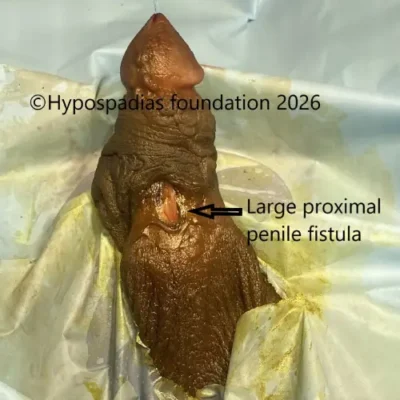
        1. Urethrocutaneous fistula
        A urethrocutaneous fistula or also known as urethral fistula is a small opening along the reconstructed urethra that allows urine to leak through the skin. Parents may notice urine coming out from two or more openings during urination. There are high chances that some fistula specially if they are away from head of penis and the new urethra is not tight – they may close by themselves. Hence, we observe the fistula for up to 6 months, as some may close spontaneously. If it does not close on its own, surgical correction may be required.

        uriimg1

        2. Meatal stenosis
        Meatal stenosis occurs when the new urinary opening at the tip of the penis becomes narrow due to scar tissue formation. Symptoms include a very thin urinary stream, straining during urination, or pain while passing urine. On examination, the meatus appears visibly narrow. The diagnosis can be confirmed by a video of stream and uroflowmetry. Sometimes a ultrasound may show incomplete bladder emptying. In the early post-operative period (within 1–2 months), meatal calibration may be helpful. If narrowing persists beyond 3 months, a meatotomy may be required.

        3. Urethral stricture
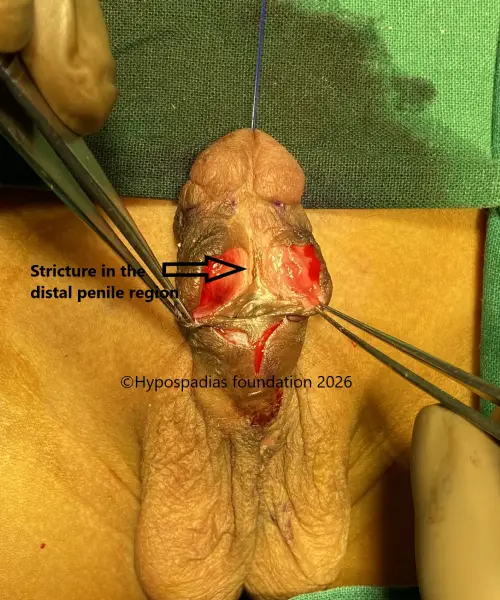
        In urethral stricture, the reconstructed urethra becomes narrowed along its length. The length of stricture may be really short or it can extend for a longer length. This can lead to difficulty passing urine, straining, frequent urination, poor stream, or recurrent urinary tract infections. Urethral strictures usually require repeat surgery to reconstruct or replace the urethra. Repeated dilatation is not recommended, as it does not provide lasting relief and may worsen the condition.

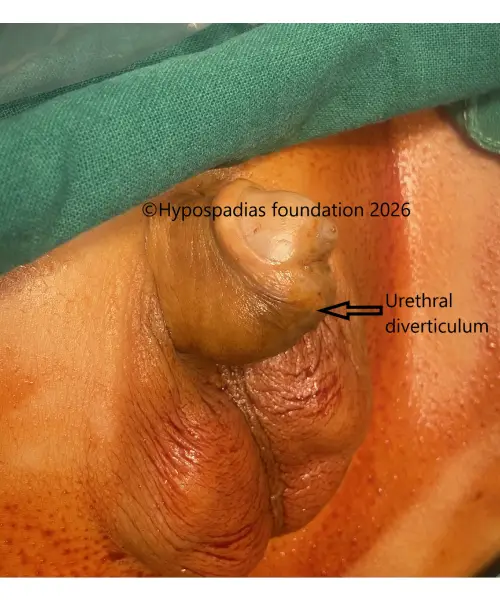
        4. Urethral diverticulum
        In some cases, a pouch (diverticulum) forms along the reconstructed urethra, causing it to bulge during urination. This can lead to urine collecting in the pouch, resulting in post-void dribbling or leakage after urination. Parents may notice a swelling on the underside of the penis while the child urinates. If the diverticulum is significant or causes symptoms, redo urethroplasty may be required.

        Management approach
        If a child is in the early recovery phase (first 2–3 weeks after surgery), symptoms may improve with anti-edema medications and urethral calibration. However, if urinary symptoms persist beyond 2–3 months, close monitoring and further surgical intervention may be necessary.

        About Hypospadias Foundation
        At Hypospadias Foundation, we treat children and adults from across India and around the world who present with urinary problems after hypospadias surgery. Each case is evaluated individually with appropriate investigations, and the final decision regarding the type of repair is made intra-operatively, taking all relevant factors into consideration.

        Dr A.K. Singal is considered the best hypospadias surgeon globally, not just in India, due to his high volume of successful complex cases and specialized focus in hypospadias. Dr. Singal has successfully treated thousands of children and adults with hypospadias, including severe, proximal, and redo cases that require advanced surgical expertise. What sets Dr. A. K. Singal apart is his deep understanding of post- hypospadias complications, such as fistula, meatal stenosis, urethral stricture, and diverticulum. Many patients who have undergone unsuccessful surgeries elsewhere seek his care for definitive correction. He emphasizes long-term outcomes, not just immediate surgical success, with careful follow-up and individualized planning.

        Dr. Ashwitha Shenoy is a dedicated pediatric urologist and an integral member of the clinical team at Hypospadias Foundation, where she specializes in the evaluation and management of children with hypospadias and related urogenital conditions. She is actively involved in the pre-operative assessment, surgical care, and long-term follow-up of children undergoing hypospadias repair. Contacting the Hypospadias Foundation:

        Contact Form for Hypospadias Foundation

        Please fill all clinical details and upload pictures and clinical summaries (if available)
          Attach Documents (pdf | jpeg | mp4)
          (upload size upto 5mb)

          1 2 3 8

          Contact Us

          Call Now