
Hormonal Testing Considerations in Hypospadias Repair: When and Why?

Hypospadias is a birth defect that affects 1 in 150 male babies. It occurs when the urethra, the tube that carries urine out of the body, doesn’t develop properly. Instead of opening at the tip of the penis, the opening is somewhere on the underside of the penis. In some cases, hypospadias may be associated with underlying hormonal issues that can affect the growth of the penis. While the exact cause remains unknown, some theories link it to abnormal hormonal development during pregnancy. In these cases, hormonal testing might be recommended before surgery to assess potential underlying conditions.

Hormonal Influences:

  • Testosterone: This male sex hormone plays a vital role in the development of the penis and scrotum. Low fetal testosterone levels might be a contributing factor to small penile size in some hypospadias cases.
  • Dihydrotestosterone (DHT): Testosterone is converted to DHT by an enzyme 5 alpha reductase. DHT is crucial for the formation of the urethra along the underside of the penis. An imbalance in DHT levels could potentially influence hypospadias development and associated small penile size.

At hypospadias foundation, we do the preoperative measurement of the size of the penis of all children with hypospadias. We check two parameters i.e Stretched penile length (SPL) and Glans diameter (GD).

The protocol which we follow at our centre is as follows:

1. SPL <30mm GD<12mm Hormonal testing
2. SPL<30mm GD 12-14mm Two doses of testosterone before surgery
3. SPL>30mm GD>14mm Normal

When are Hormonal Tests Performed?

While not routine for all hypospadias cases, hormonal testing should be done in these situations:

  • Small phallus: The presence of a small phallus alongside hypospadias might indicate hormonal imbalances. If the size of the penis, SPL< 30mm and GD< 12mm then hormonal testing is mandatory
  • Severe Hypospadias: If the hypospadias is severe, affecting other genital structures or accompanied by undescended testicles (cryptorchidism), hormonal tests along with karyotyping might be recommended to diagnose a case of DSD (disorder of sexual differentiation)
  • Family History: A family history of hypospadias or other genital malformations could also warrant hormonal testing.

Which are the hormonal tests recommended in case of hypospadias?

hCG stimulation test is the hormonal test recommended in cases of hypospadias. On day 1, blood sample is collected and first dose of Inj hCG is administered. On day 2 and day 3, Inj hCG is administered. On day 4, serum testosterone and 5-alpha Dihydrotestosterone levels are measured. The dose of hCG is 3000IU/m2    BSA. In this test pre hCG injection hormone (testosterone) levels are compared with post hcg injection hormone (testosterone and DHT) levels.

This test is interpreted as follows:

  1. There should be a rise in testosterone levels after hCG injection (more than 2 times rise after hCG injection)
  2. There should be conversion of testosterone(T) to dihydrotestosterone (DHT). The normal ratio of T/DHT is under 8 and is considered abnormal above 16. Between 8-16 is considered borderline.

If the hCG stimulation test shows normal rise in testosterone and normal T/DHT ratio, then the child is given two doses of testosterone in the preoperative period. This should effectively normalize the size of the penis for that age.

If the hcg stimulation tests shows increase in the levels of testosterone but inadequate conversion to DHT, then it implies that there may be 5 alpha reductase enzyme deficiency. These children do not have sufficient DHT in their body hence they will need DHT supplementation of to improve the size of the penis.

If the hCG stimulation test results are borderline, then we prefer to give two doses of Injection testosterone and assess the response. The ones who do not respond to testosterone may need DHT gel supplementation.

Rarely testosterone and DHT may not increase the size of the penis. The cause for this may be androgen insensitivity. In androgen insensitivity, the body’s cells are unable to respond to androgens, male hormones.

Hormonal analysis in hypospadias is important because it indirectly predicts the child’s future. If the hormone levels are normal, then there will be natural growth of the penis at puberty. If the hormone levels are abnormal then the child may need hormonal supplementation at puberty. But this decision is taken at puberty if the natural growth is inadequate.

Importance of Consulting a Pediatric Urologist:

If your child requires hypospadias surgery, a pediatric urologist will determine if hormonal testing is necessary based on the specific condition and individual factors. They will explain the rationale behind the tests and address any concerns you may have. Surgical results in a small penis are suboptimal with higher risk of complications.

At hypospadias foundation, we believe in complete care when it comes to hypospadias. Penile measurements in the OPD, preoperative hormone tests and supplementation if required and planning of surgery, every step is important to achieve our goal of successful hypospadias surgery with no complications. Dr Singal and Dr Shenoy are the best hypospadias surgeons for these reasons. Every child is assessed thoroughly and taken utmost care to yield excellent results.

Dr A K Singal is a highly experienced surgeon and is regarded as the best hypospadias surgeon in India and in the world for treating children and adults with hypospadias. If you are looking for a highly skilled and experienced pediatric urologist and hypospadias surgeon for yourself or your child, then Dr Singal is an excellent choice.

Dr Ashwitha Shenoy is an expert pediatric surgeon with a special interest in pediatric urology and hypospadias. Dr Singal and Dr Shenoy’s collaboration allows them to offer advanced surgical techniques and comprehensive care for patients.

Contact Form for Hypospadias Foundation

Please fill all clinical details and upload pictures and clinical summaries (if available)
    Attach Documents (pdf | jpeg | mp4)
    (upload size upto 5mb)

    Single stage buccal mucosa graft urethroplasty for an adult with failed hypospadias

    Hypospadias Foundation starts Clinic for Hypospadias Treatment & Surgery in Bahrain

    Hypospadias is a common congenital birth defect which occurs in 1/150 boys in India. 20-30 years back the treatment for hypospadias was very not very successful as the procedure and surgical techniques very not very refined, the number of expert hypospadias surgeons focussed on treatment was less, sutures and instruments for hypospadias surgery were also very basic. With advancing knowledge and expertise, these days in 2019, the results of hypospadias repair (urethroplasty) are much better. A lot of adults in this century, underwent surgery as children way back in 1980’s and 1990’s and some of them did not get good results even after multiple hypospadias surgeries due to complications. Some of these people lost hope at a cure and did not pursue further surgery for failed hypospadias. At Hypospadias Foundation, we regularly get such young adults who come from all over India to seek best treatment and cure for Hypospadias. One of the new techniques to cure such adults with hypospadias is to use skin from inside the mouth for making new urethra- called oral or buccal mucosa graft urethroplasty. In hands of an expert surgeon, it has extremely good results.

    Case History:

    Mr A.G. 26 years old young man, engineer by profession, extremely smart and suave in nature, came to our hypospadias clinic one evening. He sat down and talked about the trauma of two failed hypospadias surgery which he underwent in Indore with a plastic surgeon. The last surgery was about 10 years back. He had lost hope for cure till he stumbled upon Hypospadias Foundation while searching online. He had come with a hope to get a cure for his hypospadias issue and get married soon. His present problem was thin stream of urine, pain while passing and leak of urine from underside of penis. On examination, his penis was straight (no chordee), he had a fistula in proximal penile region with thin unhealthy urethra. We sat with him and explained the plan to do a cystoscopy and check for quality of urethra and find out reason for repeated failure of surgery and then decide whether a one stage or two stage surgery is needed for full cure and best results of hypospadias surgery. A.G. agreed for the plan and wanted the best treatment.

    Surgery:

    On cystoscopy, we saw that his new urethra was thin and unhealthy. We cut it open from tip of penis to the site of fistula and actually little below that. We saw that the dorsal wall (roof of urethra) was healthy with minor scarring. We made a deep cut in the dorsal wall in the central midline. We took a buccal graft (oral or labial graft) from upper lip. The graft was fixed with absorbable sutures in the midline to form a part of the neo-urethra. The graft and surrounding urethral wall were rolled into a tube with absorbable sutures around a 14 Fr silicon catheter – all in one stage. The unhealthy skin was excised, and closure of skin also done in a cosmetic way. The catheter was removed after 3 weeks and at one month after catheter removal AG was passing urine in a thick stream without pain from the tip of penis. He was very happy and planning to get married soon. We advised him to marry atleast 6 months after hypospadias surgery. The new urethra is still a bit fragile for 3-4 months after surgery and it is better to wait for 6 months for intercourse (coitus/ sex) after surgery.

    Buccal (oral) mucosa graft urethroplasty in adults:

    An adult with multiple failed hypospadias surgeries, generally has no normal penile skin or prepuce left for hypospadias repair using local tissues from penis. Hence in such patients, it may be better to use skin from inside the mouth for making the new passage. The skin can be easily taken from inside of cheek or lips. The defect heals very fast and generally without much complications. The buccal graft adapts to penile location very well and has great long-term results in failed surgery. While some of these cases are suitable for a single stage surgery, some may require two stage surgery depending on the severity of the defect. Nonetheless, Buccal Graft Urethroplasty remains a great option with best long-term results for children and adults with Failed Hypospadias.

    At Hypospadias Foundation in India, Dr Singal and his team have one of the best hypospadias surgery results in the world. Children and adults from more than 20 countries such as UAE, Bahrain, Iran, Iraq, Afghanistan, Saudi Arabia, Pakistan, Bangladesh, Malaysia, Tanzania, Nigeria, Congo, Ethiopia, Kenya, Nepal, Indonesia, Egypt, Jordan etc come for treatment at our foundation. It is indeed heartening to see them go back with final cure from hypospadias.

    To contact us write an email to hypospadiasfoundationindia@gmail.com or contact us at +91-9821261448 between 9am-6pm India time or fill up this form for enquiry.

    Watch Buccal Mucosa Graft Urethroplasty Video here:

    Watch Two staged Buccal Mucosa repair surgery in a child:

    From Dhaka, Bangladesh to Navi Mumbai, India: In search for a cure – Story of Adult hypospadias repair surgery

    Hypospadias is one of the most common urological anomalies in boys. While 80% of all hypospadias are mild and of distal or midpenile, 20% are proximal hypospadias. Severe varieties like scrotal hypospadias form only 5% of total burden of hypospadias. Severe hypospadias such as scrotal hypospadias often have associated chordee (bent penis) and this may be very severe too posing a challenge for the hypospadias surgeon. We have realized in last few years that making the penis straight (chordee correction) is THE MOST IMPORTANT step of hypospadias repair procedure. While most of the severe scrotal hypospadias are also repaired in a single stage (almost 90% are suitable for a single stage urethroplasty), in 10% of the children the anomaly is so severe especially due to severe chordee that two stage repair may be better for an optimal long term outcome.

    Master R.P. was born with scrotal hypospadias, severe chordee in Patna, Bihar and was advised to undergo surgery after 1 year of age. The parents went to multiple doctors in Patna, Delhi and finally came to consult Dr A.K.Singal, renowned Hypospadias surgeon at MITR Hospital, Navi Mumbai. On examination, the child had a severe scrotal hypospadias, severe chordee (almost 90 degrees) and abnormally fused skin of scrotum to the penis. This almost looked like a trapped hypospadias penis due to skin shortage. Dr Singal discussed in detail with parents that such a severe hypospadias may require hypospadias treatment in stages. Due to the severity it may be impossible to correct all the defects in one surgery. Also the penis length may have got shortened and cosmetic result would also been suboptimal.

    Mr T.R., now 30 years old, was born in Dhaka city in Bangladesh with a urological anomaly called Hypospadias in which the urinary opening is on the underside of the penis rather than the tip. Hypospadias also leads to a downward curvature of the penis called Chordee. Hypospadias always needs surgery, a specialized procedure called Urethroplasty which is done by trained Pediatric Urologist surgeons in childhood itself. Unfortunately, due to lack of awareness and non-availability of Pediatric Urologist doctor in Bangladesh, his parents did not get any surgery done for him. Mr T.R. was a good student and did postgraduate in commerce and got a job with an international bank. He had always thought something was abnormal with his penis and hence started searching for specialist doctor for hypospadias surgery. He found out about Bumrungrad hospital in Thailand and Hypospadias Foundation at MITR Hospital in Kharghar, Navi Mumbai. He sent his medical records to both the places but after exchanging a few emails with Dr A.K.Singal, Pediatric Urologist who managed Hypospadias Foundation, decided to travel to Navi Mumbai for his treatment. He came to Kharghar in September 2014 and after a few tests for fitness for surgery and anesthesia underwent Urethroplasty surgery under care of a team of two surgeons: Dr A.K.Singal, Pediatric Urologist and Dr Manish Dubey, Adult urologist. This is the same team which started Hypospadias foundation 6 years back. The whole surgery was performed in one stage and took three hours. T.R. also had a significant chordee and chordee correction surgery was done at the same time as hypospadias repair procedure. He was discharged to hotel in 2 days. Mr. T.R. recovered well after surgery and the catheter was removed after 14 days. Initially he had a little difficulty in passing urine but settled over the next few weeks.  He has sent us reports of uroflowmetry from Bangladesh and they show a good urine flow of urine from the tip of penis.

    Dr Singal said “Hypospadias is one of the most common birth defect in children but due to stigma attached to penile deformity no one talks about it. About 1 lakhs kids are born in India every year with this problem and ideally they should be operated by 1.5 years of age. There are an estimated 5 lakh adults and failed hypospadias surgery cases who are suffering and unable to get a cure as the surgeries 20 years back did not have such good results as we have now. Dr Manish Dubey and I started Hypospadias Foundation in 2008 as these children and families need lot of counselling and psychological support beyond surgery for full cure. Also the surgery is difficult and complicated, requires lot of patience and skill, and unless the surgeon is focused on taking this complicated issue head on, the results remain suboptimal. At hypospadias Foundation, we provide hypospadias treatment to more than 200 such children and adults every year and they come from all over India and from countries all over the world. Hypospadias Foundation remains world’s first and only organisation dedicated to caring for children and adults with hypospadias.”

    Dr Manish Dubey said “We see lot of adult patients with issues from failed and un-operated hypospadias who come with psychological, infertility and urological issues. They don’t even know where to go for treatment and who is the right doctor for them as this is child urological abnormality which was not treated appropriately many years back. Here at Hypospadias Foundation, our team, does dedicated treatment to make sure that they recover on all aspects and become normal again.”

    Dr Singal added “Adults take longer time to heal after hypospadias surgery. Coupled with spontaneous erections which occur in certain phases of sleep, it is little painful for initial few weeks. Over all the healing may take upto 2-3 months though one can join back work in 3-4 weeks after adult hypospadias surgery.

    Mr T.R. said “I did a lot of research on internet before deciding to go to Navi Mumbai India for my hypospadias surgery. The focus and dedication with which Dr. Singal and Dr. Dubey manage patients with hypospadias is good to see. I am very thankful to Dr. Rajkumar also who took personal care for me when I was recovering. Besides, I found the full team of MITR is so helpful and caring that I didn’t feel uncomfortable during my stay. Especially I should have mentioned the name of Mrs. Emily who is an administrator of MITR Hospital, helped me a lot in every single stage with lovely smile. In terms of my treatment, I found Dr. Singal is very friendly and always listened me with lots of care. His hands on experience and depth of knowledge on this particular field makes him so confident which I liked most. Before my surgery I knew that hypospadias treatment on adult is so complicated thus I was in strain but after meeting Dr. Singal before my surgery made me so relaxed. After my surgery I felt complication while passing urine but Dr. Singal and Dr Dubey immediately managed the situation and solved the problem. Overall, it’s an excellent experience doing my surgery by Dr. Singal. I would strongly recommend Dr. Singal if anyone has been suffering from hypospadias in the adult stage. I would like to congratulate Dr. Singal and his team for doing the outstanding jobs. Wish the team all the very best.”

    About Hypospadias Foundation:

    Hypospadias Foundation is a part of MITR Hospital in Kharghar, Navi Mumbai, India and registered as a NGO under One Vision Health and Research Foundation. It was started by Dr A.K.Singal and Dr Manish Dubey on 26 Nov, 2008 and has to date treated more than 1000 kids and adults with hypospadias. Patients have come from virtually all states and major cities in India for Hypospadias treatment in Kharghar. Patients have also traveled from countries like Nigeria, Congo, Tanzania, UAE, Kuwait, Qatar, Greece, Nepal, Pakistan and Bangladesh.

    Hypospadias Foundation aims to make sure that no child or adult is said no for surgery because of shortage of money or intent. Also, Hypospadias surgery training programs are planned in near future to train more surgeons to take care of Hypospadias Patients in a just, ethical and compassionate way.

    Hypospadias Foundation was covered by yourstory.com, a leading online portal:

    http://social.yourstory.com/2015/01/hypospadias/

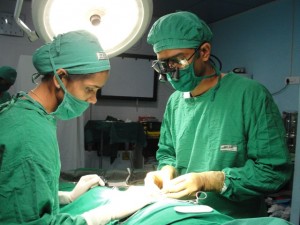
    Dr A.K.Singal during Hypospadias surgery

    To get in touch with us please write to hypospadiasfoundationindia@gmail.com or fill up this contact form: Contact Hypospadias Foundation

    Videos of Hypospadias repair surgery by Dr A.K.Singal

    Please fill all clinical details and upload pictures and clinical summaries (if available)

      Attach Documents (pdf | jpeg | mp4)
      (upload size upto 5mb)

      Hypospadias repair surgery in adults: Man from Nepal gets successful treatment at Hypospadias Foundation, Navi mumbai, India

      Hypospadias is the most common urological birth defect occurring in upto 1/150 newborn boys, which measures upto almost 100,000 (1 Lakh) new cases every year. While most of the cases are not hereditary or genetic, 6-8% of hypospadias cases have family history of hypospadias or associated genetic disorders. In the current era and in cities, most of these children are referred to pediatric urologists or surgeons in early childhood and receive timely treatment for hypospadias. This was not true 20 years back or even now in many parts of the world. Hence, there are a large number of adults living with hypospadias across the world either unrepaired or some who have failed hypospadias surgery in childhood. In India alone, there are an estimated 5 lakh adults who have either not received hypospadias surgery or have failed hypospadias surgery in their earlier years and their families or they themselves have given up.

      Every year, we receive adults from many countries in South East Asia and rest of the world who travel to India to Hypospadias Foundation to find treatment for their Hypospadias problem. Recently, a young man travelled from Nepal for hypospadias treatment. We would like to share the story.

      Reaching Hypospadias Foundation:

      Mr N.S. was born with hypospadias and was diagnosed soon after birth. Due to lack of knowledge and pediatric urology/ hypospadias specialists in Nepal, his parents could not get him treated for hypospadias in childhood. He grew up to be a smart boy and completed his graduation and got employed with an infrastructure company in Nepal. But somewhere at the back of his mind he had this nagging doubt about treatment of his hypospadias issue. He kept on searching whether he can get treatment with good results for hypospadias at the age of 23 years but no one gave him a satisfactory answer. Finally he contacted Hypospadias Foundation at Navi Mumbai, India- a team of hypospadias surgeons led by Dr A.K.Singal and Dr Manish Dubey. He sent his medical records by email and also some pictures. After an electronic opinion, he finally travelled to Navi Mumbai in September 2014.

      Examination:

      Mr N.S. was examined by Dr A.K.Singal, Pediatric urologist and expert Hypospadias surgeon in Hypospadias Clinic at Hypospadias Foundation, Navi Mumbai, India. He was found to have distal penile hypospadias with mild chordee. No previous surgery had been done. The midline raphe of the penis was misaligned to one side causing a slight bend in the penis also to one side called penile torsion. N.S. was counselled for surgery as well post-op recovery and underwent distal penile hypospadias repair surgery (urethroplasty) the next day.

      Hypospadias Repair surgery:

      Since it was a case of primary hypospadias and there was no previous surgery done, the urethral plate was still preserved well. We planned to do a single stage TIP repair (Tubularised Incised plate urethroplasty or Snodgrass repair). The new urinary tube (urethra) was made over 12 Fr silicon catheter and covered with two additional layers for secure healing and prevent fistula. First layer was with corpus spongiosum called spongioplasty and second was with dartos from foreskin on the top of penis. Finally excess foreskin on top was excised imparting a circumcised look to the penis. N.S. was discharged the day after surgery on antibiotics, analgesics (painkillers), antacids and antispasmodics. Additionally a medicine was given to decrease erections temporarily. One week later, we removed the dressing in clinic and finally the catheter was removed on day 10. N.S. had some pain initially on passing urine but within 2-3 days he was passing urine normally from the tip of penis. There was an issue with delayed healing of skin on underside of his penis which finally healed completely in 2 months. He has been passing urine normally and came to see us at 6 months follow-up after surgery this week (18th March 2015) and was extremely happy with the result of hypospadias repair surgery. He has healed well with a single stage surgery and does not require any further surgery. He is planning to start seeing girls now and get married soon. We have given him a clearance to go ahead with marriage and send him our best wishes from Hypospadias Foundation.

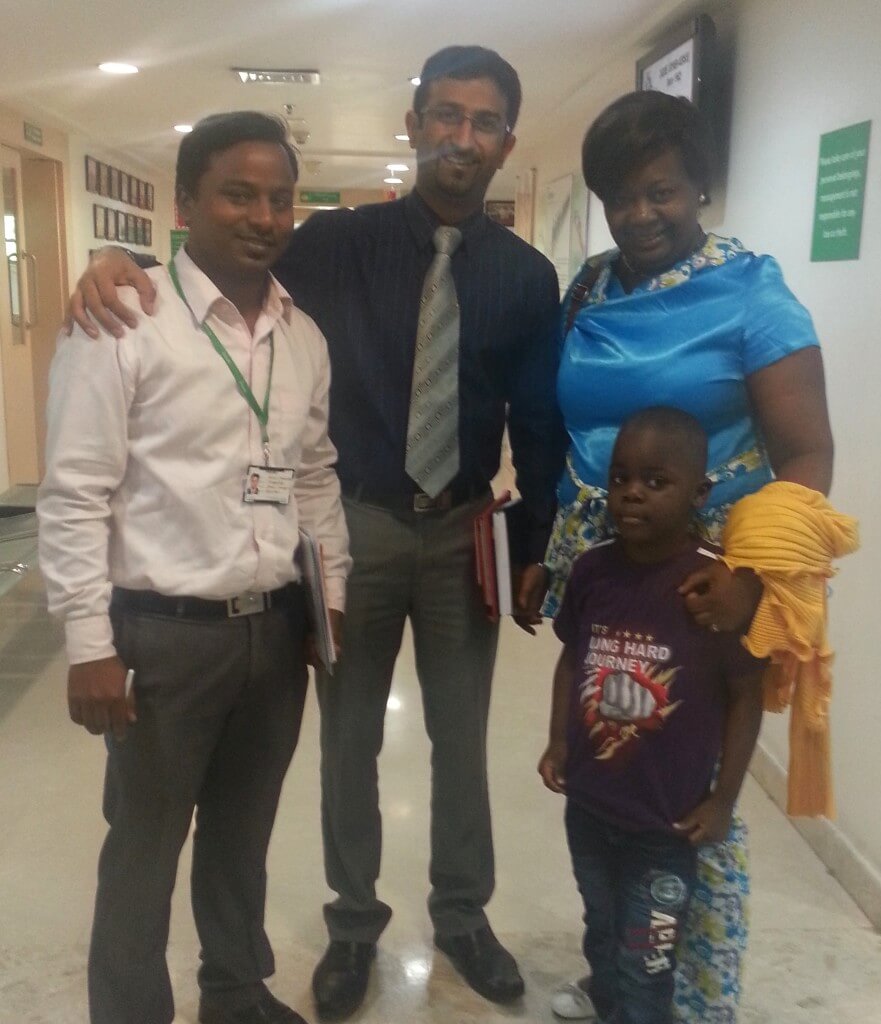
      Dr A.K.Singal with adult hypospadias patient from Nepal after a successful outcome

      Hypospadias repair surgery in adults:

      1. Longer healing time than children: Though the overall success rates of hypospadias surgery in adults remain good and comparable to hypospadias surgery in children, the healing takes longer. It may take upto 2-3 months for the penis skin to heal fully though one can start passing urine normally in 2-3 weeks.
      2. Longer time for indwelling catheter: We like to keep catheter inside for 10-14 days for distal hypospadias repair in adults and 14-21 days for severe hypospadias repair in adults. This is in to children where most of the catheters are removed in 5-10 days.
      3. Higher risk of infections: Since there is hair growth in penile area and more sweating in adults, the chances of skin infections at hypospadias surgery site is little higher in adults.
      4. Pain after surgery: As adults have night time erections during a certain phase of the sleep, there may be episodes of severe pain during healing phase in first one month. Hence we give medicines to decrease the frequency of erections for 4-6 weeks and stronger pain killers.
      5. Abstinence from sex: We advise abstinence from sex and masturbation for almost 3 months after hypospadias surgery in adults.
      6. Off from work: Since most of the adults are in a job or business, it is important to take atleast 4 weeks off from work before planning hypospadias surgery.
      7. Uroflowmetery: We recommend performing a test called uroflowmetry to check the speed of urine passage at 3 months and one year of surgery to make sure that the new passage is of good caliber.

      Conclusion

      Though there are challenges in treating adults with hypospadias, but with diligence and dedication very good results can be achieved at Centres of Excellence in Hypospadias Treatment. A good counselling, a thorough OPD consultation are a must before embarking on the surgery to ensure that the adults with hypospadias understand the treatment, results and long term outcomes. This also helps in setting the expectations right after Adult Hypospadias surgery.

      About Hypospadias Foundation

      Hypospadias foundation is the World’s first and only organisation dedicated to care of children and adults suffering from Hypospadias. Founded by Dr A.K.Singal and Dr Manish Dubey in Nov 2008, more than 700 children and adults have found hope and cure at Navi Mumbai India. Kids and adults travel from all over India and now more than 20 countries to Navi Mumbai for state of art treatment, surgery for hypospadias and best results. The unique teamwork between a pediatric and adult urologist allows adults with hypospadias to gain the best results in treatment of hypospadias. Hypospadias Foundation can be contacted at hypospadiasfoundationindia@gmail.com or +91-22-22743558/ 4229 Oor Dr Rajkumar, Coordinator for Foundation can be contacted at +91-9821261448 between 9am- 5 pm India time.

      Or you can fill up this enquiry form: Enquiry Form

      Contact Form for Hypospadias Foundation

      Please fill all clinical details and upload pictures and clinical summaries (if available)
        Attach Documents (pdf | jpeg | mp4)
        (upload size upto 5mb)

        Contact Us

        Call Now