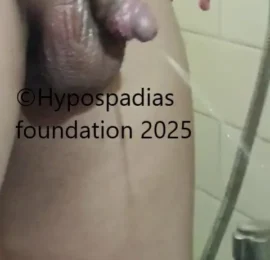
Failed Hypospadias with distal penile fistula – Single stage redo urethroplasty

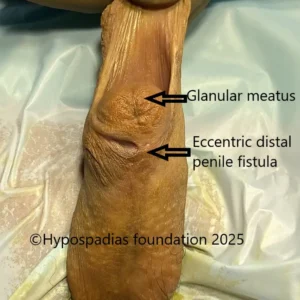
Mast B.E, 14-year male from Mumbai had undergone two unsuccessful hypospadias repairs at another hospital in the past. He presented to Hypospadias Foundation with complaints of passing urine from two sites, which is from the tip and from the distal penile region. On clinical examination, there was an eccentric subcoronal fistula with a thin glans bridge separating it from the glanular meatus. There was some residual skin on the dorsal side. The urine stream was spraying as shown in the photo below
46c1
46c2

Picture 1: On clinical examination, there was an eccentric distal penile fistula with thin glans bridge separating it from the glanular meatus
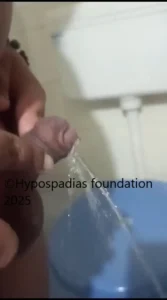
Picture 2: Urine stream was poor with spraying of urine.

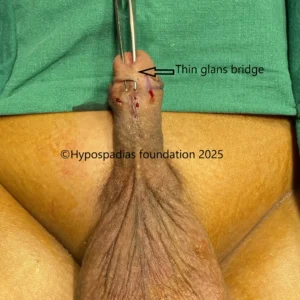
He was planned for single/ two stage repair depending on the degree of chordee, status of native urethra and quality of urethral plate. Cystoscopy was noted to be normal. Chordee assessment showed no residual chordee. The thin glans bridge between the meatus and the fistula was divided. The urethral plate was noted to be wide with no scarring. Considering all the above factors he was planned for single stage repair – simple tube urethroplasty or Glans Approximation Procedure was decided.
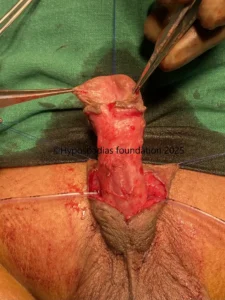
Picture 2: Artificial erection test showed no residual chordee. Urethral plate was noted to be wide and healthy.

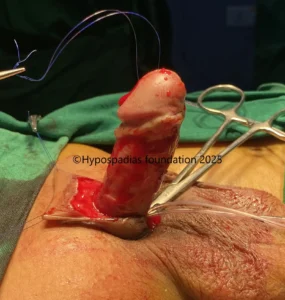
Stay suture was taken on the glans with 4-0 prolene. Complete degloving was done. Artificial erection test showed no residual chordee. Glans wings were marked and raised. Urethroplasty was done by continuous inverting subcuticular sutures with 6-0 PDS over 8Fr infant feeding tube. Second layer closed over the urethroplasty with local tissues with 6-0 PDS interrupted sutures. Right dartos flap was raised and sutured over the urethroplasty with 6-0 PDS. Glansplasty was done with 5-0 vicryl. Unhealthy skin was excised; edges were freshened and closed in 2 layers with 6 0 PDS and 6-0 vicryl rapide.
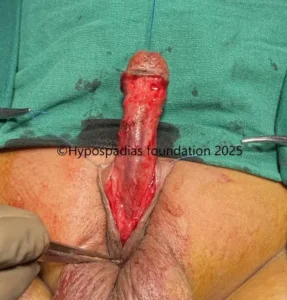
Picture 3: Complete degloving done and chordee assessed by artificial erection test. No chordee noted.
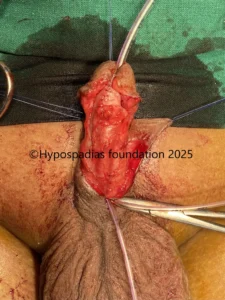
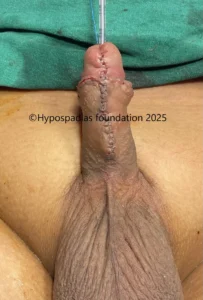
Picture 4: Urethroplasty done with 6-0 PDS, followed by glansplasty and skin closure
46c9
46c10

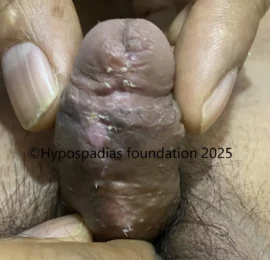
Picture 5: Appearance and urine stream at 2 weeks after catheter removal
46c11 (1) (1)

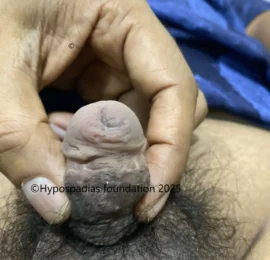
Picture 6: Follow up at 6 months after surgery

Click here to watch the entire video of this surgery
Redo urethroplasty for a distal urethral fistula – Hypospadias Foundation, India

Redo urethroplasty for failed hypospadias

Redo urethroplasty for failed hypospadias is a highly complex and challenging surgical procedure. The primary goal is to address the complications of the initial surgery which are often associated with tissue scarring, shortage of tissues and presence of residual chordee. The general goals for any redo urethroplasty are to straighten the penis (correct any residual chordee), to reconstruct the urethra (create
a new wide and patent urinary passage) and place the urinary opening at the tip of the penis (glanular meatus).

Redo hypospadias repair should be performed by a experienced pediatric urologist or hypospadias surgeon who has expertise in complex hypospadias repairs. Surgeon should wait atleast 6 months after the initial repair to allow the inflammation to subside and for the scar tissue to soften. Sometimes if there is significant scarring, we wait for even 1-2 years and use steroid creams to soften the scar area.

About Hypospadias Foundation

Hypospadias Foundation is a centre specialized for treatment of children with hypospadias. It is located at MITR hospital, Kharghar, Navi Mumbai in the state of Maharashtra, India. Our expertise in primary and redo hypospadias repair makes us one of the best centres for hypospadias treatment in the world. We get children from more than 30 countries in the world with various types of complications after hypospadias surgery done at other centres and we are able to repair them successfully with good cosmetic outcomes. This is possible because of our dedication in the field of hypospadias.

Dr A K Singal is an expert and top hypospadias surgeon in India. He is a gifted surgeon and his expertise in this area has helped us achieve excellent outcomes in primary and failed hypospadias in children as well as adults.

Dr Ashwitha Shenoy is an expert hypospadias surgeon with special interest in hypospadias and pediatric urology. Both Dr Singal and Dr Shenoy work together to give best results for hypospadias surgery in India for both children and adults.
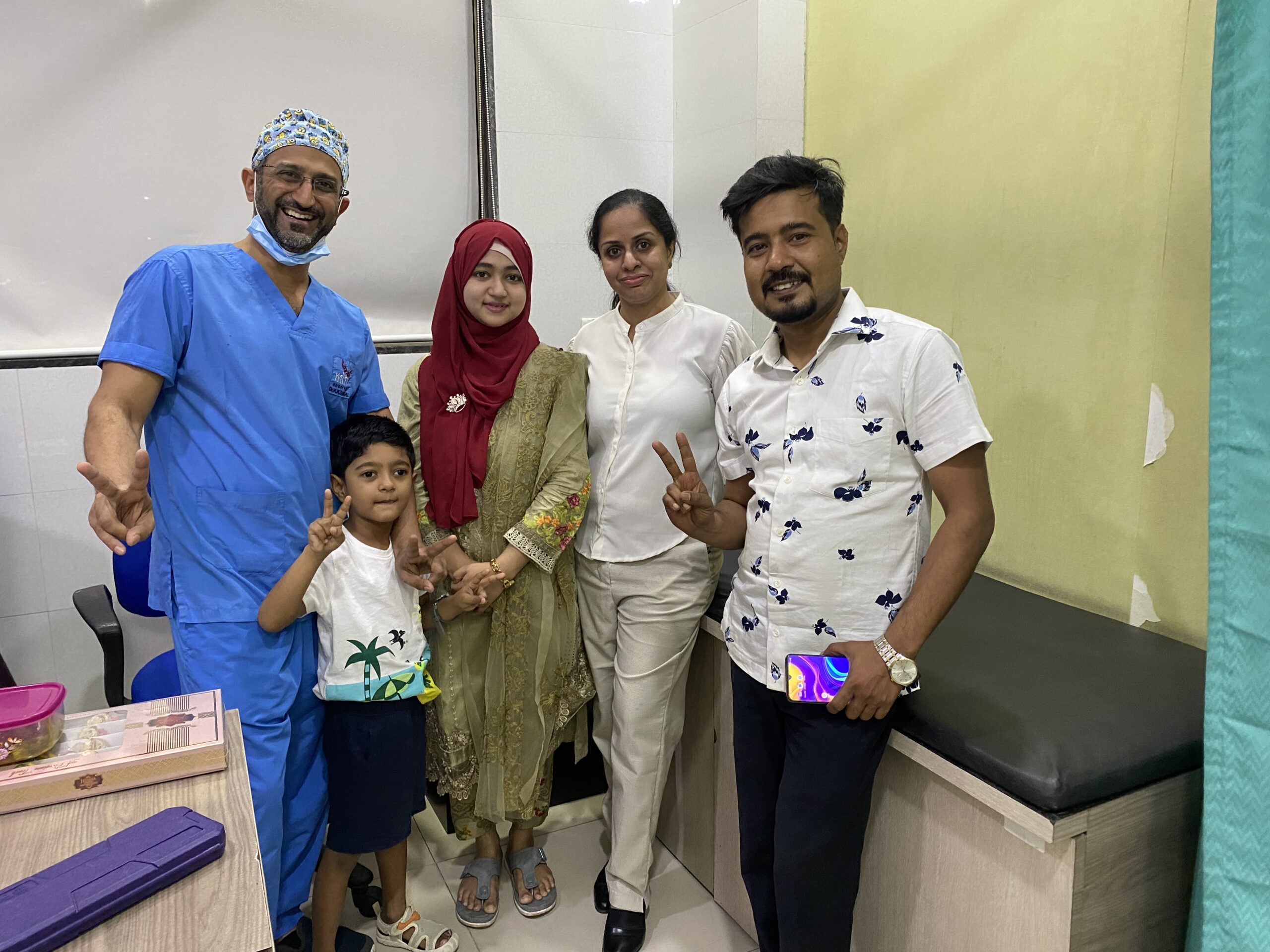
Single stage hypospadias repair in a child with recurrent distal penile fistula

A urethral fistula after hypospadias repair is an abnormal communication that forms between the newly reconstructed urethra and the skin on the underside of the penis. This is the most common complication that occurs after hypospadias surgery. In this condition, the urine comes from the tip of the penis and leaks from the fistula site.

This fistula mostly occurs due to issues with healing of the urethra. The common reasons include tension on the newly reconstructed urethra, poor blood supply at the operated site, gaps during closure, infection at the operated site, narrowing or stricture formation in the new urethra or straining while passing stool in the post operative period.

Children who form fistula after hypospadias surgery come with leaking or dribbling of urine from the fistula site. Symptoms usually appear within a few weeks to months after the initial hypospadias repair.

The primary treatment is surgical repair if they do not close on their own. It is standard practice to wait for atleast 6 months after the initial hypospadias repair before attempting fistula closure. This allows the tissues at the urethral fistula site to soften, improve blood supply and increase the success rate of second surgery. The fistula tract is identified and excised to create healthy tissue edges for repair.

The urethral fistula site is closed in multiple layers as done in the above-mentioned case to ensure a watertight seal and prevent recurrence. Before closing the fistula, it is always necessary to confirm that the urethra beyond the fistula site is not narrow or tight. In the presence of distal obstruction, the urethral fistula closure surgery may fail.

If your child has developed urethral fistula after hypospadias repair, then it’s necessary that you see a hypospadias specialist who will assess what is best for your child and choose the best technique minimizing the risk of complications and improving the chances of success.

About Hypospadias Foundation

Hypospadias Foundation is a centre specialized for treatment of children with hypospadias. Hypospadias foundation is located at MITR Hospital in Kharghar, Navi Mumbai in the state of Maharashtra. Our expertise in hypospadias makes us one of the best centres for hypospadias repair in the world. We treat children from more than 25 countries in the world and from all over India. Our dedication in this field has helped us achieve excellent outcomes.

Dr A K Singal is an expert and top hypospadias surgeon in India. He is a gifted surgeon and his expertise in this area has helped us achieve excellent outcomes in primary and failed hypospadias in children as well as adults.

Dr Ashwitha Shenoy is an expert hypospadias surgeon with special interest in hypospadias and pediatric urology. Both Dr Singal and Dr Shenoy work together to give best results for hypospadias surgery in India for both children and adults.

Why does hypospadias occur?

Why does hypospadias occur?

Hypospadias is a congenital abnormality of the penis with an incidence of 1 in 150 live births. In hypospadias, the urinary opening (peehole) is in an abnormal position on the underside of the penis. As a parent of a child with hypospadias, you may wonder what causes hypospadias. Infact this is the most common question which parents ask us in the clinic- Why did my child develop hypospadias?

Why does hypospadias occur

The exact cause for hypospadias is not known but there are various factors which can increase the risk of hypospadias in your baby. This blog is to help you understand the probable factors which may lead to hypospadias in your baby boy.

  1. Genetic factors:

Family history: While 90-95% of hypospadias are isolated cases, 5-10% of them do run in families. If the father or anyone in first degree family has hypospadias, then the risk of having hypospadias in subsequent male children increases.

  1. Environmental factors:

Maternal exposure to pesticides or herbicides in pregnancy may cause hypospadias.

These pesticides are known to be endocrine disruptors, they interfere with the androgen and oestrogen signalling pathways during genital development, hence causing hypospadias. This is a hypothesis and studies are still under process to clearly link exposure of pesticides to occurrence of hypospadias.

There have been studies showing higher risk of hypospadias due to plasticisers in the single use plastic bottles. The chemicals here act as male hormone blockers and interrupt development of penis, hence causing hypospadias.

  1. Hormonal exposure in pregnancy:

During pregnancy, certain hormones may be advised for the mother to decrease the chance of preterm labour or miscarriage. This is common after invitro fertilization (IVF) conception, twin pregnancy and in precious pregnancies. Carmichael reported that the use of progesterone to prevent early pregnancy loss was associated with risk of developing moderate to severe hypospadias.

  1. Maternal factors:

Maternal pre pregnancy obesity with a BMI>30 has been associated with 1.3-to-2-fold increased risk of hypospadias compared to other women who had normal weight in the pre pregnancy period.

Maternal nutrition is very important for the development of fetus. Folic acid supplementation in the pre conceptional period is necessary to prevent various congenital anomalies. Study conducted by Mavrogenis et al showed that folic acid supplementation early in pregnancy was associated with low risk of hypospadias.

Hypertension in pregnancy and usage of anti-hypertensive medicines are associated with development of hypospadias in the fetus. Untreated hypertension has an odds ratio of is 2.1 and anti-hypertensive usage in pregnancy has an odds ratio of 1.6 for development of hypospadias. The cause for this is most likely because of reduced placental perfusion in hypertension.

It has been hypothesized that the maternal use of estrogen and progestin may cause hypospadias because of interference with fetal androgen production or action. Several other medications have been associated with moderate to severe hypospadias. These include ibuprofen (odds ratio 1.2), Venlafexine(odd ratio 2.4), proton pump inhibitors(odds ratio 4.4) and clomiphene citrate(ovulation induction agent with odds ratio 1.9)

  1. Birth factors:

Infants with hypospadias are most likely to be born preterm, low birth weight or small for gestational age. These are more strongly associated with severe hypospadias than the milder forms of hypospadias. Placental dysfunction may fail to stimulate fetal androgen production which is necessary for urethral closure. It also causes reduced transfer of nutrients to the fetus causing growth restriction. Placental dysfunction and androgen deficiency in early pregnancy are known to cause intrauterine growth restriction and hypospadias.

The most important message here is that it is not the fault of the mother or father which can cause hypospadias in their child. The above-mentioned factors may increase the risk of hypospadias but that is not always true. A pregnant woman should take care of her health and avoid exposure to chemicals as much as possible. She should maintain a healthy diet, get good sleep, and avoid stress. Even if your child has hypospadias inspite of all the extra care, do not worry. Hypospadias is a condition that can be easily corrected by surgery by an expert pediatric urologist or a surgeon who specializes in hypospadias repairs.


At hypospadias foundation India, we have been blessed to treated families having twins or two brothers with hypospadias. We also have cases where father had hypospadias and then their child had hypospadias. Some of these parents themselves did not achieve good results in their day and age but now with latest techniques which we use at Hypospadias Foundation, the results which their children get after hypospadias repair surgery are very good.

In current era, success rate of hypospadias in first surgery itself is more than 95%. At hypospadias foundation, we treat hundreds of children and adults with hypospadias every year, both the ones which are primary or the ones where the previous repair has failed. If your child has hypospadias, do visit us, or consult us online to get the best hypospadias treatment for your child. Every child deserves the best and we are here to support you to give the best care to your child.


Fill up contact form: https://www.hypospadiasfoundation.com/contact/

Contact Form for Hypospadias Foundation

Please fill all clinical details and upload pictures and clinical summaries (if available)

    Attach Documents (pdf | jpeg | mp4)
    (upload size upto 5mb)

    Guide to choose the best hypospadias surgeon for your child

    Hypospadias is a common congenital anomaly diagnosed at birth. Most of the children will need repair surgery for hypospadias and this surgery should be done by 18 months of age in a child who is born full term and is otherwise healthy. The hypospadias surgery, when done, should be carried out by an expert hypospadias surgeon. The hypospadias surgeon should be trained in hypospadias surgeries and have extensive experience and dedication to hypospadias-related work. 

    As a parent of a child with hypospadias, you may be confused about how to choose the best hypospadias surgeon. Any pediatric urologist or pediatric surgeon can operate on a child with hypospadias, but every surgeon may not get the desired and best post-surgery results. Here are a few tips that will help you shortlist the best hypospadias surgeon for your child.

    1. Ask your pediatrician: Pediatricians and pediatric urologists or surgeons often know each other well and work closely. Pediatricians are the first doctors to diagnose hypospadias and they can guide you to an experienced hypospadias surgeon who does lot of such surgeries and has good results for hypospadias surgery. Pediatricians often also get to see the children post-surgery and hence know the outcomes for each surgeon. Ask your pediatrician to guide you to seek the best hypospadias surgeon for your child. 
    2. Connect with parents of children with hypospadias: A parent of a child with hypospadias goes through a great deal of experience when it comes to hypospadias surgery. From pre-surgery OPD visits to post-surgery care, they become experts on how to manage their child in the hospital and after surgery. New parents can discuss with other parents whose child has already completed hypospadias repair and get an honest opinion regarding the hypospadias surgeon, experience in the hospital, and their overall experience. This will help other parents gain confidence and decide what’s best for their child.
    3. Search online for the best centres of expertise for Hypospadias Surgery: Most of the good centres for hypospadias treatment have a comprehensive website and a knowledge centre. Key things to look online are- qualification of the hypospadias doctor, years of experience, kind of cases they have managed, their success stories, their online reviews, the surgery videos, their publications and whether they are so good that they are training other surgeons. In the best hypospadias centres, their website will have enough information on all these points.
    4. Visit your hypospadias surgeon in the OPD: Make sure you visit your hypospadias surgeon or connect with them online for a hypospadias consultation at least once before you plan the surgery. In the Outpatient department (OPD) of a hypospadias surgeon you will find many other children with hypospadias which indicates hypospadias surgery is performed regularly at that hospital. Ask your hypospadias surgeon about the cases done so far, the success rate and similar cases done in the past which will help you gain confidence in the surgeon and take a decision if he/she is the right surgeon for your child.
    5. Success rate of hypospadias repair surgery: Every surgery has its own set of complications but when it comes to hypospadias the complication rates vary widely at various centers. The best hypospadias surgeon should have a success rate of more than 90% with a complication rate of under 10%.  When you visit your hypospadias surgeon do ask them about the success rate of surgery at their center. 
    6. Expertise in managing complex hypospadias: Complex hypospadias such as perineal, scrotal hypospadias and redo hypospadias (hypospadias after multiple previous failed attempts) need to be managed very differently. If your child has such a hypospadias, make sure that you ask your hypospadias surgeon about their experience in managing such cases and the technique which is going to be done in your child so that you are prepared for the post-surgery period. An experienced hypospadias surgeon will be well versed in managing complex cases as well as primary ones. 

    The first surgery is the best chance for a complete cure from hypospadias. Once the first surgery fails, subsequent surgeries become difficult. Hence, it is important that you do full research and choose wisely. Choosing the right hypospadias surgeon is not an easy decision for any parent. Every parent wants the best surgeon for their child. 

    At hypospadias foundation, we treat more than 200 children and adults every year with hypospadias. Our dedication and expertise in hypospadias makes us one of the leading centers for hypospadias repair in the world. Do not hesitate to write to us or visit us for more information on our expert hypospadias surgeons. We will be happy to offer a second opinion or help you with understanding hypospadias treatment for your child or yourself (adult hypospadias)


    Fill up contact form: https://www.hypospadiasfoundation.com/contact/

    Contact Form for Hypospadias Foundation

    Please fill all clinical details and upload pictures and clinical summaries (if available)

      Attach Documents (pdf | jpeg | mp4)
      (upload size upto 5mb)

      Twins from Greece undergo successful surgery for severe hypospadias in Mumbai, India

      Across the borders for Hypospadias

      Hypospadias is one of the most common congenital anomalies affecting more than 4,00,000 newborn babies every year across the globe. The problem is not restricted to any particular country or race. Every year, our team at Hypospadias Foundation lead by Dr A.K. Singal manages kids with hypospadias from across India and also from other countries such as Nigeria, Kenya, Iraq, Bangladesh, USA and recently Greece.

      Well, the kids from Greece were a whole different story. Though originally from Greece, their father Ioannis Padadatos was employed with a company in Delhi. Master Konstantinos and Spyridon Papadatos, twin babies were born in Delhi to Maria and Ioannis were noted to have hypospadias at birth. The hypospadias was relatively severe in both the children and had associated chordee. The urethral opening was near the scrotum (testis) called Penoscrotal hypospadias. Parents were very hassled as they had never heard of the condition before and now both their newborn babies had severe variety of hyposapdias. Dissatisfied with the information given by pediatricians, pediatric surgeons and urologists in Delhi, they took up to internet for more information. They contacted Dr A.K.Singal, Pediatric Urologist & renowned Hypospadias surgeon who regularly writes articles at www.hypospadiasfoundation.com . Though they had visited the multiple doctors in delhi, what reassured them was the blogs written by dr A.K.Singal about his experience with children who had hypospadias.

      After exchange of a few emails, Maria and Ioannis travelled all the way to Mumbai when the babies were 6 months old, in Nov 2013 to consult Dr A.K.Singal at Fortis Hospital in Vashi. Since the right age of surgery for hypospadias is 6 – 15 months, the parents elected to get the surgery done as soon as possible. After the blood tests, the parents again came to Mumbai in December to get the surgery done for both the kids. Master Spyridon underwent surgery on a Monday while Konstantinos underwent surgery on Tuesday. Though both had severe hypospadias and the parents were counseled that a two staged correction may be needed, the whole hypospadias surgical correction was performed in one stage using an Onlay Island Flap urethroplasty of which Dr Singal is an expert. The correction of penile curvature (chordee correction) and formation of new urinary tube (urethroplasty) were all performed in one stage.

      After one more day post-surgery in Mumbai, the family travelled back to Delhi and kept in regular touch with Dr Singal via email. Dr Singal visited them one week later in Fortis Hospital in Delhi while attending a conference. Finally the catheter (urinary pipe) was removed after ten days of surgery and babies passed urine in good thick stream signifying a successful outcome in one stage. Now almost nine months after hypospadias surgery, both the babies are doing extremely well.

      The family has now shifted to Doha, Qatar but they have taken a lot of India with them and most of all fond memories. We at Hypospadias Foundation are very happy to see the kids grow well and pass urine from a normal opening.

      Dr Singal adds “With the advances in instruments and sutures plus better surgical techniques, we are able to do single stage correction for even severe hypospadias in most cases. Rarely we need second surgery and that too if there are complications in the first hypospadias surgery. I am happy that Maria and Ioannis trusted us for management of their children for hypospadias. They came with full faith and trust and that made my job so much easier. I will always remember their family and their beautiful kids. It was indeed a joy meeting them and knowing them. Sometimes I wonder as a hypospadias surgeon what kind of leap of faith the parents must take to travel in an unknown country to an unknown doctor and trust him/ her with the lives of their little ones. I truly appreciate their courage and faith.”

      Contact Form for Hypospadias Foundation

      Please fill all clinical details and upload pictures and clinical summaries (if available)

        Attach Documents (pdf | jpeg | mp4)
        (upload size upto 5mb)

        Contact Us

        Call Now