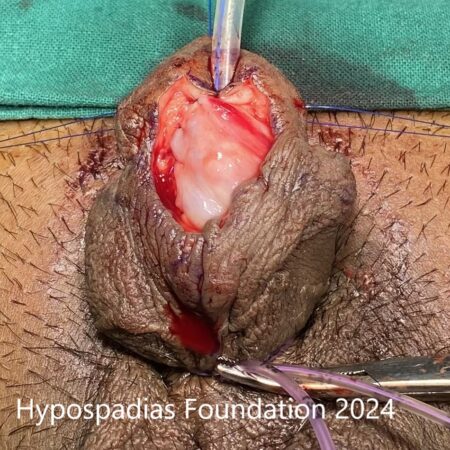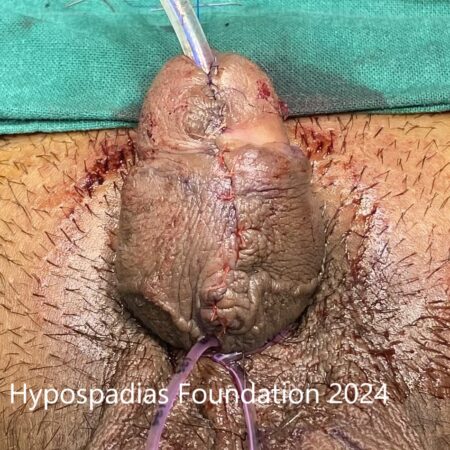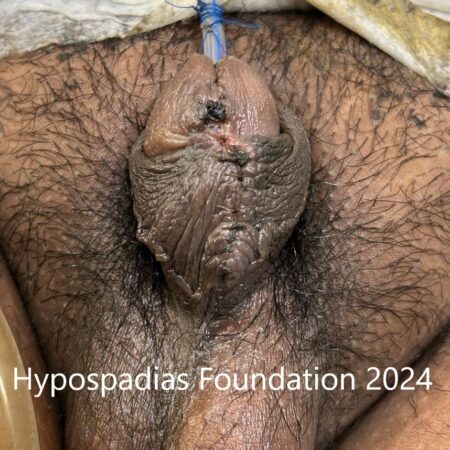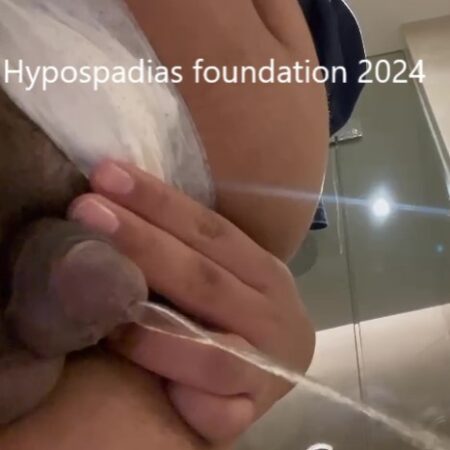
Enhancing success rates in adult primary hypospadias surgery

In the last few years, we have been treating a lot of adults coming with unrepaired primary hypospadias wanting to get hypospadias repair surgery done. Adult Hypospadias repair surgery is a very different ballgame from child hypospadias surgery. Traditionally clinical outcomes for adult hypospadias surgery have not been as good with pediatric hypospadias surgeries as:

1. Chances of infection are high
2. Due to erections at night, chances of dehiscence are high

After having done hundreds of adult hypospadias surgeries, we can clearly see differences in adult hypospadias and children with hypospadias. Whether it is the size of penis, overall anatomy of tissues, pre-surgery preparation, intra-operative instruments and stitches or post-op care- everything is very different. Over the years, we have understood various steps which should be done to decrease risk of hypospadias surgery complications in adults. This has led to improved results in adult hypospadias surgeries.
Our Stepwise Adult Hypospadias Surgery and Care protocol:

1.Pre- surgery counselling: We make sure that expectations are set right. While hypospadias surgery can correct the curvature, cosmetic appearance and urine flow issues, hypospadias surgery cannot increase the size of penis or improve fertility. In our hypospadias clinic, after we have examined the adult hypospadias patients, we discuss what they want and the propose the outlined treatment plan.

2. Pre-surgery tests: Before hypospadias surgery is planned, we like to do blood tests for ruling our diabetes, check out any risks for anesthesia or any infection. We also like to do a urine routine test to check for any infection. Chest Xray and ECG test are done to make sure that the person is fit for anesthesia. We also take a consult from a physician to make sure that the
person is fit to undergo anesthesia for hypospadias surgery.

3. Pre-surgery preparation: We start a betadine scrub bath for cleaning pubic area twice daily 2 days before surgery. Pubic hairs are not shaved as shaving 1-2 days before surgery can lead to higher risk of infections. Typically, we trim the hair in the OT with a hair trimmer.

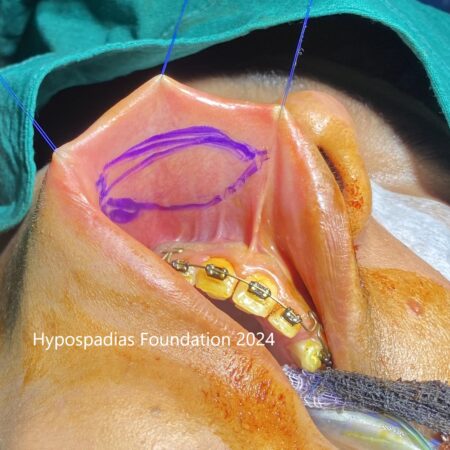
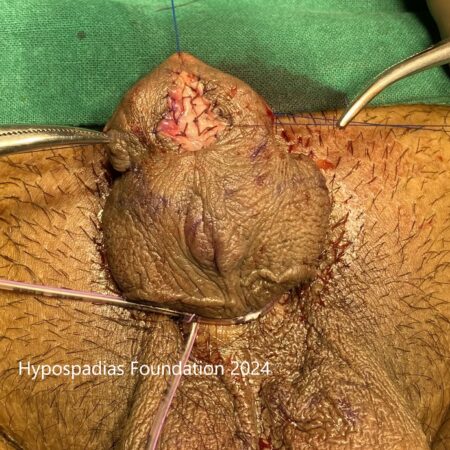
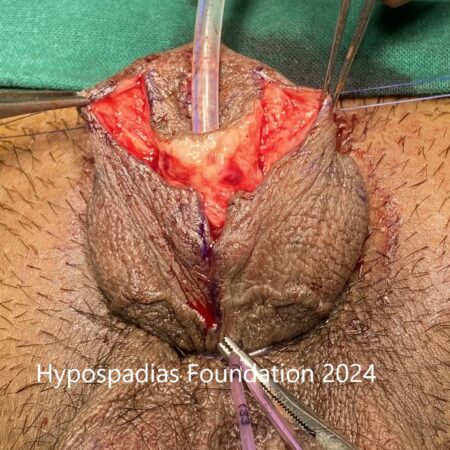
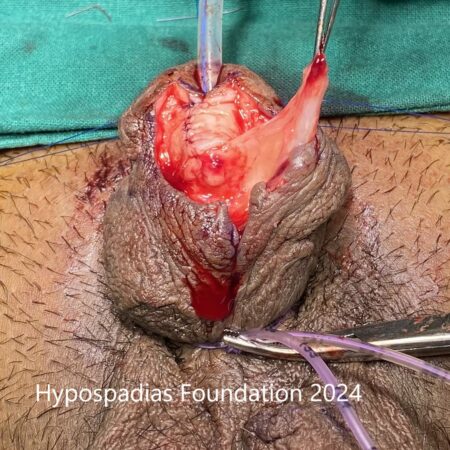
4. Surgery: General anesthesia with epidural block is given. All aseptic precautions are taken to prevent infection. Special microsurgery adult hypospadias instruments are used. Sutures used are also absorbable ones. Care is taken to handle tissues, nerves and blood vessels very gently. Dressing is done to support the penis and catheters are secured properly. Once the patient is out of anesthesia, we shift out to recovery room and thenward.

5. Post-Surgery care: We give IV antibiotics for 2 days and also open the dressing on day 5 to check for any infection. For some cases, we also advise hyperbaric oxygen therapy for 5-7 days. Catheter in adult urethroplasty is kept for a longer period as healing is slow. We typically keep two catheters – a suprapubic catheter and a urethral catheter. Both are kept for 3 weeks.

6. Follow-up: After urethral catheter removal, we typically clamp the suprapubic catheter and once the patient is passing urine from urethral well, we remove the suprapubic catheter after 2 days.

By following this protocol, our results in adult primary hypospadias surgeries have become the best in India and amongst the top centres in the world. Our success rates in Adult Hypospadias Surgery are over 95% in primary one or two stage repair with very less number of people needing further surgeries. At Hypospadias Foundation, a dedicated team of surgeons takes care of adult hypospadias. Dr A.K.Singal is a reputed and top hypospadias surgeon who has been doing hypospadias repair surgeries since 2006 and is rated amongst the best in the world for clinical results. Dr Ashwith Shenoy is a hypospadias surgeon who has deep experience in managing hypospadias. Both of them work closely giving best outcomes to adults with hypospadias. Given their team work and dedication to success rates in hypospadias, it is no surprise that people come from all over India and more than 20 countries to seek hypospadias treatment under their care.

Contact Form for Hypospadias Foundation

Please fill all clinical details and upload pictures and clinical summaries (if available)
    Attach Documents (pdf | jpeg | mp4)
    (upload size upto 5mb)

    Safe and Effective Anesthesia for Hypospadias Repair Surgery in Children

    Hypospadias surgery is a procedure to correct the opening of the urethra on the underside of the penis. It is one of the most common pediatric urological surgeries. Ensuring your child’s safety and comfort throughout the surgery is paramount. Anesthesia plays a crucial role in achieving this goal.

    Types of Anesthesia for Hypospadias Surgery:

     General Anesthesia: The most common approach, general anesthesia renders your child unconscious and pain-free. Medications are typically
    administered intravenously (through an IV) or via inhalation through a breathing mask. The anaesthesia is usually short and there is no significant
    effect on the child.

     Regional Anesthesia: Regional anaesthesia is one which works only in the specific area of the body. The regional anaesthesia used in hypospadias
    repair is a caudal block, an injection near the tailbone for targeted pain control. This caudal block gives good pain relief for six to eight hours and
    sometimes even up to ten hours after hypospadias surgery. Older children may feel tingly and numb in the lower limbs and may find it difficult to walk till it wears off, usually within first 12 hours

     Combined Anesthesia: Combining general and regional anesthesia offers the benefits of both: comprehensive pain management during surgery and a smoother recovery from general anesthesia.

    The anaesthesia medicines chosen in children is such that there are minimal side effects and, we can resume oral intake as early as 1-2 hours after the hypospadias correction surgery.

    Pediatric Anesthesiologists:

    Anesthesia for hypospadias surgery is administered by a trained pediatric anesthesiologist, a medical doctor specializing in anaesthesia for infants and children and takes good care before, during, and after hypospadias repair surgery. They will meticulously assess your child’s health before hypospadias surgery, discuss anesthesia options, and choose the safest and most suitable approach for your child’s individual needs.

    Communicate and Ask Questions:

    Open communication with your child’s hypospadias surgeon & urologist and anesthesiologist is vital. Don’t hesitate to ask questions regarding the anesthesia plan and any concerns you may have. Feeling informed and involved in your child’s care can significantly ease anxieties.

    At Hypospadias foundation, we have trained pediatric anesthesiologists who have managed more than thousands hypospadias correction repairs. From airway management, right medications to post operative pain relief we believe in a complete care of the child from pre surgery to post surgery. Safe and effective anaesthesia is necessary for good post operative recovery after hypospadias surgery.

    Effective Pain Relief After Hypospadias Surgery

    Pain relief is very important especially in a child because a cranky child makes the parents and the hypospadias surgeon anxious. After any procedure, it’s natural for your child to experience some discomfort but the discomfort should be manageable. Here’s a guide to effective pain relief after hypospadias surgery:

    Doctor-Prescribed Medications:

     Pain relievers: After surgery we prescribe pain medications, often starting with acetaminophen(paracetamol) or ibuprofen. The medicines must be given as advised because good pain relief means a comfortable child and in turn leads to good healing after hypospadias repair.

     Antibiotics: To prevent infection, antibiotics are prescribed after hypospadias surgery. They must be continued till the catheter removal and
    sometimes for a few days even after the hypospadias catheter is removed. Infection can destroy the entire hypospadias repair hence we need to be
    vigilant and avoid infection at all costs.

     Bladder antispasmodics: The presence of a urinary tube can cause urinary bladder contractions. The only way to manage this is by prescribing anti spasmodic medicines. Hence after hypospadias surgery till the catheter removal, the child will be on anti-spasmodic medicines.

     Pain due to erection: Painful erections after hypospadias surgery occur in every child and are even more prominent in teenagers and adults. This pain can be quite bad due to swelling of penis and the presence of a urinary tube. Hence we prescribe a stronger painkiller diclofenac in the form of
    suppository during these episodes of severe pain. This medicine gives good pain relief in times of extreme pain. For adults we also add more medicine to decrease painful erections at night.

    At-Home Pain Management Strategies:

     Positioning: Encourage your child to rest comfortably, positioning themselves to minimize tension on the surgical area. This can be lateral or
    supine position with pillow support.

     Distraction: Engaging your child in their favourite activities or games can help take their mind off any discomfort after hypospadias surgery

     Loose Clothing: Tight clothing can apply pressure on the operated site and cause discomfort to the child. Opt for loose-fitting clothing made from
    breathable fabrics to avoid irritation.

     Dietary Adjustments: Prefer healthy nutritious food over processed food. Processed food does not have fibre and cause constipation in a child which in turn can cause bleeding at the operated site during straining. Maintaining hydration is also essential to prevent constipation.

     Hygiene: Maintain proper hygiene around the hypospadias surgical site as instructed by your doctor. Change inner diaper frequently when dirty and be vigilant for soling of dressing. If dressing gets dirty at any point, do visit the hospital and get a hypospadias dressing change.

     Activity Restrictions: Follow the doctor’s recommendations regarding activity levels to promote healing and prevent complications. Any vigorous
    activities are generally avoided typically for 4-6 weeks after hypospadias surgery. Children can play at home and other board games comfortably.

    Remember:

     Consult your Hypospadias Doctor: If pain seems excessive or worsens, consult your child’s doctor for further evaluation and possible medication
    adjustments.

     Be Patient: Healing takes time after a hypospadias surgery. Be patient with your child and offer support throughout the recovery process.

    At Hypospadias Foundation India, we have treated thousands of children and adults with hypospadias. Our approach to hypospadias repair includes
    comprehensive care from preoperative to post operative period. Remember, every child heals at their own pace. By being prepared, informed, and supportive, you can help your child through this journey and ensure a successful recovery. Dr A.K.Singal and Dr Ashwitha Shenoy are rated as the best hypospadias surgeons in India. Their experience in the field of hypospadias makes them the best surgeons for hypospadias repair for both children and adults. If you need an opinion or consult us for your child, please do write to us at hypospadiasfoundationindia@gmail.com or fill up this contact form or visit us at the hospital.

    Contact Form for Hypospadias Foundation

    Please fill all clinical details and upload pictures and clinical summaries (if available)
      Attach Documents (pdf | jpeg | mp4)
      (upload size upto 5mb)

      Can chordee recur or come back after chordee correction or hypospadias repair surgery?

      Chordee is a condition where the penis is curved downward. Most of the times it is associated with hypospadias but can occur without hypospadias. Chordee correction is very crucial step during hypospadias repair. Without chordee correction, urethroplasty should not be attempted because there will be a stress of the urethral passage and there is high risk of complications after surgery.

      Chordee surgery is usually successful in correcting the curvature of the penis completely. However, there is a small chance that chordee can come back after surgery. This is called recurrent chordee.

      Risk factors for recurrent chordee:

      • Incomplete correction of chordee: When the chordee is severe, it must be corrected completely during chordee correction surgery. If there is any residual chordee after chordee correction surgery, it will only worsen in the future.
      • Fibrosis during healing: After chordee correction, fibrosis can occur on the underside of the penis during healing process. Sometimes the fibrosis can improve with steroid massage but if it persists then recurrent chordee correction may be required. This fibrosis can be at the level of skin, tissue under skin or even urethra.
      • Due to flaps: Recently we have seen some cases where tunica vaginalis flaps were used for second layer cover during hypospadias surgery at other centres. Somehow the flaps didn’t heal well and they caused chordee to come back. Similar outcomes we have seen when a very tight urethra was made from prepucial flaps or koyanagi repair in first surgery.

      Symptoms of recurrent chordee:

      The common symptoms which children present with are downward bending of the penis, urine which goes backward and may have occasional pain during erections.

      Adults with recurrent chordee may have pain during erection, inability to perform sexual intercourse, painful sexual intercourse and infertility

      Treatment for recurrent chordee:

      If you think you may have recurrent chordee or your child has recurrent chordee, it is important that you see a doctor right away. You need to visit a hypospadias surgeon or a pediatric urologist who has expertise in the field of hypospadias and chordee correction.

      Chordee correction can be done by various methods. First and foremost, the cause for recurrent chordee has to be identified and then appropriate method is used to correct chordee. Chordee correction method differs for children and adults.

      1. If a child presents with residual chordee due to incomplete chordee correction in the past, then the following methods of chordee correction are used: Complete degloving is done and chordee is assessed, if chordee persists even after degloving then the following methods are adopted.  If the chordee is due to short urethra due to flaps or tunica vaginalis flaps, we divide them at this stage.
      Recurrent chordee treatment in India
      Recurrent chordee treatment in Navi Mumbai

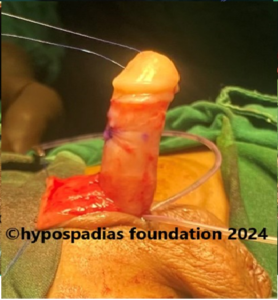
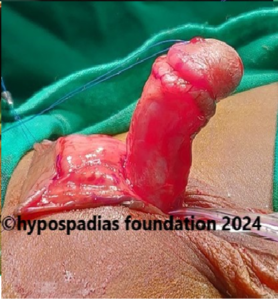
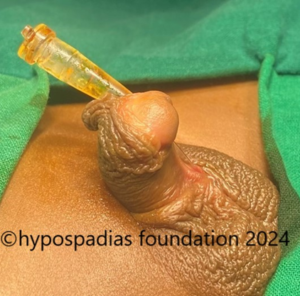
      Pre degloving and post degloving chordee assessment

      (a) Dorsal tunica Albugenia Plication (TAP): If the chordee is less than 30 degree then it can be easily corrected by placing a non-absorbable suture at the site of maximum curvature on the dorsal side(upper side) of the penis. This will correct the chordee completely.

      Recurrent chordee treatment in Kharghar
      Recurrent chordee treatment

      Post Degloving showed less than 30-degree chordee. 12’o clock dorsal tunica albuginea plication done. Chordee completely corrected by this plication.

      Recurrent chordee treatment in India

      No chordee noted after 12’o clock dorsal tunica albuginea plication

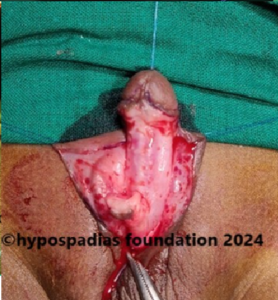
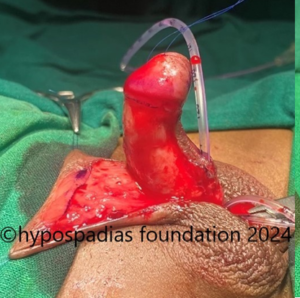
      (b) Urethral plate division and Proximal urethral mobilization: If the chordee is more than 30 degrees then one of the reasons for persistent chordee is short urethra, in these cases we will have to divide the urethral plate ventrally and mobilize the proximal urethra. This will effectively correct chordee if it is due to congenital short urethra.

      chordee Repair in India
      Hypospadias repair surgery

      Urethral plate division and proximal urethral mobilization

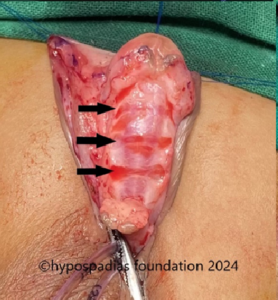
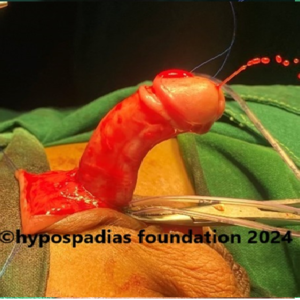
      (c)If chordee persists inspite of urethral plate division then urethral mobilization, ventral corporotomies are done. This will correct the chordee if the cause for chordee is due to disproportionate corporal bodies.

      Chordee repair in Navi Mumbai

      Three ventral corporotomies

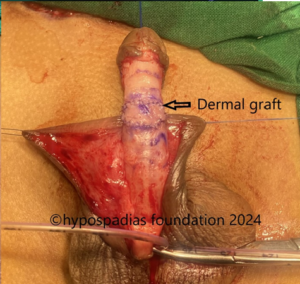
      (d) If none of the above measures can correct chordee then we perform a ventral lengthening procedure called as the dermal graft. Deep incision is given in the tunica on the ventral side at the site of maximum curvature and dermal graft is placed at the site. This method is adopted in cases of severe chordee.

      Hypospadias repair surgery

      Dermal graft

      The chordee is corrected completely after the above steps of chordee correction.

      2. If the child presents with severe chordee inspite of complete chordee correction in the past, then it is most likely due to ventral fibrosis. In these cases, along with some or all the above methods, removal of fibrotic tissues from the underside of the penis is important to correct the chordee.

      Adults with recurrent chordee after previous surgery

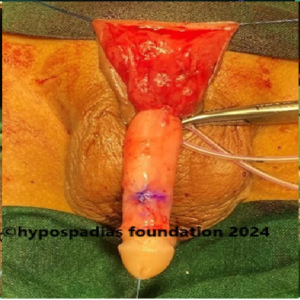
      In most of the adults at first we assess the fibrosis and degloving is done. If the chordee is still there, then we divide the urethral plate and mobilise it. Post this, if the chordee still persists, we can correct chordee completely by a method called as “16 dot plication”. In this method, 4 sutures are placed on either side of maximum curvature on the dorsal side, which will correct the chordee uniformly in an adult penis.

      In most of the cases of recurrent chordee in addition to chordee correction, urethroplasty will also be required. In redo cases, chordee correction and urethroplasty will most likely be done in two to three stages and oral mucosa graft will be used in more than 95% of such cases. Only in few exceptional we may be able to repair everything in single stage.

      About Hypospadias Foundation India:

      Hypospadias Foundation in Navi Mumbai, India is dedicated to offering care and cure for chordee and hypospadias in children and adults. Set up in 2008, more than 3000 children and adults have benefitted from care and achieved best in class results for chordee and hypospadias. Dr A.K.Singal and Dr Ashwitha Shenoy, hypospadias expert surgeons at Hypospadias foundation have dedicated their lives to the art and science of hypospadias repair.

      If you feel your child or you are suffering from recurrent chordee even after previous chordee correction, then do get it checked by an expert pediatric urologist or a hypospadias surgeon. Chordee correction surgery has good result when done in childhood than in adulthood. Do not hesitate to write to us or contact us

      Contacting the Hypospadias Foundation:

      Fill up contact form: https://www.hypospadiasfoundation.com/contact/

      Keywords: recurrent chordee, residual chordee, chordee repair, chordee repair surgery, chordee correction surgery, bent penis repair, best hospital for hypospadias in india, best hypospadias surgeon, hypospadias repair in india, adult chordee repair, dermal graft repair, 16 dot plication for chordee

      To contact Hypospadias foundation, you can either write to us at hypospadiasfoundationindia@gmail.com or fill up this contact Form

      Contact Hypospadias Foundation

      Watch Videos of Hypospadias Repair surgery procedure by Dr A.K.Singal, Specialist Hypospadias Surgeon

      Contact Form for Hypospadias Foundation

      Please fill all clinical details and upload pictures and clinical summaries (if available)
        Attach Documents (pdf | jpeg | mp4)
        (upload size upto 5mb)

        Single stage hypospadias repair in a boy after multiple failed hypospadias surgeries

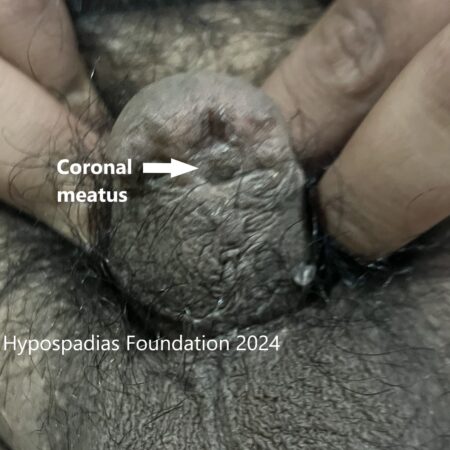
        “Mast SP, a 15-year-old male from South Africa, is a case of failed hypospadias repair, having undergone four unsuccessful surgeries elsewhere in the past. Despite previous attempts, the desired result of hypospadias repair was not achieved. He presented to us with complaints of spraying of urine with residual chordee. On clinical examination, we found that the meatus was located at the coronal region. The penis was small with flat glans. He was planned for cystoscopy to assess the status of the native urethra, and redo hypospadias surgery was planned in a single stage or in two stages depending on the cystoscopy findings, addressing the challenges of hypospadias repair in a boy

        Hypospadias repair in a boy

        1. Clinical picture showing coronal meatus.

        Cystoscopy showed normal urethra. Since the majority of the urethra was normal, we planned for single stage repair, focusing on hypospadias repair in a boy. We chose to proceed with single stage distal oral mucosa inlay graft urethroplasty.

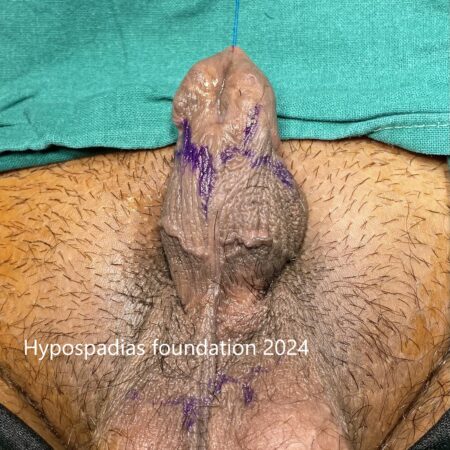
        Chordee assessment was done at the start of surgery, and the patient did not have chordee, hence degloving was not done. A midline incision was given in the urethral plate to assess the quality of the urethral plate. There was no scarring in the urethral plate. Since the urethral bed was healthy, we planned to place an oral mucosa inlay graft and perform single stage urethroplasty.

        Hypospadias repair in a boy
        HP 3

        2 a & b. Clinical picture showing the marking of the incision and chordee assessment.

        Oral mucosa graft was harvested from the upper lip to perform hypospadias repair in a boy. The graft was defatted and sutured at the urethral bed using 5-0 vicryl. The graft was sutured at the edges of the urethral plate and was quilted in place using 5-0 vicryl sutures. Following inlay graft placement, glans wings were widely mobilized. Urethroplasty was done using 5-0 vicryl stitch, first layer was continuous subcuticular inverting sutures. Second layer was closed using local tissues. Local flap was harvested from the left side and sutured over the urethroplasty as a waterproofing layer using 5-0 vicryl. Glans wings were widely mobilized and distal urethroplasty along with glansplasty was done using 5-0 vicryl.

        Hypospadias repair in a boy
        Hypospadias repair in a boy

        3 a & b Picture showing site of oral mucosa graft harvest i.e upper lip and oral mucosa graft, it has been placed and quilted in the urethral bed.

        Hypospadias repair in a boy
        Hypospadias repair in a boy

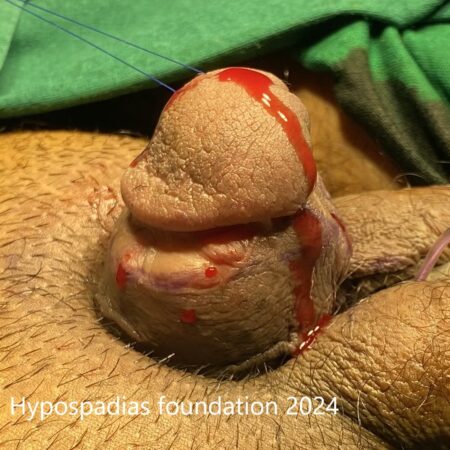
        4 a & b: Distal urethroplasty completed and local flap harvested from the left side.

        HP 8
        Hypospadias repair in a boy

        5 a & b: Local flap sutured over the urethroplasty, and second picture shows completion of the entire repair.

        After undergoing hypospadias repair in a boy, the patient had a per urethral catheter and suprapubic cystostomy (SPC). Dressing change was done on postoperative day 4 followed by operated site inspection on every 4th day. Per urethral catheter was removed on postoperative day 21 and SPC was removed on postoperative day 22.

        Hypospadias repair in a boy
        Hypospadias repair in a boy

        6. Picture showing status at post operative day 15 and second picture shows urine stream after catheter removal. 

        Post catheter removal, he was passing urine in single straight stream with no leak. Patient was started on meatal dilatation using meatal dilator with mild steroid ointment for 3 months. 

        Testimonial from the boy’s father in his own words:

        We are from South Africa. We got reference of Dr. Singal from a website, post which I got an appointment. Post which they did a proper evaluation and told that he had to undergo a redo hypospadias repair. Based on the evaluation, he had to do redo surgery for hypospadias repair in a boy. We came here on 22nd of December, procedure was properly explained to us. The surgery went well, post care after the surgery was also extremely good. Total support staff, hospital staff took care of my son very well. After the surgery, the discharge process was very fine, post care after discharge was also very good. The steps were properly explained. Today we are finishing the treatment and going out of India to South Africa. From my experience, the overall procedure was very good and extremely satisfying.

        Single Stage Hypospadias Repair In A Boy After Multiple Failed Hypospadias Surgeries

        Failed hypospadias repair refers to a situation where the initial surgery to correct hypospadias was not successful. Inspite of the best efforts by the surgeon the complications may happen because every healing of every hypospadias patient is different. We do not know the exact reason for complications after hypospadias surgery but here are some factors which may contribute to post-surgery complications:

        1. Severity of hypospadias: Severe hypospadias repair is more complex and more challenging than mild hypospadias. Total healing time in hypospadias is 3- 4 weeks and it is longer in severe hypospadias. To minimize the risk of complications in severe hypospadias repair, the entire repair may have to be done in 2-3 stages.
        2. Surgical technique: Different surgical techniques have varying success rates, and the choice of technique can impact the outcome. The choice of technique depends on the type of hypospadias, degree of chordee, glans diameter etc. An expert hypospadias surgeon will choose the best technique after considering all the factors because no two techniques are the same, and no two hypospadias are the same.
        3. Experience of the surgeon: The experience of a surgeon is an important factor for successful hypospadias surgery. Centre performing more than 50 surgeries per year will have lesser complications compared to the other centres.
        4. Wound healing: Wound healing is an important deciding factor in complications after any surgery. In hypospadias, wound healing is very slow in adults as compared to children. This may be because of decreased cell turnover with age, a weakened immune system, and reduced blood flow. And if they have any preexisting co-morbid illnesses then healing is slower, with a higher risk of complications.
        5. Age at surgery: The best age to undergo hypospadias surgery is between 6 and 18 months of age. If not done at this age, it should ideally be done by 5 years of age. Parents are sometimes unable to get the surgery done within 5 years of age, and these children, when they reach adulthood, realize that they need surgery to correct the hypospadias. Outcomes in later age are little inferior to childhood hypospadias surgery but still possible. Adults with hypospadias need not lose hope because it’s better late than never. At Hypospadias Foundation, we have been able to achieve good outcomes with cosmetic result with a success rate of more than 90%, even in adults after multiple previous failed surgeries.
        6. Underlying medical conditions: Obese or overweight adults, smokers, poor nutritional status, and diabetes are some of the conditions that can lead to slow healing. Overweight patients or diabetics can develop insulin resistance, causing poor healing. Smokers, nutritional deficiencies, etc. can cause decreased blood flow to the operated site, associated with decreased collagen production, which in turn causes slow healing.

        Impact and Considerations after failed hypospadias repair:

        A failed hypospadias repair can have both physical and emotional consequences for an individual with adult hypospadias and for parents of kids suffering from hypospadias. Complications that can occur after hypospadias repair are:

        1. Urinary problems: difficulty in urinating, spraying of urine (glans dehiscence), urine passage from multiple holes (fistula), pain in urinating, or urinary tract infections, swelling pf penis during voiding (diverticulum), problems with ejaculation, post void dribbling,
        2. Residual chordee (curvature): The penis may remain bent, affecting sexual intercourse and, in turn, leading to sexual dysfunction.
        3. Cosmetic appearance: The meatus may be at a slightly lower level than normal. This may be disturbing for some individuals. In this case, there will be no problems in passing urine, and it is merely the way it looks different from others.
        4. Psychological impact: As a parent, you may feel helpless and angry after a failed hypospadias. Failure of hypospadias surgery can cause feelings of anxiety, frustration, suicidal tendency, and low self-esteem in an adult. At certain times, adults may need pre- surgery counseling to reduce anxiety and stress. By improving your communication with your doctor and understanding the risks and benefits of surgery, you are more likely to be satisfied with the outcome.

        Seeking Help:

        If you or someone you know has a failed hypospadias, it’s crucial to seek professional help from a urologist specializing in pediatric urology or hypospadias. They can assess the situation, discuss treatment options, and provide guidance and support throughout the process. Even after previous unsuccessful repairs, there is more than 90% chance that with an expert hypospadias surgeon, the complications can be managed, and your hypospadias can be fully cured.

        About Hypospadias Foundation 

        At Hypospadias Foundation, we get adults and children from all over the world in search of treatment for hypospadias. We provide support and information for children, adults, and their families affected by hypospadias. Dr Singal and Dr Shenoy are deeply devoted to creating awareness and helping patients get the right treatment and best outcomes for hypospadias. Children and adults from more than 25 countries visit Hypospadias Foundation in search of treatment for hypospadias.

        Dr A K Singal is a highly experienced surgeon and is regarded as the best hypospadias surgeon in India and in the world for treating children and adults with hypospadias. If you are looking for a highly skilled and experienced pediatric urologist and hypospadias surgeon for yourself or your child, then Dr Singal is an excellent choice.

        Dr Ashwitha Shenoy is an expert pediatric surgeon with a special interest in pediatric urology and hypospadias. Dr Singal and Dr Shenoy’s collaboration allows them to offer advanced surgical techniques and comprehensive care for patients.

        Contact us:

        For appointment kindly contact us at the contact details given below.

        MITR hospital & Hypospadias Foundation, Kharghar, Navi Mumbai, India – Tue/Saturday 4:00pm-6:00pm, Call for appointments: +91-9324180553 (whatsapp), +916262840940, +916262690790 Or email us at hypospadiasfoundationindia@gmail.com

        Keywords: best hypospadias surgeon India, Best hypospadias surgeon world, complicated hypospadias repair, oral mucosa graft repair, oral mucosa inlay graft, Hypospadias repair in small penis, failed hypospadias repair, oral mucosa graft urethroplasty, results of hypospadias surgery, failed hypospadias surgery, complications of hypospadias, hypospadias surgery, hypospadias surgeon south Africa,

        Contact Form for Hypospadias Foundation

        Please fill all clinical details and upload pictures and clinical summaries (if available)
          Attach Documents (pdf | jpeg | mp4)
          (upload size upto 5mb)

          Contact Us

          Call Now