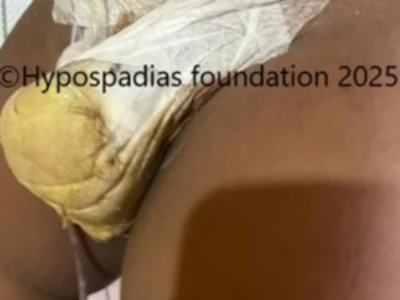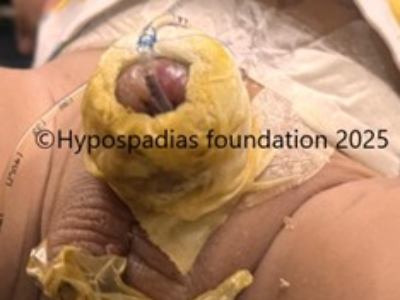
Failed hypospadias with urethral stricture and fistula – Two stage oral mucosa graft urethroplasty

Failed hypospadias with urethral stricture and fistula – Two stage oral mucosa graft urethroplasty

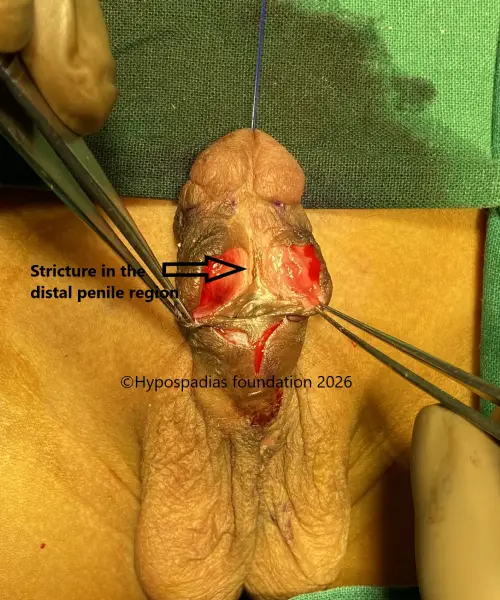
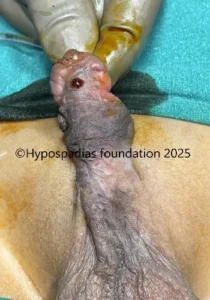
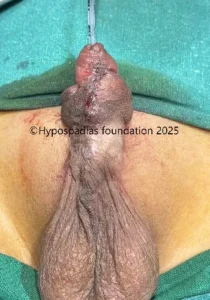
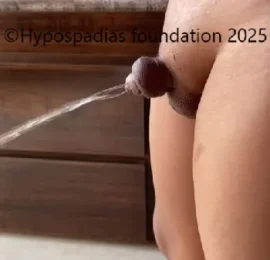
A 6-year male child presented to Hypospadias foundation OPD after 4 failed hypospadias surgeries in Australia. After the first surgery in Australia, he had complete breakdown of the newly reconstructed urethra. He further underwent redo surgery in 3 stages, but it was unsuccessful. Even after a redo surgery, child was unable to pass the urine from the distal penile meatus. On examination in the Hypospadias Foundation OPD, the urinary opening was at the midpenile region. The distal passage was completely strictured. There was no obvious chordee on examination. We counselled the parents that the entire repair needs to be done again in 2-3 stages.

At the start of hypospadias surgery, we performed cystoscopy. The urethra proximal to the midpenile meatus was normal. Scope could not be negotiated into the distal urethra. Chordee was assessed and there was no residual chordee. We decided to proceed with two stage oral mucosa graft repair since there was no residual chordee.

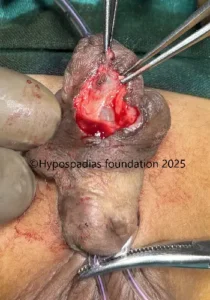
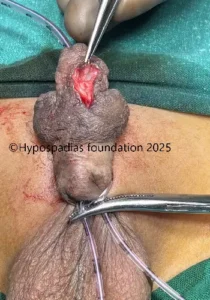
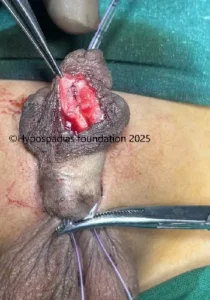
Glans stitch was taken with 4-0 prolene. The distal urethra was laid open and noted to be completely stenosed. Unhealthy fibrotic urethra was excised completely. Oral mucosa graft was harvested from the right cheek of size 5x2cm. Graft was placed on the ventral raw area and quilted thoroughly on the corpora with 6-0 PDS.

After stage 1, healing was good. Steroid massage was started 3 weeks after surgery and was continued for 5 months. There was 100% graft uptake. Second surgery was planned 8 months after stage 1 when graft was soft and pliable.


Second stage repair (Urethroplasty)

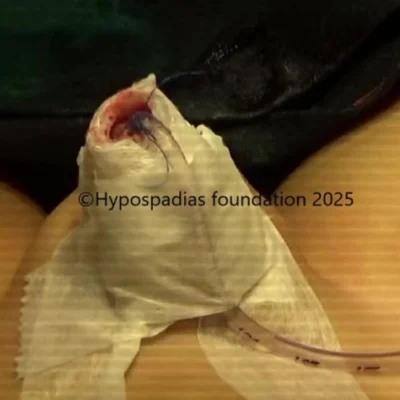
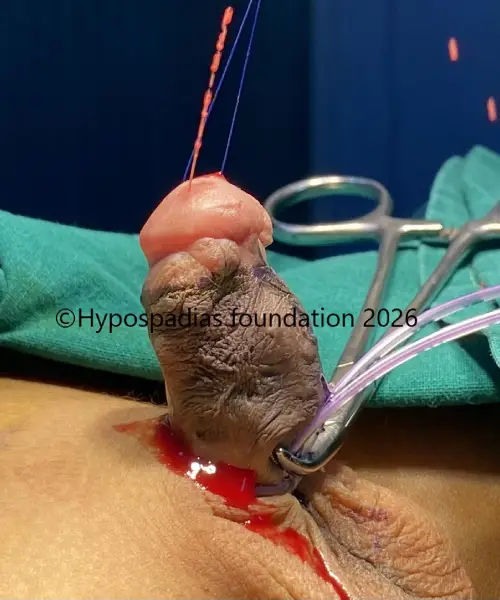
Local anesthesia, lignocaine with adrenaline was injected at the edges of the graft. Graft was incised at the margin keeping a width of 18mm. Graft was tubularized over a 7Fr infant feeding tube (IFT). Second layer was closed with local tissues. Glans wings were widely mobilized. Dartos flap was raised from the left side and sutured over the urethroplasty with 6-0 PDS. Glansplasty was done with 5-0 vicryl and glans epithelium was closed with 6-0 PDS. Skin was closed in 2 layers with 6-0 PDS and 6-0 vicry rapide.

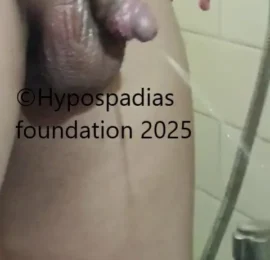
Dressing change was done on day 7 and catheter was removed on post operative day 12. After catheter removal, the child was passing urine in single straight stream with no pain or leak.
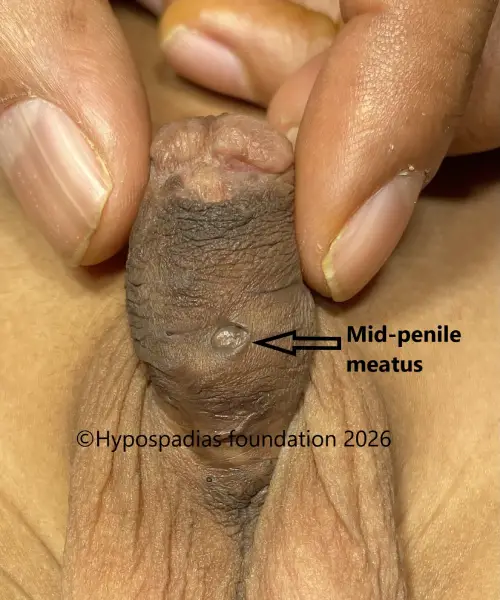
Picture 1: On examination, the meatus was in the midpenile region. Chordee was assessed during stage 1, there was no residual chordee
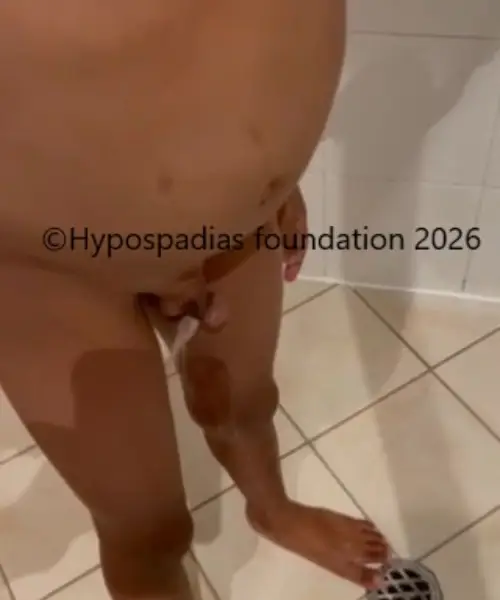
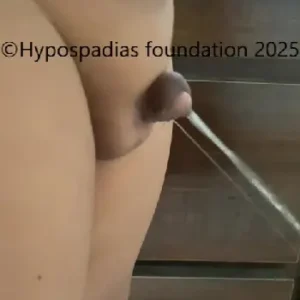
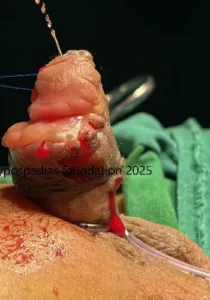
Picture 2: Pre surgery urine stream, passing urine from midpenile region with no flow from the distal penile meatus.
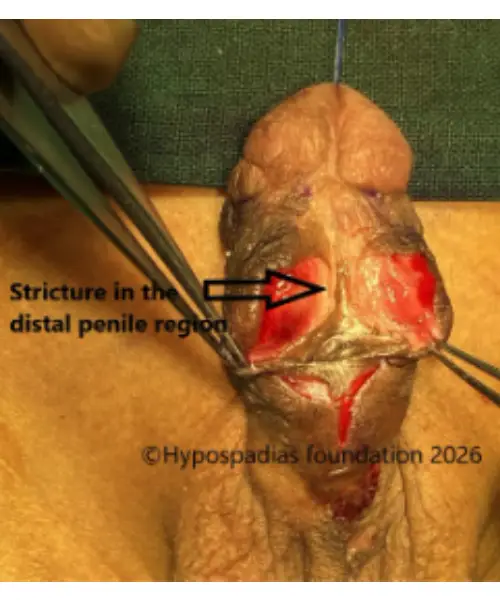
Picture 3: Distal urethra was laid open and noted to be completely stenosed.
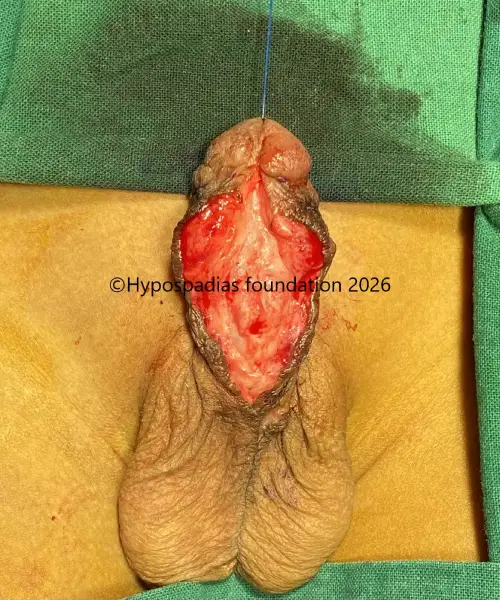
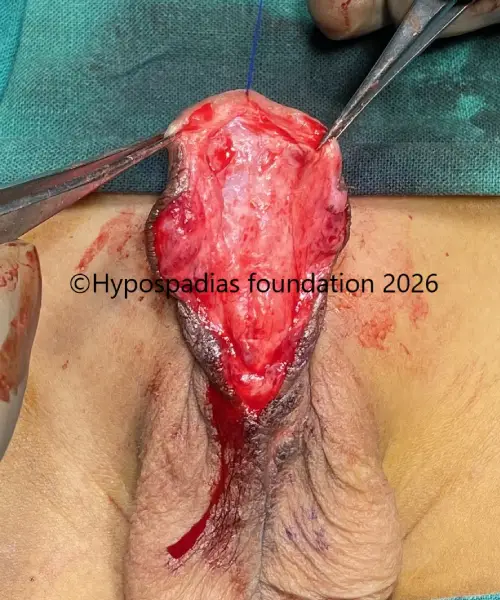
Picture 4: Unhealthy urethra excised, glans wings widely raised for placement of oral mucosa graft
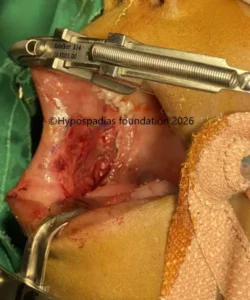
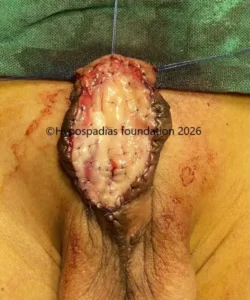
Picture 5: Oral mucosa graft harvested from right cheek, sutured on the ventral side and quilted to the underlying corpora with 6-0 PDS.
46c9
46c10

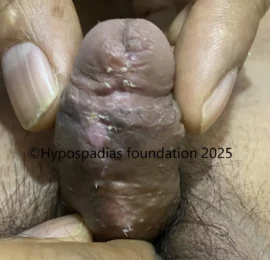
Picture 6: At 3 weeks after stage 1 OMG, the graft was examined. There was 100% graft uptake
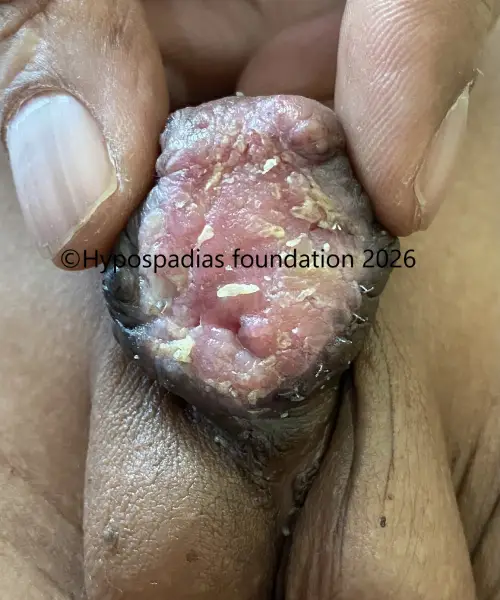
Picture 6: Follow up at 6 months after surgery
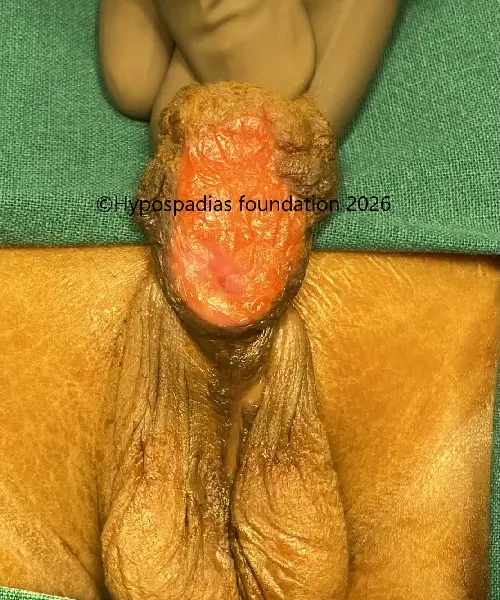
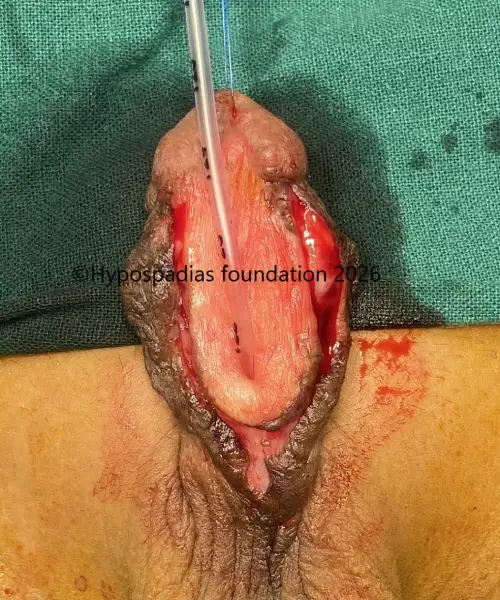
Picture 7: Graft was soft and supple at 8 months after stage 1. Graft edges were incised keeping a width of 18mm for urethroplasty
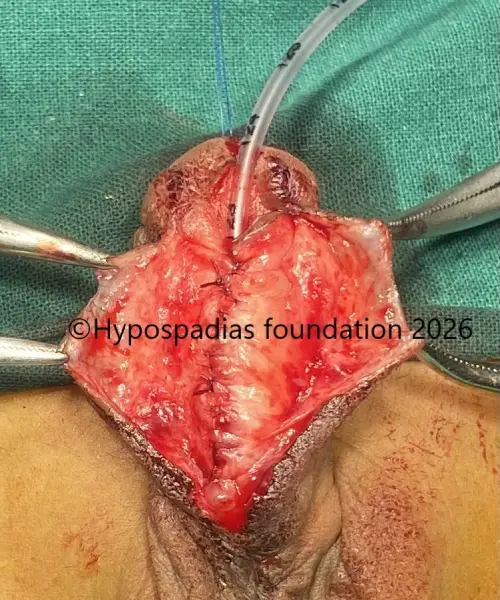
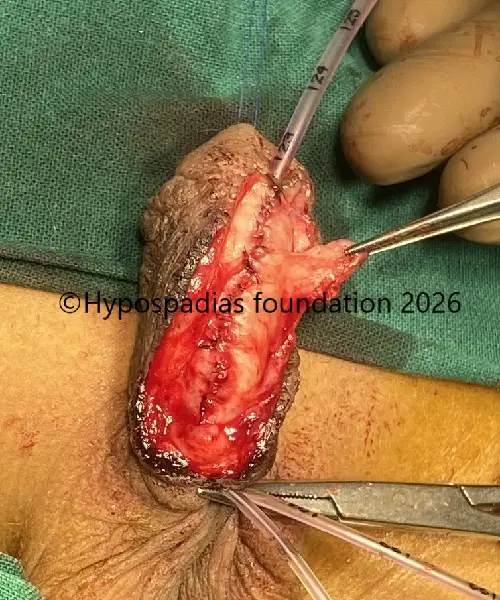
Picture 8: Urethroplasty was done over 7Fr infant feeding tube. Dartos flap from the left side was raised and sutured over the urethroplasty.
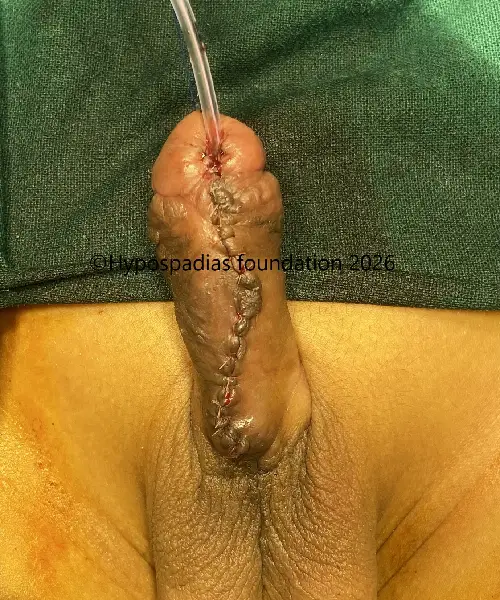
Picture 9: Urethroplasty and glansplasty was completed. Catheter removal was done on post operative day 12
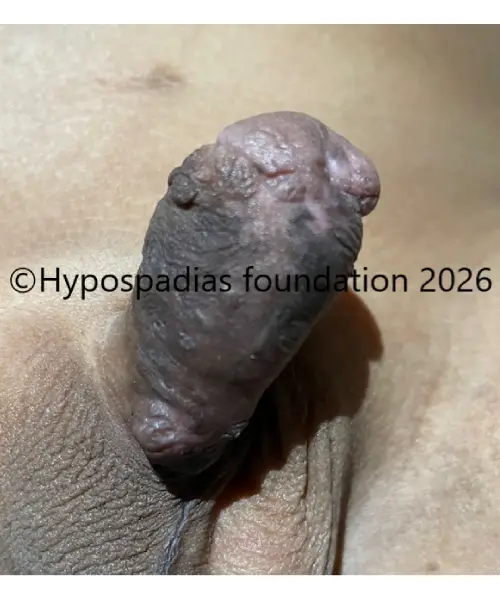
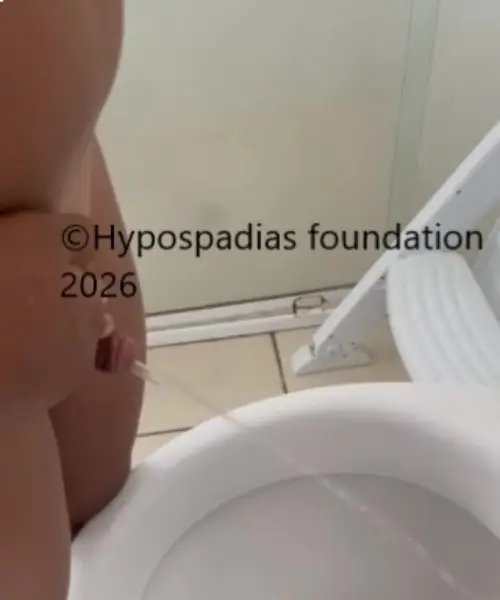
Picture 10: Cosmetic result and urine stream at 6 months after stage 2 urethroplasty

Surgery for failed hypospadias – stricture and fistula – Two stage oral mucosa graft repair

Failed hypospadias with stricture and fistula – Two stage oral mucosa graft urethroplasty

Urethral stricture and urethrocutaneous fistula are two well-recognized complications following hypospadias repair. A urethral stricture refers to narrowing of the reconstructed urethra due to scarring. This obstruction is one of the important factors contributing to fistula
formation.

In the above-mentioned case, the child developed distal urethral narrowing and was unable to pass urine through the distal penile meatus. As a result, the urethra opened in the mid- penile region, allowing urine to drain from the bladder. Since urine preferentially drained through the mid-penile opening, flow across the distal urethra ceased, leading to progressive stenosis of the distal segment. Over time, this resulted in narrowing of the entire distal urethra.

The most common causes of urethral stricture following hypospadias surgery include ischemia of the neourethra due to poor vascularity, excessive tension on the reconstructed urethra, and postoperative infection. Urethral strictures occurring after hypospadias repair differ significantly from non-hypospadias–related urethral strictures. In such cases, urethral dilatation is usually ineffective, and repeated dilatations may further worsen the scarring and narrowing.

Management of post-hypospadias urethral stricture typically requires replacement of the narrowed segment with healthy tissue. This is achieved using either oral mucosal grafts (such as buccal mucosa) or well-vascularized local skin flaps to adequately widen the urethra and restore normal urinary flow.

Complications following hypospadias repair are best managed by a trained and experienced pediatric urologist, particularly one with expertise in failed and complex hypospadias cases. Multiple previous surgeries significantly increase the complexity of subsequent repairs. In such situations, staged surgical reconstruction often provides better functional outcomes, improved cosmesis, and more durable long-term results.

At the Hypospadias Foundation India, children and adults from more than 30 countries worldwide seek treatment for hypospadias and its complications. The surgical team, led by experienced surgeons Dr. A. K. Singal and Dr. Ashwitha Shenoy, specializes in managing complex, multistage, and failed hypospadias repairs. Dr A.K.Singal is considered the best hypospadias surgeon in the world especially for children or adults who had a failed hypospadias surgery earlier. With a deep understanding of the nuances involved in challenging hypospadias surgery, the Hypospadias Foundation offers a dedicated and specialized approach for patients requiring advanced reconstructive care.
Can there be urinary problems after hypospadias repair?

Hypospadias is a condition in which the urinary opening is located on the underside of the penis. Surgery is required to correct this condition. Because the surgery involves reconstruction of the urethra there may be a change in urinary patterns or some urinary complications to occur during recovery. The body needs time to heal and adapt to the newly formed urethra.

Urinary issues may occur while the catheter is in place or after catheter removal.

Short-term recovery issues (with catheter in situ)

Children may experience the following during the post-operative period while the urinary catheter is in place:

1. Bladder spasms
These may feel like sharp cramping pain in the lower abdomen or a sudden urge to urinate. Bladder spasms are commonly caused by irritation of the bladder lining from the urinary catheter. To reduce discomfort, anticholinergic medications are routinely prescribed after surgery, and the dose may be increased if symptoms persist.

2. Leakage around the urinary catheter
Some urine may leak from the tip of the penis around the catheter. This is usually normal if urine is draining well through the catheter and there are no signs of blockage.

3. Blood in the urine
A few drops of blood may occasionally be seen in the urine while the catheter is in place. This is generally expected in the early post-operative period and usually resolves on its own.

4. Whitish material in urine: Sometimes there may be whitish flakes in otherwise clear urine. These oay be due to mucus, minerals or bladder lining cells. Doctor may ask to increase water intake. If the urine is clear, there is smell or pus, nothing needs to be done except increasing hydration.

If urinary problems persist or appear months after hypospadias surgery, further evaluation may be required. Some children may develop symptoms after few months of hypospadias repair which can be poor urinary stream, urine leakage, painful urination, or difficulty emptying the bladder. These issues may indicate a late surgical complication of hypospadias repair.

Common surgical complications after hypospadias repair

1. Urethrocutaneous fistula
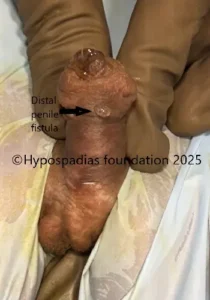
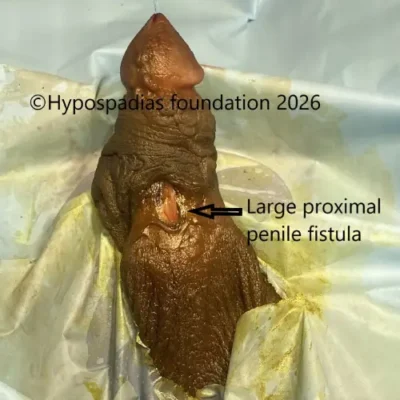
A urethrocutaneous fistula or also known as urethral fistula is a small opening along the reconstructed urethra that allows urine to leak through the skin. Parents may notice urine coming out from two or more openings during urination. There are high chances that some fistula specially if they are away from head of penis and the new urethra is not tight – they may close by themselves. Hence, we observe the fistula for up to 6 months, as some may close spontaneously. If it does not close on its own, surgical correction may be required.

uriimg1

2. Meatal stenosis
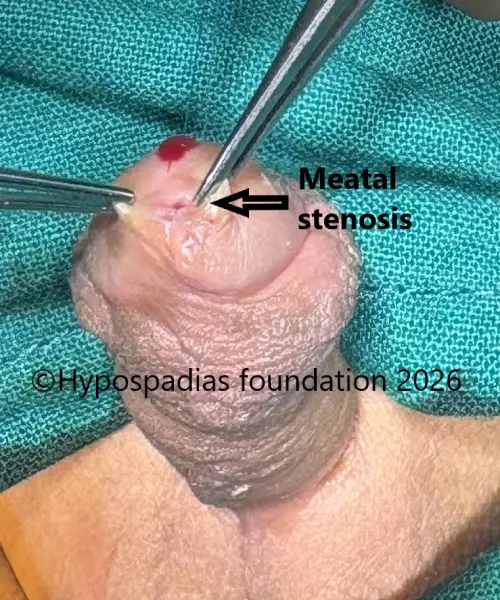
Meatal stenosis occurs when the new urinary opening at the tip of the penis becomes narrow due to scar tissue formation. Symptoms include a very thin urinary stream, straining during urination, or pain while passing urine. On examination, the meatus appears visibly narrow. The diagnosis can be confirmed by a video of stream and uroflowmetry. Sometimes a ultrasound may show incomplete bladder emptying. In the early post-operative period (within 1–2 months), meatal calibration may be helpful. If narrowing persists beyond 3 months, a meatotomy may be required.

3. Urethral stricture
In urethral stricture, the reconstructed urethra becomes narrowed along its length. The length of stricture may be really short or it can extend for a longer length. This can lead to difficulty passing urine, straining, frequent urination, poor stream, or recurrent urinary tract infections. Urethral strictures usually require repeat surgery to reconstruct or replace the urethra. Repeated dilatation is not recommended, as it does not provide lasting relief and may worsen the condition.

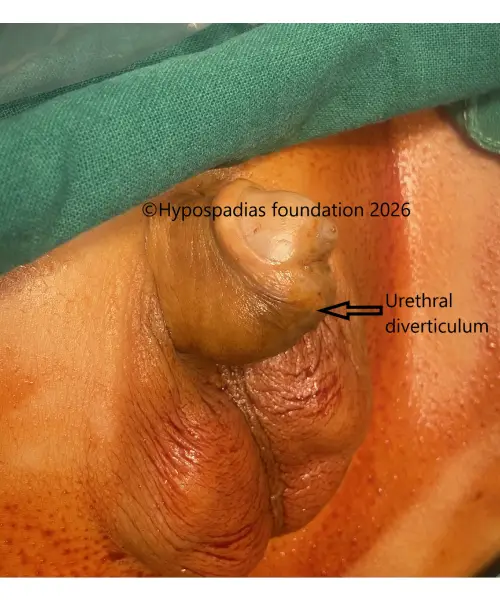
4. Urethral diverticulum
In some cases, a pouch (diverticulum) forms along the reconstructed urethra, causing it to bulge during urination. This can lead to urine collecting in the pouch, resulting in post-void dribbling or leakage after urination. Parents may notice a swelling on the underside of the penis while the child urinates. If the diverticulum is significant or causes symptoms, redo urethroplasty may be required.

Management approach
If a child is in the early recovery phase (first 2–3 weeks after surgery), symptoms may improve with anti-edema medications and urethral calibration. However, if urinary symptoms persist beyond 2–3 months, close monitoring and further surgical intervention may be necessary.

About Hypospadias Foundation
At Hypospadias Foundation, we treat children and adults from across India and around the world who present with urinary problems after hypospadias surgery. Each case is evaluated individually with appropriate investigations, and the final decision regarding the type of repair is made intra-operatively, taking all relevant factors into consideration.

Dr A.K. Singal is considered the best hypospadias surgeon globally, not just in India, due to his high volume of successful complex cases and specialized focus in hypospadias. Dr. Singal has successfully treated thousands of children and adults with hypospadias, including severe, proximal, and redo cases that require advanced surgical expertise. What sets Dr. A. K. Singal apart is his deep understanding of post- hypospadias complications, such as fistula, meatal stenosis, urethral stricture, and diverticulum. Many patients who have undergone unsuccessful surgeries elsewhere seek his care for definitive correction. He emphasizes long-term outcomes, not just immediate surgical success, with careful follow-up and individualized planning.

Dr. Ashwitha Shenoy is a dedicated pediatric urologist and an integral member of the clinical team at Hypospadias Foundation, where she specializes in the evaluation and management of children with hypospadias and related urogenital conditions. She is actively involved in the pre-operative assessment, surgical care, and long-term follow-up of children undergoing hypospadias repair. Contacting the Hypospadias Foundation:

Contact Form for Hypospadias Foundation

Please fill all clinical details and upload pictures and clinical summaries (if available)

    Attach Documents (pdf | jpeg | mp4)
    (upload size upto 5mb)

    Single stage Redo hypospadias repair in a child with recurrent distal penile fistula

    Single stage Redo hypospadias repair in a child with recurrent distal penile fistula

    3-and-a-half-year-old male was diagnosed with penoscrotal hypospadias at birth. He underwent single stage urethroplasty at 1 and half year of age at another centre. Following the urethroplasty, he developed urine leak from the distal penile region. A second surgery was done to close the fistula. Unfortunately, the fistula recurred. Parents were disappointed and visited hypospadias foundation for treatment of their child.

    We examined the child in the OPD and noted that there was a small fistula in the distal penile region with a normal meatus on the glans. He was passing urine mainly from the meatus (95%) and with a leak from the distal penile region (5%).

    At hypospadias foundation, after examination we counselled the family for surgical repair which would be dependent on the quality of urethra, any residual chordee and blood supply to the tissues. While we aim to do a single stage repair for such cases, in some cases a decision to do a staged repair may be made during surgery.

    On cystoscopy, a ledge was noted at the junction of normal urethra and reconstructed urethra. On artificial erection test, there was no residual chordee. The tissues were also healthy around the fistula. The findings were in favour of single stage fistula closure; hence we proceeded with the same.

    Fistula site was marked. Local anesthesia with adrenaline was infiltrated at the marked site. Incision was given around the fistula site. Fistula site was mobilized all around and tract was completely excised. Fistula site was closed in 2 layers with 6-0 PDS over a 7Fr infant feeding tube. Local flap along with underlying dartos tissue was raised and sutured over the fistula site to decrease the risk of recurrent fistula formation. Skin was closed in 2 layers with 6-0 PDS and 6-0 vicryl rapide. The ledge in the distal urethra was incised. Post surgery, the dressing along with the catheter was removed on post operative day 7. Post catheter removal, he was passing urine in single straight stream with no pain or leak.

    KP (10)

    Pic 1: Pre surgery urine stream – Passing from meatus at the tip and from the fistula at distal penile region

    Pic 2: Preoperative assessment shows fistula in the distal penile region.

    Pic 3: Artificial erection test showed no chordee

    Pic 4: Incision given around the fistula site and fistula mobilized all around

    Pic 5: Fistula site closed in 2 layers. Skin along with dartos flap closed over the fistula closure site.

    KP (8)

    Pic 6: Post operative – good outcome at 2 months after surgery- passing urine in single straight stream with no leak

    Click on this link to watch this video of fistula repair in redo hypospadias with recurrent fistula Fistula closure in redo hypospadias with recurrent fistula – Dr A.K.Singal/ Dr Ashwitha Shenoy – YouTube

    Single stage hypospadias repair in a child with recurrent distal penile fistula

    A urethral fistula after hypospadias repair is an abnormal communication that forms between the newly reconstructed urethra and the skin on the underside of the penis. This is the most common complication that occurs after hypospadias surgery. In this condition, the urine comes from the tip of the penis and leaks from the fistula site.

    This fistula mostly occurs due to issues with healing of the urethra. The common reasons include tension on the newly reconstructed urethra, poor blood supply at the operated site, gaps during closure, infection at the operated site, narrowing or stricture formation in the new urethra or straining while passing stool in the post operative period.

    Children who form fistula after hypospadias surgery come with leaking or dribbling of urine from the fistula site. Symptoms usually appear within a few weeks to months after the initial hypospadias repair.

    The primary treatment is surgical repair if they do not close on their own. It is standard practice to wait for atleast 6 months after the initial hypospadias repair before attempting fistula closure. This allows the tissues at the urethral fistula site to soften, improve blood supply and increase the success rate of second surgery. The fistula tract is identified and excised to create healthy tissue edges for repair.

    The urethral fistula site is closed in multiple layers as done in the above-mentioned case to ensure a watertight seal and prevent recurrence. Before closing the fistula, it is always necessary to confirm that the urethra beyond the fistula site is not narrow or tight. In the presence of distal obstruction, the urethral fistula closure surgery may fail.

    If your child has developed urethral fistula after hypospadias repair, then it’s necessary that you see a hypospadias specialist who will assess what is best for your child and choose the best technique minimizing the risk of complications and improving the chances of success.

    About Hypospadias Foundation

    Hypospadias Foundation is a centre specialized for treatment of children with hypospadias. Hypospadias foundation is located at MITR Hospital in Kharghar, Navi Mumbai in the state of Maharashtra. Our expertise in hypospadias makes us one of the best centres for hypospadias repair in the world. We treat children from more than 25 countries in the world and from all over India. Our dedication in this field has helped us achieve excellent outcomes.

    Dr A K Singal is an expert and top hypospadias surgeon in India. He is a gifted surgeon and his expertise in this area has helped us achieve excellent outcomes in primary and failed hypospadias in children as well as adults.

    Dr Ashwitha Shenoy is an expert hypospadias surgeon with special interest in hypospadias and pediatric urology. Both Dr Singal and Dr Shenoy work together to give best results for hypospadias surgery in India for both children and adults.

    What to avoid after hypospadias repair

    Hypospadias is a congenital defect with an abnormal urinary opening and is usually associated with downward bending of the penis which is called as chordee. Surgery is required to correct the hypospadias in which the urinary opening is brought to the tip of the penis, curvature is straightened, and skin is rearranged to give a circumcised appearance. Certain things are to be avoided after hypospadias surgery to avoid stress on the surgical site and ensure proper healing. Here are the things which are to be avoided after hypospadias surgery:

    1. Activity and bathing restrictions:

    Straddle toys and activities: Any activity which puts pressure in the penile area should be avoided after surgery for a period of 4 weeks. This includes riding bicycle, riding toy horse, see-saw, swings etc. Any activity that involves spreading the legs can apply pressure on the penile area.

    Sports: Any sport activity involving ball which can cause impact on the penile area should be avoided.

    Swimming: Swimming should be avoided for 6 weeks after hypospadias repair. Public or natural water sources (chlorinated pools) contain bacteria, chemicals and contaminants that can lead to serious wound infection because the surgical site is a fresh healing wound.

    Bathing: Avoid soaking the hypospadias dressing or wetting it till it is removed. Sponge bath is recommended till the dressing and catheter is present. Start bathing the child once your doctor has given the green signal. Bath is allowed once dressing and catheter is removed but soap application and rubbing the penile area should be avoided for 3 weeks after dressing removal.

    2. Hypospadias Wound and Dressing care:

    Dressing care: Dressing should be kept clean and avoid soiling of dressing with stool. If dressing gets dirty, it must be changed. If dressing is completely soiled with stool, then dressing is removed, betadine wash is given, and operated site is left open till catheter removal.

    blogimg1

    Pic 1: Clean dressing after hypospadias surgery

    blogimg2
    blogimg3

    Pic 2: Soiled dressings in the post operative period after hypospadias surgery

    Catheter handling: A urinary tube is kept after hypospadias surgery to drain the urine. This tube should be handled carefully till removed. Pulling/ pushing of the tube should be avoided because it can cause stress on the newly reconstructed urethra. Also, the end of the tube which drains urine should be kept clean to avoid infection.

    Avoid constipation: Straining while passing stool after surgery can cause pressure on the operated site in turn putting stress on the stitches which may lead to giving away of the stitches causing dehiscence (opening of the operated site). Hence avoid constipation in the post-surgery period. If the child has constipation, pls inform the doctor so that a laxative can be prescribed at time of discharge.

    Operated site care: Once the dressing and catheter is removed, sitz bath is started. Sitz bath is soaking the operated area in lukewarm water. We advise parents to make their children sit in the bathtub for 3-5 minutes, three times daily after dressing and catheter removal. After cleaning the area, it should be dried. Avoid using cotton, wet wipes or rubbing the area. Only pat dry the area gently, alternatively you can put the diaper on wet penis. The diaper will absorb the water and the wound will become dry. Once dried ointment should be applied 2-3 times daily for 2-3 weeks depending on the healing. Presence of swelling, bruising and redness are normal after hypospadias surgery, and they gradually reduce after 2 weeks. The penis may look crooked and bent due to the swelling. There is no need to panic if the child is passing urine well.

    3. Do not stop or miss the medicines:

    Medicines are to be continued as per the doctor’s advice. Do not stop the antibiotics or other medicines prematurely in the presence of urinary tube because it can lead to infection.

    Always follow the specific post operative instructions given by your doctor. This instruction will vary slightly depending on the type of repair, post operative healing and the surgeons preference.

    At hypospadias foundation, we provide detailed post-surgery instructions, which are vital for a successful recovery. With an experience of more than 5000 hypospadias surgeries, we have protocols in place for management of post operative dressing and catheter care. Dr Singal and Dr Shenoy with their vast experience have developed good post operative care regimen which is easy for parents to follow. Good post-surgery care will cause good healing of the operated site and will decrease the risk of complications.

    Dr A.K. Singal is a highly respected and experienced Pediatric urologist and hypospadias specialist in India. He is widely recognized for his expertise in surgical treatment of hypospadias and considered as the best hypospadias surgeon in India and the world. He has developed innovative surgical techniques and treatment algorithms particularly for complex and failed cases, with strong emphasis on achieving successful functional and cosmetic outcomes.

    Dr Shenoy specializes in pediatric urology and hypospadias providing advanced surgical techniques for both primary and failed hypospadias repair in children and adults. Their combined experience and shared focus on a single, complex condition contribute to the foundation’s high success rate.

    Contact Form for Hypospadias Foundation

    Please fill all clinical details and upload pictures and clinical summaries (if available)

      Attach Documents (pdf | jpeg | mp4)
      (upload size upto 5mb)

      Contact Us

      Call Now