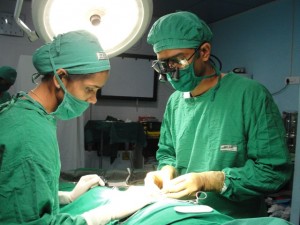
Hypospadias vs Circumcision

Hypospadias vs Circumcision: Why Circumcision Alone Cannot Fix Hypospadias

One of the most common questions parents ask when their child is diagnosed with hypospadias is: “Can circumcision alone correct hypospadias?”

The simple answer is no. Circumcision and hypospadias repair are two very different surgical procedures, and understanding the distinction is crucial for achieving the best outcome for your child.

What is Hypospadias?

Hypospadias is a congenital condition in which the urinary opening (meatus) is located on the underside of the penis instead of at the tip. It is often associated with:

 A hooded foreskin (foreskin present on the upper side but deficient on the
underside)
 Penile curvature (chordee)
 Abnormal urinary stream

The goals of hypospadias surgery are to straighten the penis, reconstruct the urethra, and create a normal appearance.
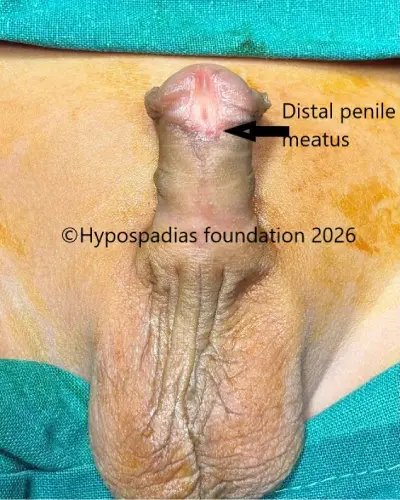
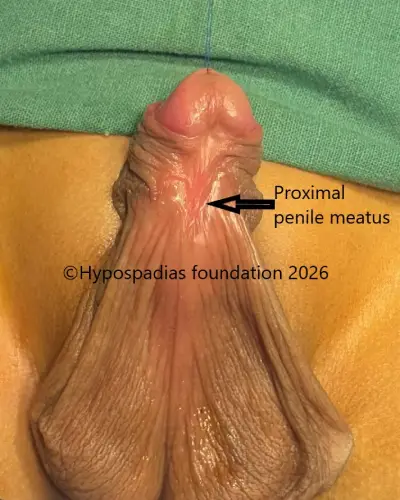
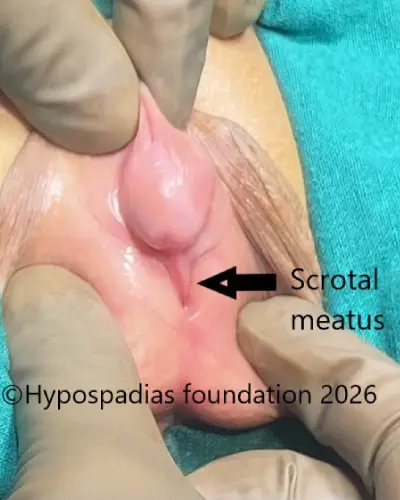
Pic 1: Case of distal penile, proximal penile and scrotal hypospadias

What Does Hypospadias Repair Involve?

Hypospadias surgery is a reconstructive procedure that is far more extensive than a circumcision. Depending on the severity of the condition, the surgery involves the following steps:

1. Degloving

The penile skin is carefully mobilized around the shaft to release adhesions, fibrotic strands and correct any skin-related curvature.

2. Chordee Assessment

An artificial erection test is performed during surgery to assess the degree of penile curvature. The severity of chordee helps determine whether a single-stage or two-stage repair is required.

 Chordee less than 30 degrees: Usually suitable for single-stage repair.
 Chordee greater than 30 degrees: Often requires more extensive reconstruction and sometimes a staged approach.

3. Chordee Correction

Depending on the degree of curvature, correction may be achieved through:

 Dorsal tunica albuginea plication for mild curvature
 Urethral plate division
 Urethral mobilization
 Corporotomies
 Ventral lengthening procedures using dermal grafts or pericardial patches for severe curvature

4. Urethroplasty

Once the penis is straightened, the urethra is reconstructed to bring the urinary opening to the tip of the penis.

5. Circumcision

The foreskin is frequently used during hypospadias reconstruction to create the new urethra and provide skin coverage on the underside of the penis. As a result, the foreskin is usually consumed during the repair process, making circumcision a component of the surgery rather than the treatment itself.

Why Circumcision Alone Cannot Correct Hypospadias

Circumcision simply removes the foreskin. It does not:

 Correct penile curvature
 Reconstruct the urethra
 Move the urinary opening to the tip of the penis

Therefore, circumcision alone cannot treat hypospadias.

In fact, performing circumcision before a planned hypospadias repair can create significant challenges because the foreskin is often needed for reconstruction. Loss of this tissue may limit surgical options and can sometimes convert a straightforward single-stage repair into a more complex two-stage procedure.

What to Expect After Hypospadias Surgery

Following hypospadias repair:

 A dressing is placed around the penis.
 A urinary catheter is usually left in place to drain urine.
 The dressing and catheter are typically removed after 7–10 days, depending on the type of repair performed.

The final appearance is usually that of a circumcised penis because the foreskin has been used during reconstruction. The foreskin does not regrow, as it was either deficient from birth or utilized during surgery.

Attempts to reconstruct the foreskin solely for cosmetic purposes may increase the risk of complications such as tightness, scarring, or breakdown of the repair.

How is Circumcision Different?

Circumcision is a relatively minor procedure involving removal of the foreskin covering the glans penis. Common indications include:

 Recurrent phimosis
 Recurrent foreskin infections
 Balanitis Xerotica Obliterans (BXO)
 Failure of medical treatment for phimosis
 Religious or cultural reasons

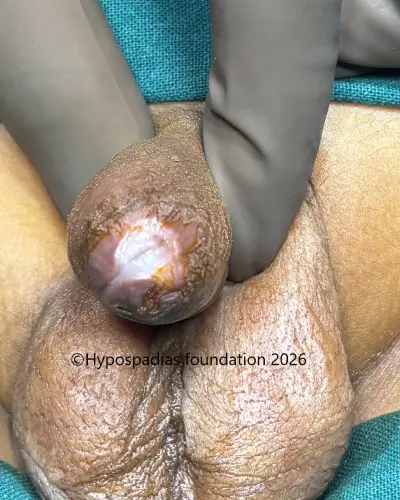
Pic 2: BXO (Balanitis Xerotica Obliterans) changes noted at the tip of foreskin

Unlike hypospadias repair, circumcision generally does not require urethral reconstruction or urinary catheterisation.

The Important Exception: MIP Variant of Hypospadias

Not all hypospadias cases present with a hooded foreskin. A special subtype called the Megameatus Intact Prepuce (MIP) variant may have a completely normal foreskin.
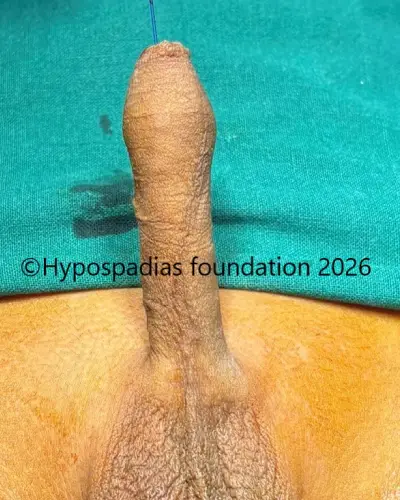
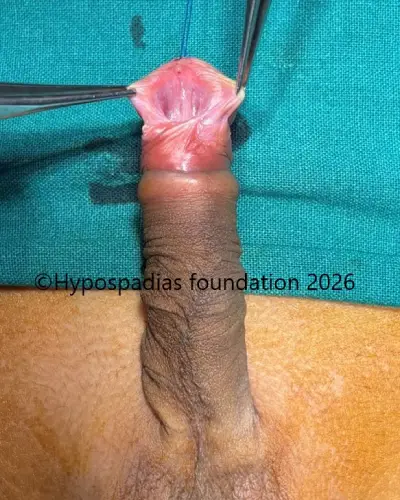
Pic 3: MIP variant of hypospadias with complete prepuce

Because the foreskin appears normal, the diagnosis can occasionally be missed before circumcision. For this reason, surgeons should always retract the foreskin and examine the position of the urinary opening before beginning a circumcision procedure.

Take-Home Message

Circumcision does not correct hypospadias. Hypospadias is a reconstructive condition that requires correction of penile curvature and relocation of the urinary opening to the tip of the penis. In many cases, the foreskin plays an essential role in reconstruction and should be preserved until evaluation by an experienced hypospadias surgeon.

If your child has hypospadias or there is any doubt about the position of the urinary opening, consult a pediatric urologist or an experienced hypospadias specialist before proceeding with circumcision.

Hypospadias foundation is a centre located in Kharghar, Navi Mumbai, Maharashtra, India with surgeons having expertise in hypospadias repair in children and adults. We regularly manage both primary hypospadias repairs and complex cases including those with previous multiple failed repairs. A significant focus of our patient base consists of children and adults who have had failed hypospadias surgeries elsewhere. Our approach involves not just good surgical technique but also diligent pre-operative assessment, focussed post-surgery care and critical decision making for good long-term outcomes.

Dr A.K. Singal is the founder and head of hypospadias foundation, India. He is considered the best hypospadias surgeon in India and the world and has successfully treated thousands of children and adults with hypospadias with excellent results.

Dr Ashwitha Shenoy is an expert hypospadias surgeon with special interest in the field of hypospadias and pediatric urology. Both Dr Singal and Dr Shenoy strive toachieve excellent outcomes in adults and children with hypospadias. Our success rate at hypospadias foundation for all types of repairs including complex and failed repairs are more than 95%.

Contact Form for Hypospadias Foundation

Please fill all clinical details and upload pictures and clinical summaries (if available)

    Attach Documents (pdf | jpeg | mp4)
    (upload size upto 5mb)

    Single Stage Repair Surgery for Distal Hypospadias and Penile Torsion

    Hypospadias Foundation starts Clinic for Hypospadias Treatment & Surgery in Bahrain

    A 10-month-old child was brought with complaints of deviation of urine stream and abnormal location of meatus. On clinical examination, there was distal penile hypospadias with severe penile torsion measuring 90 degrees to the left. We planned a single-stage correction for both Surgery for Distal Hypospadias and Penile Torsion, addressing both conditions simultaneously to optimize outcomes efficiently.

    Penile torsion

    Notice Penile torsion to left

    Distal Hypospadias with Penile torsion

    Surgery Steps:

    Marking of the degloving incision, a crucial step in surgery for distal hypospadias and penile torsion, commenced the procedure. Local anesthesia was meticulously infiltrated at the marked incision site to ensure patient comfort. The surgical process proceeded with complete degloving and assessment of chordee, revealing a 30-degree chordee. Chordee correction was expertly performed through Tunica albuginea plication at 12 o’clock on the dorsal side, resulting in the successful elimination of chordee. Urethroplasty commenced with precise incision of the urethral plate in the midline, followed by meticulous suturing over a 7Fr Infant feeding tube with 6-0 PDS continuous sutures. Additional measures included the harvesting of a Dartos flap for extra coverage over the urethroplasty, secured with 6-0 PDS sutures. Penoscrotal web correction was also addressed, with excess skin excised and meticulously sutured using 5-0 vicryl rapide. To address penile torsion, skin flaps were rotated and adjusted, ensuring optimal alignment, and meticulously sutured all around using 5-0 vicryl rapide. Postoperative care included a 7-day period with dressing and catheter in situ, followed by their removal to facilitate the patient’s recovery.

    Penile torsion and Hypospadias repair

    Finished Hypospadias and Penile torsion surgery

    Surgery for Distal Hypospadias and Penile Torsion

    Final outcome of correction of penile torsion and hypospadias

    Results

    The Final result was very gratifying with a straight penis without any torsion. The child was passing urine in good stream in straight axis without any discomfort or pain.

    About Hypospadias repair and penile torsion

    Penile torsion is a condition wherein the penis is rotated or twisted on its axis. The penile torsion is more commonly to the left. Many a time penile torsion may not be detected till a circumcision is planned or foreskin is retracted.

    Penile torsion may be associated with hypospadias and/or chordee (penile curvature). With hypospadias, penile torsion is mostly associated with distal penile cases.

    Based on the degree of glanular rotation, penile torsion can be classified as mild, moderate, and severe. It is mild if its less than 45 degree, moderate if it’s between 45-90 degree and severe if more than 90 degree.

    Penile torsion in majority of cases (>85%) is between 10 to 20 degree. If it is a moderate or severe degree of torsion, urine stream may be deviated to one side.

    Surgical intervention is not always required in isolated penile torsion. The indications for surgical correction are cosmetic, functional, or sexual. When penile torsion is associated with hypospadias, it should be corrected along with Hypospadias repair or urethroplasty at the same time.

    About Hypospadias Foundation

    Hypospadias foundation is a centre which provides personalized and best quality care for children and adults with hypospadias. It is one of the best hospital centres in India and world for surgical treatment for hypospadias in adults and children.  Our dedication in the field of hypospadias has helped us achieve excellent outcomes in these patients. We treat children and adults not only from various parts of India but also from more than 25 countries all over the world. Hypospadias foundation is located at MITR hospital in Kharghar, Navi-Mumbai, Maharashtra, India. Every year more than 200 surgeries for hypospadias are performed at MITR hospital and Hypospadias Foundation

    Contact us:

    For appointment kindly contact us at the contact details given below.

    • MITR hospital & Hypospadias Foundation, Kharghar, Navi Mumbai, India
    • MITR Clinic: C1/8 Ground floor, Sector-2, VashiCall

    Call for appointments: +91-2227743558/ 27744229/ 39/69 and +919324180553.

    Or you can fill up this form- Contact form for Dr Singal


    Fill up contact form: https://www.hypospadiasfoundation.com/contact/

    Long journey from Patna to Navi Mumbai: Severe scrotal hypospadias managed successfully at Hypospadias Foundation

    Hypospadias is one of the most common urological anomalies in boys. While 80% of all hypospadias are mild and of distal or midpenile, 20% are proximal hypospadias. Severe varieties like scrotal hypospadias form only 5% of total burden of hypospadias. Severe hypospadias such as scrotal hypospadias often have associated chordee (bent penis) and this may be very severe too posing a challenge for the hypospadias surgeon. We have realized in last few years that making the penis straight (chordee correction) is THE MOST IMPORTANT step of hypospadias repair procedure. While most of the severe scrotal hypospadias are also repaired in a single stage (almost 90% are suitable for a single stage urethroplasty), in 10% of the children the anomaly is so severe especially due to severe chordee that two stage repair may be better for an optimal long term outcome.

    Master R.P. was born with scrotal hypospadias, severe chordee in Patna, Bihar and was advised to undergo surgery after 1 year of age. The parents went to multiple doctors in Patna, Delhi and finally came to consult Dr A.K.Singal, renowned Hypospadias surgeon at MITR Hospital, Navi Mumbai. On examination, the child had a severe scrotal hypospadias, severe chordee (almost 90 degrees) and abnormally fused skin of scrotum to the penis. This almost looked like a trapped hypospadias penis due to skin shortage. Dr Singal discussed in detail with parents that such a severe hypospadias may require hypospadias treatment in stages. Due to the severity it may be impossible to correct all the defects in one surgery. Also the penis length may have got shortened and cosmetic result would also been suboptimal.

    Finally, R.P. was taken under anesthesia and hypospadias repair surgery was started. As a first step the penis was degloved. Urethral plate was divided and the fibrous bands causing chordee on the underside of penis were divided deeply till the scrotum. The penis was almost straight after this maneuver with just 30 degree bend which was further corrected by a placing a placating stitch on the top side of penis (tunica albuginea plication or TAP). Artificial erection test confirmed the complete correction of chordee. Since the chordee was severe and the urethral plate was also divided, single stage surgery would have carried very high failure rates. Hence, a staged urethroplasty was planned. The skin on the top of the penis was divided in midline and brought to the underside of penis. A part of the skin was advanced into the head of penis (glans) so that the new urethra in next stage would be constructed till the tip of penis. This is called Thiersch Byar’s urethroplasty stage-1. There was a compression dressing done which was removed after 7 days and the family travelled back to Patna after a total of 14 days after first hypospadias surgery.

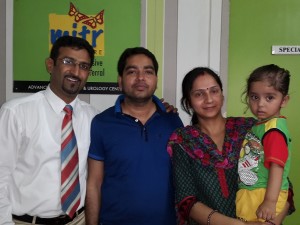
    Happy family with Dr Singal after Surgery

    The family sent us some pictures in the healing phase over next few months and the second stage urethroplasty was planned after 6 months of first hypospadias surgery. When we saw the patient again – the flaps and the skin on the underside was very well healed and ready for second stage. Second stage urethroplasty was done and it took just 2 hours for the surgery. The catheter was removed after ten days and the R.P. passed urine in a good stream from the tip of the penis like a normal boy. Family was delighted and after another follow-up visit one week later they travelled back to Bihar.

    According to Dr Singal, “With the experience and expertise, currently we do single stage surgery for even scrotal hypospadias and other complex hypospadias. The only limiting factor is the severity of the chordee. Sometimes in sever chordee we need to apply a cut on the underside of penis to straighten it. In such cases, it is better to do a staged repair. In our experience, two stage hypospadias surgery can have excellent cosmetic and functional results. It also provided a longer penis length by straightening the penis and elongating the underside of penis when chordee correction is done.

    About the author:

    Dr A.K.Singal is a senior Pediatric Urologist and a renowned Hypospadias expert surgeon in Navi Mumbai, India. Every year he operates more than 200 kids and adults with hypospadias from all over the world and from all over India. Dr Singal has done lot of clinical research and conducted training programs for hypospadias surgery in India. Due to expertise in managing complex cases of severe hypospadias and failed hypospadias operated elsewhere, he is counted as one of the best and top hypospadias surgeons in India.

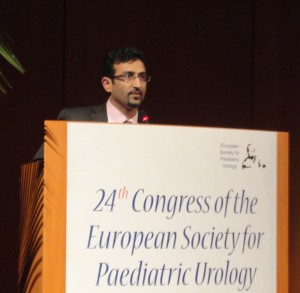
    Dr A.K.Singal delivering his talk at ESPU

    About Hypospadias Foundation:

    Hypospadias Foundation is World’s first and only organisation dedicated to care and cure of children and adults with hypospadias. Started in 2008 by Dr Singal and Dr Dubey, more than 1000 patients have benefitted from care at the foundation from more than 20 countries. The blessings and goodwill only continues to grow from a single point focus of excellence in hypospadiology. The foundation soon intends to start formal training courses in Hypospadias surgery for international doctors.

    To contact us you can

    Email us at hypospadiasfoundationindia@gmailcom

    Or Call Dr Rajkumar, Coordinator, at +91-9821261448 between 10am-4pm.

    Else you can fill up this form: Contact Hypospadias Foundation

    Watch video of Scrotal hypospadias surgery repair by Dr Singal

    Watch video of Proximal penile hypospadias surgery by Dr Singal

    Contact Form for Hypospadias Foundation

    Please fill all clinical details and upload pictures and clinical summaries (if available)

      Attach Documents (pdf | jpeg | mp4)
      (upload size upto 5mb)

      What is chordee (bent penis) and why do hypospadias have chordee? How is chordee correction surgery done?

      Chordee means that the penis is bent (curved penis). Penis mostly gets bent downwards hence it is called ventral chordee and is seen commonly seen in children with hypospadias. In children with other type of anomaly which is much rarer than hypospadias called epispadias the penis may be bent upwards, it is called dorsal chordee. Hypospadias is atleast 20-30 times more common than epispadias, hence when someone uses the word chordee it is by fault supposed to mean ventral chordee as seen in hypospadias.

      Why does chordee happen?

      When the penis is getting formed between 8-12 weeks of pregnancy, the urethra (urinary passage) also starts getting formed from the base of penis to the tip of penis. This happens gradually under the 3influence of male hormones produced by the testis. All around urethra, a special tissue called corpus spongiosum is also formed through which the urethra runs. The two cylinders of tissue called corpus cavernosa are also formed. Together equal sizes of spongiosum and two cavernosa cylinder are responsible for a straight penis. When the urethra is short as in hypospadias, the spongiosum tissue is a3lso short, the skin and dartos tissue under skin is also short and sometimes the corpora can also be curved. Hence chordee results from this shortage of these tissues on underside of penis.

      Do all hypospadias have chordee?

      Chordee is seen more than 50% of all hypospadias but this also depends on the severity of hypospadias. Generally, the more severe the hypospadias is, higher the chances of chordee. Hence, chordee is more common in scrotal hypospadias than distal penile hypospadias. This is a generalization and it is not true in all cases as we have seen lot of cases of chordee without hypospadias and also minor hypospadias having a major degree of chordee.

      How is chordee checked and graded?

      Chordee can sometimes be seen by the parents when the child has an early morning erection which happens even in small babies. Generally we tell the parents to click the picture from the side to document the chordee degree. Chordee must always be checked during hypospadias surgery by doing an artificial erection test. This is infact a mandatory test for all hypospadias and the most important thing to be taken care of during hypospadias surgery. If chordee is not checked and left untreated, it can create lot of issues in adulthood and need surgery again which is much more difficult in adulthood. Chordee is graded in degrees like 30 degrees, 45 degrees or 90 degrees or also as mild, moderate or severe.

      Does chordee always need surgery repair?

      A straight penis is important to have straight stream of urine as well as for having normal sexual intercourse. Hence, if the penis has anything more than 15-20 degrees of bend should be corrected.

      How is chordee repair surgery done?

      • Degloving of penis: In any hypospadias surgery or chordee repair surgery, the first step is called degloving of penis. Degloving means that the penis skin is taken down till the base of penis by a circular incision around head of penis while saving the opening of hypospadias and urethral plate. Generally, there are some abnormal tissues around base of penis which cause chordee and once these are divided chordee gets corrected in most cases. Then a tourniquet is applied on the base of penis and saline solution is injected into the head of penis or corporal bodies. This is called artificial erection test and allows the hypospadias surgeon to assess the degree of chordee.
      • Tunica albuginea plication: If there is still chordee then further steps need to be done to correct chordee. If the chordee is mild, then we perform tighten the top side of penis with a non-absorbable stitch to straighten the penis.
      • Division of urethral plate: If the chordee is still severe then a cut needs to be given to divide the urethral plate between hypospadias opening and the head of penis.
      • Dermal graft for chordee correction: Chordee is again checked and if it still severe then corpora needs to be lengthened by placing a dermal graft on underside of penis. In case a dermal graft is placed, then a single staged repair can’t be done and a staged hypospadias repair is done.

      It is important for a hypospadias surgeon to make sure that the chordee is completely corrected during hypospadias surgery. It requires experience to do a stepwise assessment of the chordee in every individual case and then proceed with chordee repair as detailed above. The importance of having a straight penis cannot be overemphasized.

      About the author:

      Dr A.K.Singal during Hypospadias surgery

      Dr A.K.Singal is a renowned Pediatric urologist and is one of the best & most experienced hypospadias surgeons across India and world. His deep interest, research, knowledge has helped hundreds of children and adults with hypospadias achieve a satisfactory cosmetic and functional results of hypospadias. Dr Singal is available in Fortis Hospital in Mulund Mumbai, Jupiter hospital in Thane, Fortis Hospital in Vashi (Navi Mumbai) and MITR Hospital & Hypospadias Foundation in Kharghar, Navi Mumbai, India. To reach him you can send him an email at hypospadiasfoundationindia@gmail.com or fill up this form:

      Contact form for Dr Singal

      Also, you can call up Dr Rajkumar, Dr Singal’s assistant and Coordinator of Hypospadias Foundation on +91-9821261448

      Video of Glanular Hypospadias with chordee surgery repair by Dr A.K.Singal

      Video of Distal penile hypospadias repair procedure by Dr A.K.Singal

      Video of proximal penile hypospadias repair surgery procedure by Dr A.K.Singal

      Video of scrotal hypospadias single stage repair procedure by Dr A.K.Singal

      Please fill all clinical details and upload pictures and clinical summaries (if available)
        Attach Documents (pdf | jpeg | mp4)
        (upload size upto 5mb)

        Contact Us

        Call Now