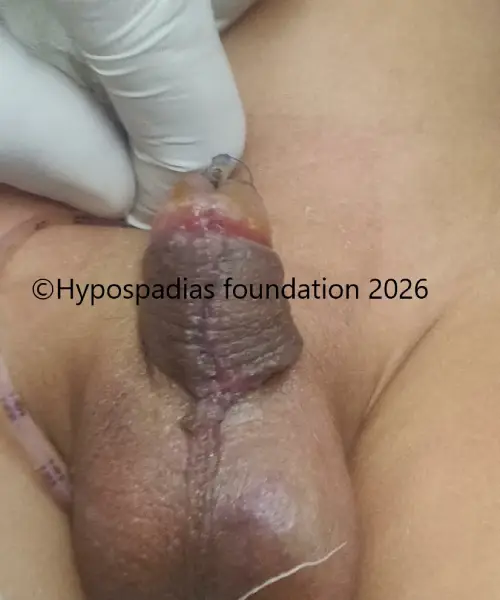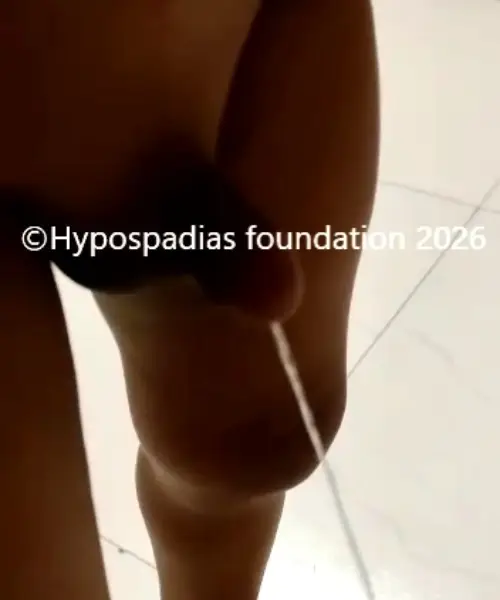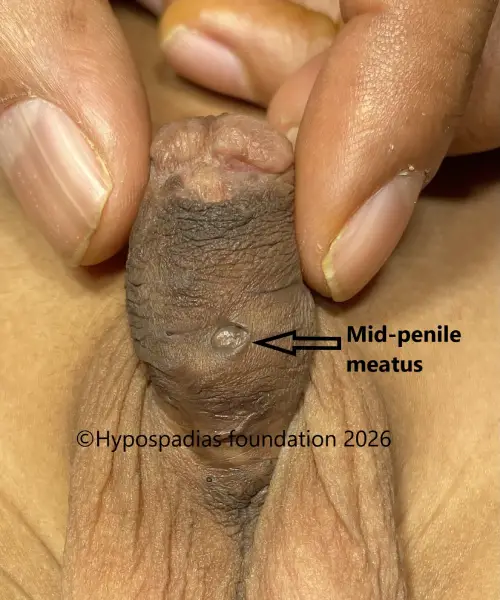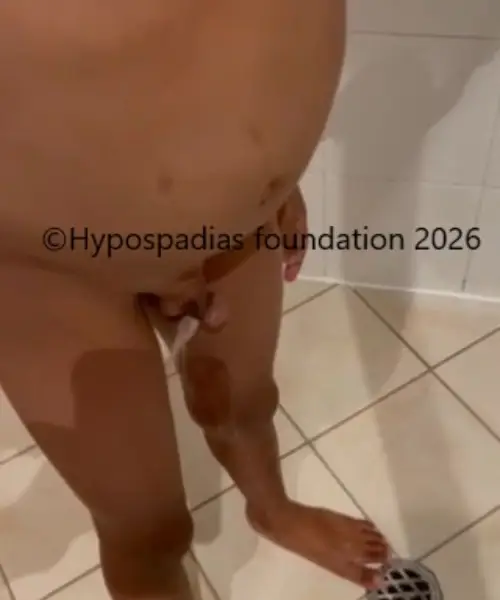
Two stage repair of deceptive distal penile hypospadias with hypoplastic urethra and severe chordee

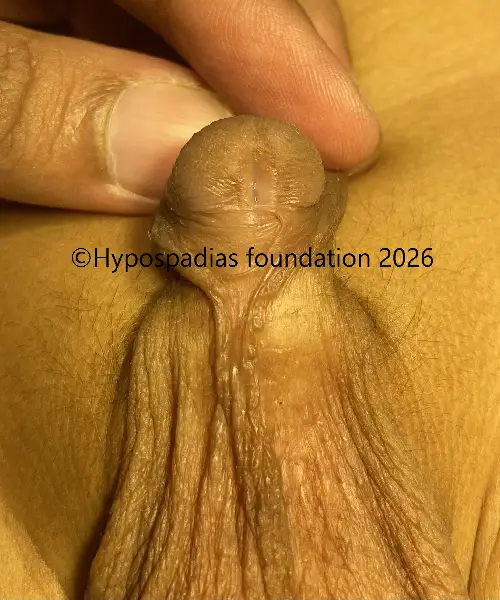
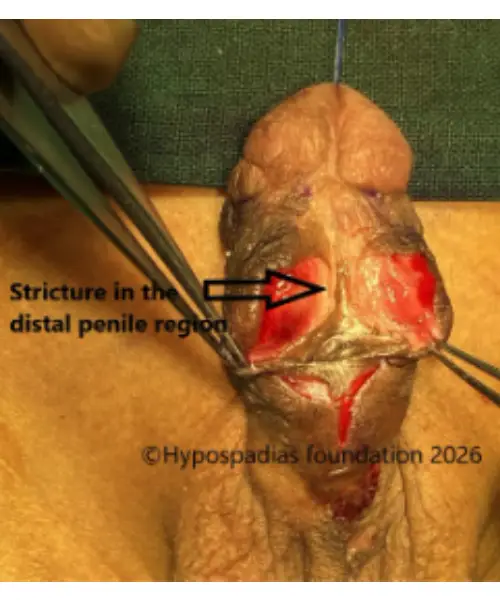
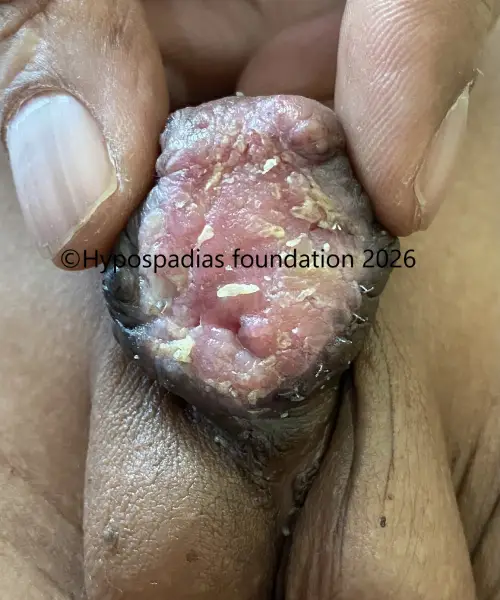
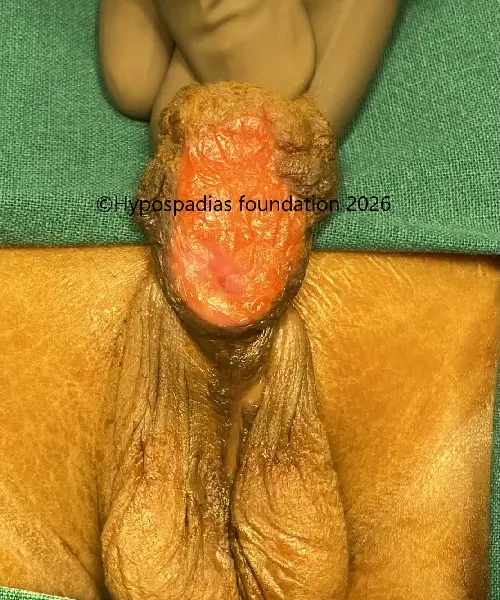
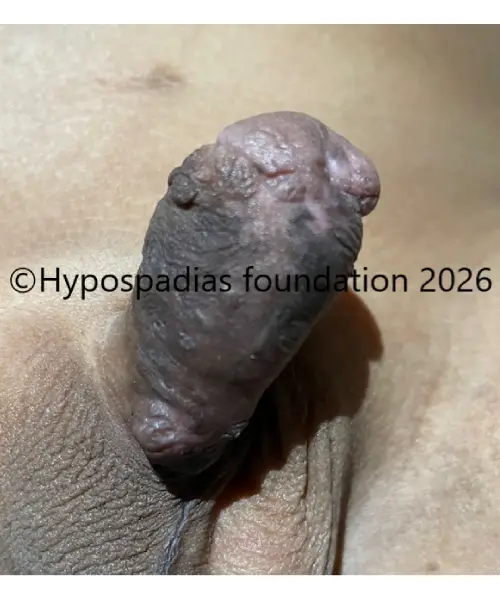
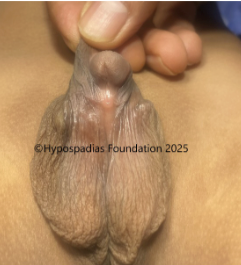
6-year male from Kerala presented to the Hypospadias Foundation clinic with complaints of passing urine from distal penile region associated with downward curvature of the penis (chordee). On examination, meatus was in distal penile region, but the urethra was thin till the proximal penile region. The stretched penile length (SPL) was 40mm and glans diameter (GD) was 12.5mm. In view of small glans diameter, he received two doses of injection testosterone in the pre surgery period which were given 1 month apart. Following the two doses, the stretched penile length improved to 35mm and glans diameter to 15mm.

He was planned for hypospadias repair and the family was counselled for single or two stage repair based on the degree of chordee.

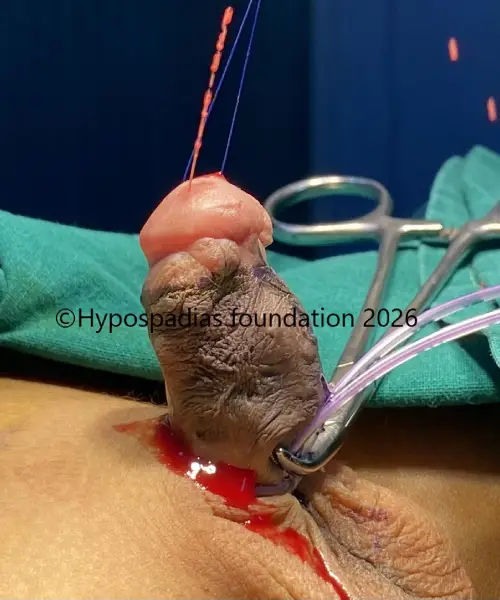
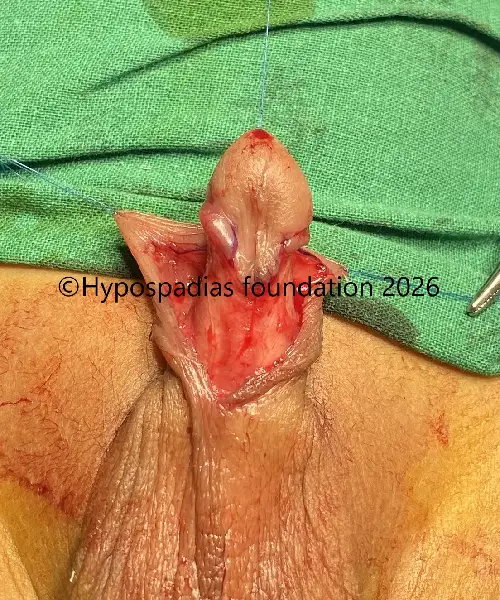
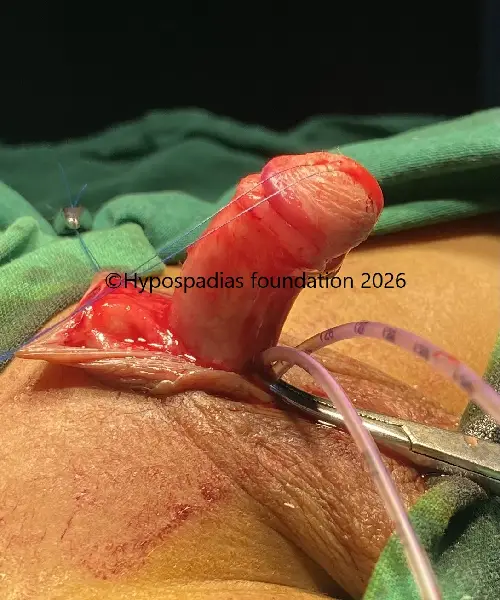
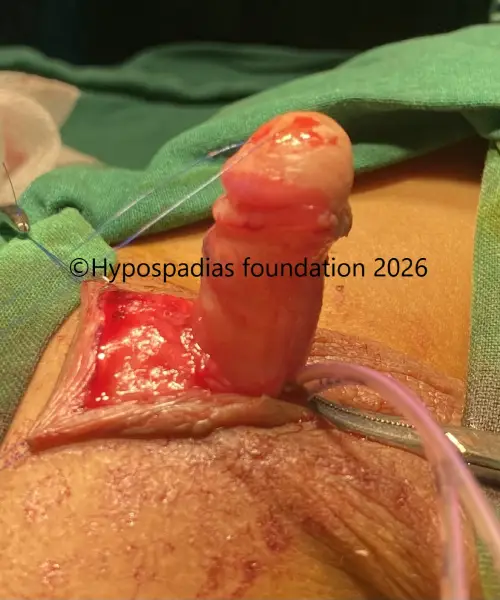
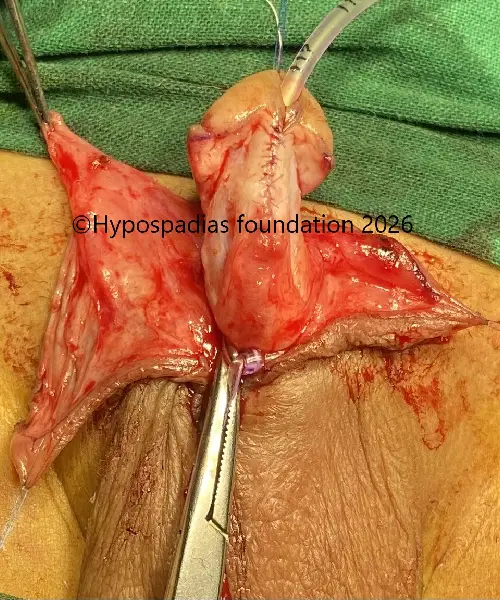
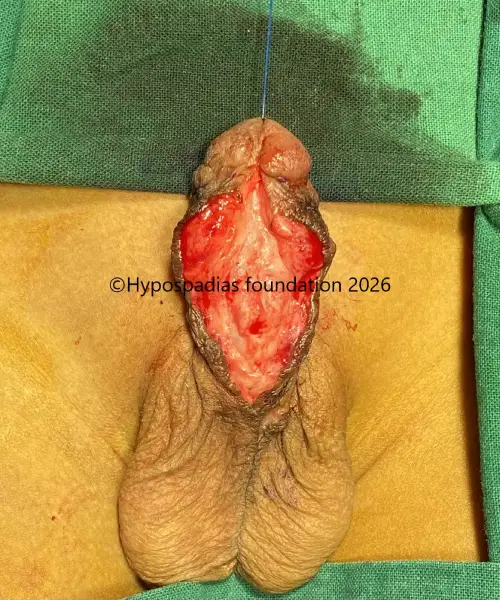
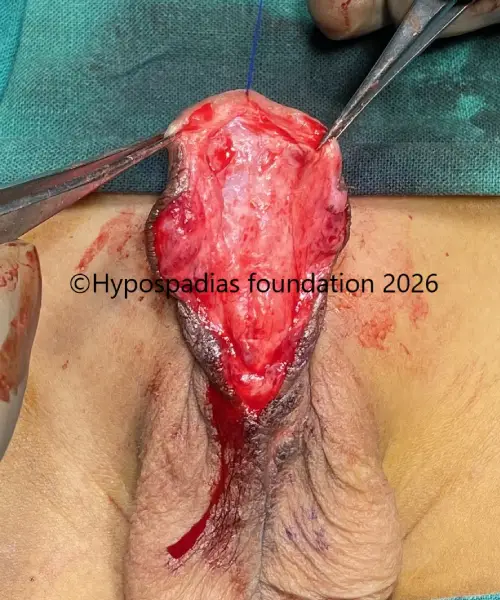
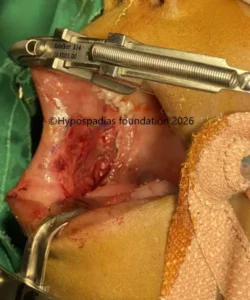
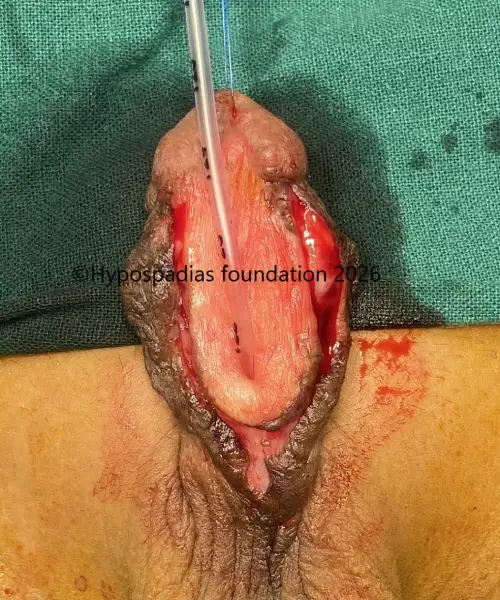
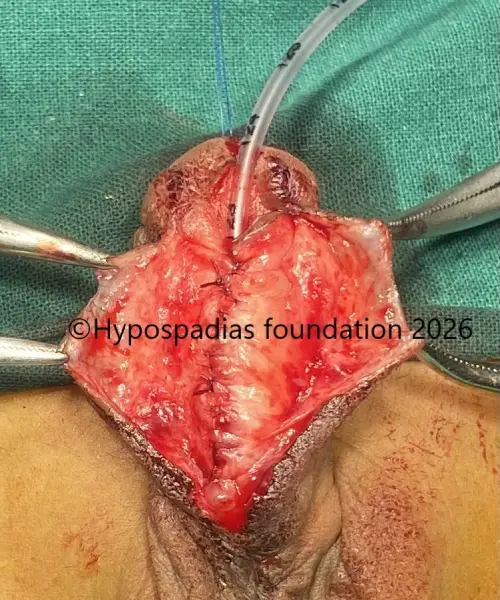
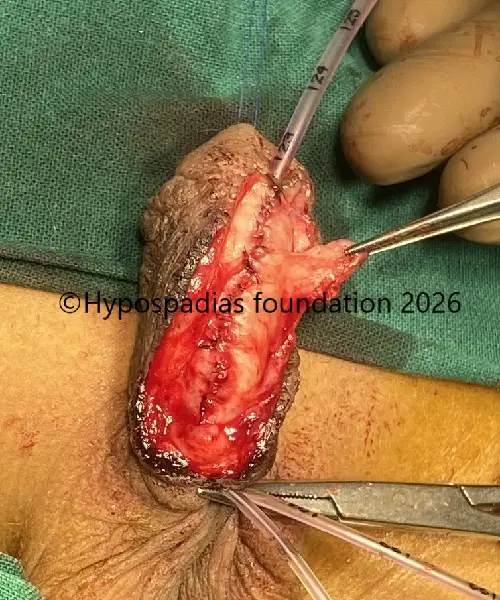
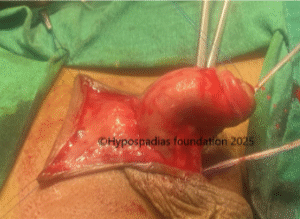
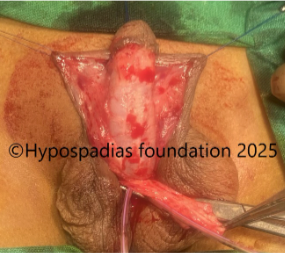
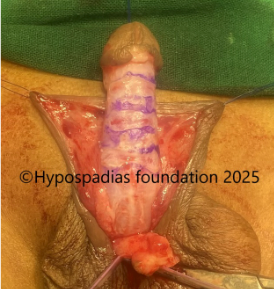
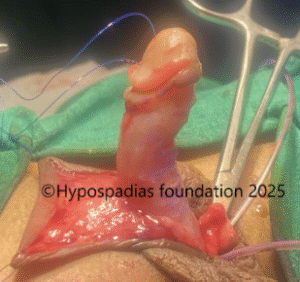
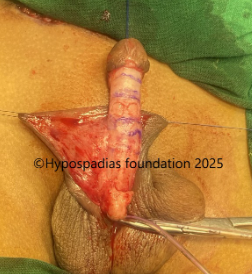
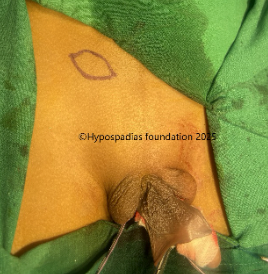
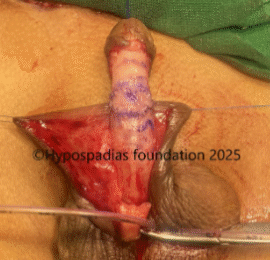
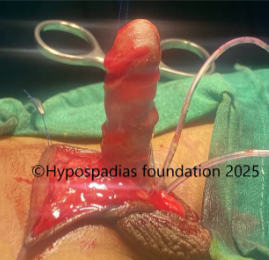
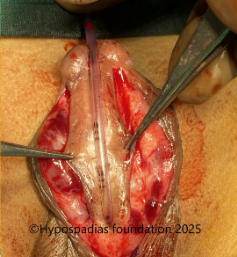
The surgery was started by complete degloving which means the penile skin was completely taken down preserving its blood supply. After degloving, the chordee was assessed by artificial erection test. Here in this case after complete degloving, artificial erection test showed chordee of more than 45 degrees. This was because of the hypoplastic (underdeveloped) tissues on the underside of the penis. We decided to divide the urethral plate and mobilise the urethra. Spongiosum was raised on the sides first, urethral plate divided at coronal level and urethra mobilised till penoscrotal junction to fully evaluate the chordee. Chordee was reassessed and there was persistent chordee of more than 45 degrees. Site of maximum curvature was marked on the ventral side (underside of the penis) and three corporotomies were made by placing horizontal incisions over the tunica with middle incision at the site of maximum curvature. Chordee was reassessed and there was still significant chordee necessitating a ventral penile lengthening procedure called as dermal graft. The central corporotomy incision was deepened to full divide tunica and then cavernosal tissue was mobilised from tunica on all sides. A skin ellipse was harvested from the inguinal region, de-epithelized, and defatted to create a dermal graft. This dermal graft was sutured at the site of tunical defect with 6-0 PDS interrupted sutures. An artificial erection test following dermal graft revealed no chordee.

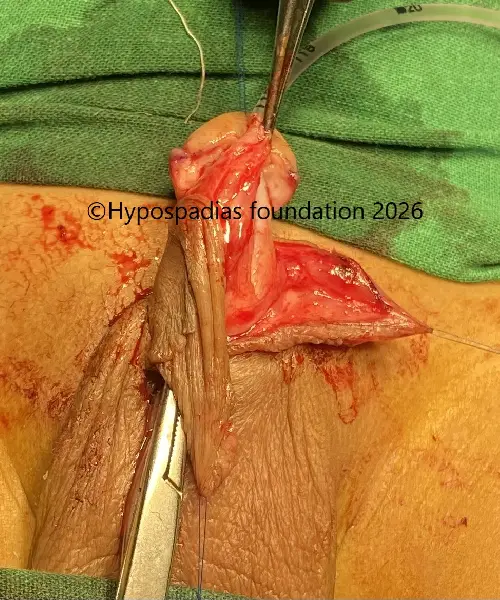
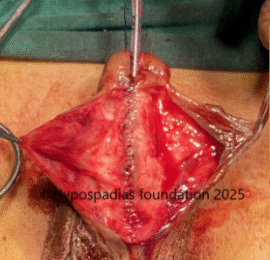
Once the chordee was corrected, the proximal urethra was sutured in the proximal penile region with 6-0 PDS. Glans wings were raised. Byars flap was created. Byars flap involves division of the dorsal prepuce in the midline and then rotation to the underside of the penis to cover the whole underside of the penis from glans till all around the meatus.

41img1
41img2

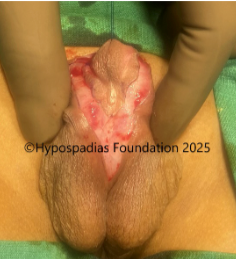
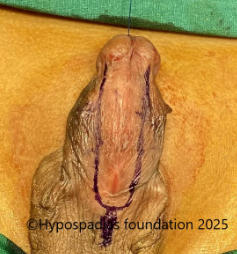
Picture 1: On clinical examination, the meatus was in the distal penile region with thin urethra till the proximal penile region. Surgery was started by complete degloving

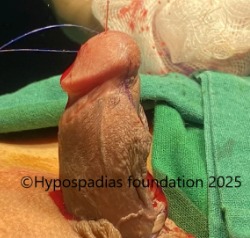
Picture 2: Artificial erection test showed chordee of more than 45 degrees

41img5

Picture 3: Urethral plate divided, mobilised and chordee reassessed. More than 45 degrees chordee noted

Picture 4: Three ventral corporotomies given and chordee reassessed, persistent chordee of more than 30 degrees noted, hence planned to go ahead with ventral lengthening procedure

Picture 5: Deep corporotomy given at the site of maximum curvature and tunica incised, dermal graft harvested from the right inguinal region

41img10
41img11

Picture 6: Dermal graft sutured at the site of tunical defect. No chordee noted after dermal graft.

41img12

Picture 7: Dorsal prepuce (foreskin) divided in the midline and flaps rotated to cover the underside of the penis

Second stage of Hypospadias Repair:

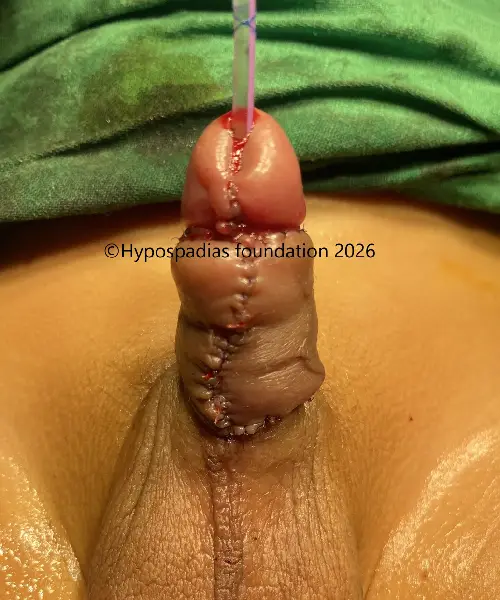
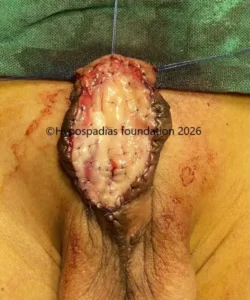
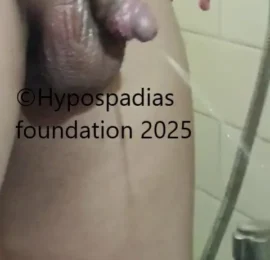
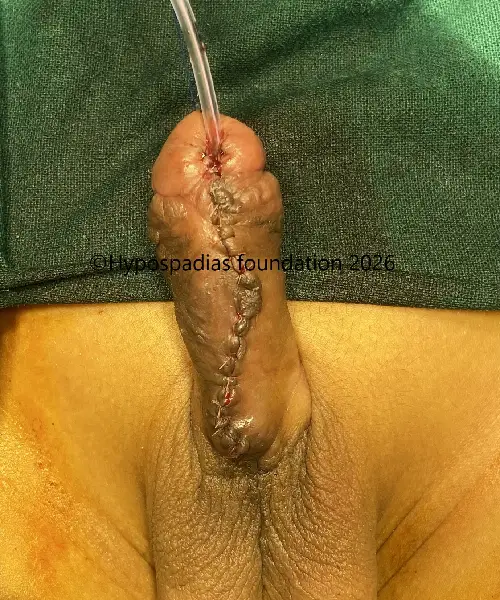
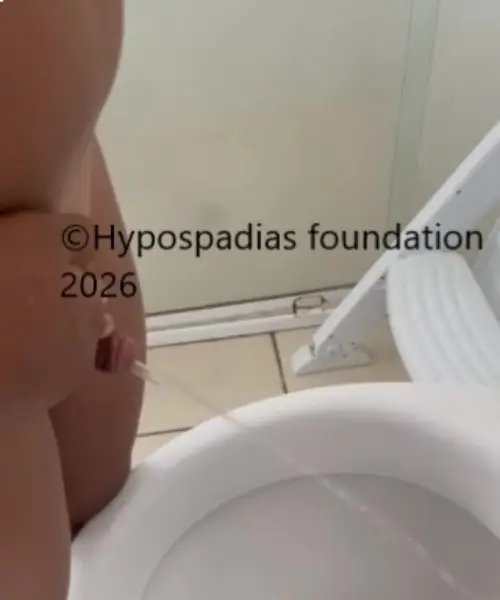
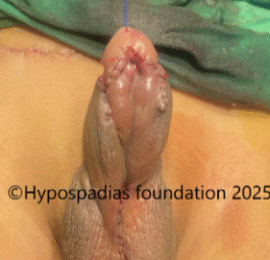
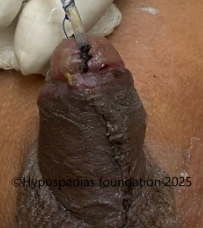
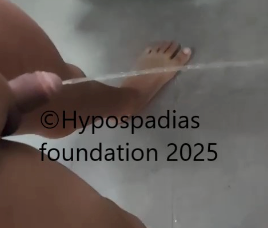
After 6 months of first hypospadias surgery, the child was taken up for second stage urethroplasty. We checked chordee again before starting the urethroplasty (urethral reconstruction) and the penis was completely straight. The prepucial flaps which were done in first stage had healed very well. The flaps were wide and supple. 15mm wide incision was marked on the flaps and, local anaesthesia was infiltrated at the marked site and incisions were deepened till the corpora. Urethroplasty was done over 7Fr Infant feeding tube in two layers with 6-0 PDS absorbable sutures. Dartos flap was harvested from both sides and sutured over the entire urethroplasty. Glans wings were raised. Distal urethroplasty and glansplasty was done, and a new meatus was created on the glans. The dressing in the post operative period was changed on post operative day 7 and catheter was removed on post operative day 12. Child was passing urine through the new opening in a good stream.

41img13
41img14

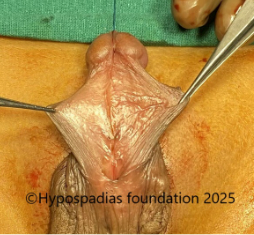
Picture 8: Prepucial flaps 6 months after stage 1 were healed very well. Flaps were wide and supple. Artificial erection test done before urethroplasty done showed no residual chordee

41img15
41img16

Picture 9: 15mm wide flaps marked and incised.

41img17

Picture 10: Urethroplasty done over 7Fr Infant feeding tube, dartos flap raised and sutured over the urethroplasty and glansplasty done

41img18
41img19

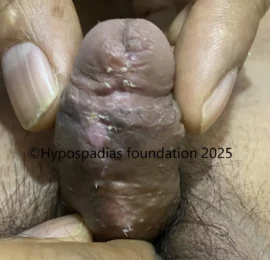
Picture 11: Completion of urethroplasty and follow-up at post operative day 12

41img20

Picture 12: Urine stream following catheter removal

Distal penile hypospadias with severe chordee (Deceptive hypospadias)

In some cases of hypospadias, the urethral opening is not only in an abnormal location but also the urethra can be underdeveloped or hypoplastic. Hypoplastic urethra is characterized by thin, underdeveloped, paperlike quality of urethral plate and the existing distal urethra. While the meatal opening may be near the tip, the presence of a hypoplastic or underdeveloped urethra indicates a more complex form of hypospadias, even if the urethral meatus appears relatively distal. This is often associated with chordee which contributes to the overall complexity of the hypospadias.

The hypospadias repair in hypoplastic urethra is more challenging. This thin urethra does not have enough robust tissue to create a new functional urethra. Using this thin urethra in reconstruction can lead to complications such as fistula formation, stricture, diverticulum formation or dehiscence.

The surgical management in hypoplastic urethra often requires specialized techniques. Degloving in these cases must be done carefully because of higher chance of injury to the urethra due to its paper-thin consistency. The type of surgical repair in cases with hypoplastic urethra is decided based on the degree of chordee. If the chordee is not significant and if single stage repair is planned, then either the thin urethra must be laid open before staring the urethral reconstruction or spongiosa around the thin urethra has to be mobilized and sutured over the thin urethra which is called as Spongioplasty.

For severe cases, like in the above-mentioned case with significant chordee and extensive hypoplastic urethra, two stage repair may be necessary. In the first stage, the penis is straightened and prepucial flaps are created. In the second stage which is 6 months after stage 1, the flaps are tubularized to form the new urethra.

Long term follow in cases of hypoplastic urethra is necessary because complications like stricture can develop years after hypospadias repair surgery. Hence these complex cases of hypoplastic urethra with hypospadias should be performed by an experienced hypospadias surgeon.

At hypospadias foundation, we have operated many cases of hypospadias with hypoplastic urethra. Each case is thoroughly examined in the preoperative period, carefully degloved during the surgery, meticulously assessed and hypospadias repair is done considering factors such as degree of chordee, severity of hypoplasia and quality of urethral plate. This has helped us achieve success rate of more than 95% even in the most complex cases.

The team at Hypospadias Foundation has two experienced hypospadias surgeons. Dr A.K Singal is considered the best hypospadias surgeon in India and the world and has a special expertise in managing complex hypospadias cases. His profound anatomical knowledge, meticulous surgical skill and an unwavering commitment to restoring both form and function in hypospadias has transformed various lives.

Dr Ashwitha Shenoy is an expert hypospadias surgeon who along with Dr Singal has dedicated her life to treating children and adults with hypospadias. Their dedication extends beyond the operating room, offering compassionate guidance and hope to families navigating a challenging diagnosis.

Guide to choose the best hypospadias surgeon for your child

Hypospadias is a common congenital anomaly diagnosed at birth. Most of the children will need repair surgery for hypospadias and this surgery should be done by 18 months of age in a child who is born full term and is otherwise healthy. The hypospadias surgery, when done, should be carried out by an expert hypospadias surgeon. The hypospadias surgeon should be trained in hypospadias surgeries and have extensive experience and dedication to hypospadias-related work. 

As a parent of a child with hypospadias, you may be confused about how to choose the best hypospadias surgeon. Any pediatric urologist or pediatric surgeon can operate on a child with hypospadias, but every surgeon may not get the desired and best post-surgery results. Here are a few tips that will help you shortlist the best hypospadias surgeon for your child.

  1. Ask your pediatrician: Pediatricians and pediatric urologists or surgeons often know each other well and work closely. Pediatricians are the first doctors to diagnose hypospadias and they can guide you to an experienced hypospadias surgeon who does lot of such surgeries and has good results for hypospadias surgery. Pediatricians often also get to see the children post-surgery and hence know the outcomes for each surgeon. Ask your pediatrician to guide you to seek the best hypospadias surgeon for your child. 
  2. Connect with parents of children with hypospadias: A parent of a child with hypospadias goes through a great deal of experience when it comes to hypospadias surgery. From pre-surgery OPD visits to post-surgery care, they become experts on how to manage their child in the hospital and after surgery. New parents can discuss with other parents whose child has already completed hypospadias repair and get an honest opinion regarding the hypospadias surgeon, experience in the hospital, and their overall experience. This will help other parents gain confidence and decide what’s best for their child.
  3. Search online for the best centres of expertise for Hypospadias Surgery: Most of the good centres for hypospadias treatment have a comprehensive website and a knowledge centre. Key things to look online are- qualification of the hypospadias doctor, years of experience, kind of cases they have managed, their success stories, their online reviews, the surgery videos, their publications and whether they are so good that they are training other surgeons. In the best hypospadias centres, their website will have enough information on all these points.
  4. Visit your hypospadias surgeon in the OPD: Make sure you visit your hypospadias surgeon or connect with them online for a hypospadias consultation at least once before you plan the surgery. In the Outpatient department (OPD) of a hypospadias surgeon you will find many other children with hypospadias which indicates hypospadias surgery is performed regularly at that hospital. Ask your hypospadias surgeon about the cases done so far, the success rate and similar cases done in the past which will help you gain confidence in the surgeon and take a decision if he/she is the right surgeon for your child.
  5. Success rate of hypospadias repair surgery: Every surgery has its own set of complications but when it comes to hypospadias the complication rates vary widely at various centers. The best hypospadias surgeon should have a success rate of more than 90% with a complication rate of under 10%.  When you visit your hypospadias surgeon do ask them about the success rate of surgery at their center. 
  6. Expertise in managing complex hypospadias: Complex hypospadias such as perineal, scrotal hypospadias and redo hypospadias (hypospadias after multiple previous failed attempts) need to be managed very differently. If your child has such a hypospadias, make sure that you ask your hypospadias surgeon about their experience in managing such cases and the technique which is going to be done in your child so that you are prepared for the post-surgery period. An experienced hypospadias surgeon will be well versed in managing complex cases as well as primary ones. 

The first surgery is the best chance for a complete cure from hypospadias. Once the first surgery fails, subsequent surgeries become difficult. Hence, it is important that you do full research and choose wisely. Choosing the right hypospadias surgeon is not an easy decision for any parent. Every parent wants the best surgeon for their child. 

At hypospadias foundation, we treat more than 200 children and adults every year with hypospadias. Our dedication and expertise in hypospadias makes us one of the leading centers for hypospadias repair in the world. Do not hesitate to write to us or visit us for more information on our expert hypospadias surgeons. We will be happy to offer a second opinion or help you with understanding hypospadias treatment for your child or yourself (adult hypospadias)


Fill up contact form: https://www.hypospadiasfoundation.com/contact/

Contact Form for Hypospadias Foundation

Please fill all clinical details and upload pictures and clinical summaries (if available)

    Attach Documents (pdf | jpeg | mp4)
    (upload size upto 5mb)

    Twins from Greece undergo successful surgery for severe hypospadias in Mumbai, India

    Across the borders for Hypospadias

    Hypospadias is one of the most common congenital anomalies affecting more than 4,00,000 newborn babies every year across the globe. The problem is not restricted to any particular country or race. Every year, our team at Hypospadias Foundation lead by Dr A.K. Singal manages kids with hypospadias from across India and also from other countries such as Nigeria, Kenya, Iraq, Bangladesh, USA and recently Greece.

    Well, the kids from Greece were a whole different story. Though originally from Greece, their father Ioannis Padadatos was employed with a company in Delhi. Master Konstantinos and Spyridon Papadatos, twin babies were born in Delhi to Maria and Ioannis were noted to have hypospadias at birth. The hypospadias was relatively severe in both the children and had associated chordee. The urethral opening was near the scrotum (testis) called Penoscrotal hypospadias. Parents were very hassled as they had never heard of the condition before and now both their newborn babies had severe variety of hyposapdias. Dissatisfied with the information given by pediatricians, pediatric surgeons and urologists in Delhi, they took up to internet for more information. They contacted Dr A.K.Singal, Pediatric Urologist & renowned Hypospadias surgeon who regularly writes articles at www.hypospadiasfoundation.com . Though they had visited the multiple doctors in delhi, what reassured them was the blogs written by dr A.K.Singal about his experience with children who had hypospadias.

    After exchange of a few emails, Maria and Ioannis travelled all the way to Mumbai when the babies were 6 months old, in Nov 2013 to consult Dr A.K.Singal at Fortis Hospital in Vashi. Since the right age of surgery for hypospadias is 6 – 15 months, the parents elected to get the surgery done as soon as possible. After the blood tests, the parents again came to Mumbai in December to get the surgery done for both the kids. Master Spyridon underwent surgery on a Monday while Konstantinos underwent surgery on Tuesday. Though both had severe hypospadias and the parents were counseled that a two staged correction may be needed, the whole hypospadias surgical correction was performed in one stage using an Onlay Island Flap urethroplasty of which Dr Singal is an expert. The correction of penile curvature (chordee correction) and formation of new urinary tube (urethroplasty) were all performed in one stage.

    After one more day post-surgery in Mumbai, the family travelled back to Delhi and kept in regular touch with Dr Singal via email. Dr Singal visited them one week later in Fortis Hospital in Delhi while attending a conference. Finally the catheter (urinary pipe) was removed after ten days of surgery and babies passed urine in good thick stream signifying a successful outcome in one stage. Now almost nine months after hypospadias surgery, both the babies are doing extremely well.

    The family has now shifted to Doha, Qatar but they have taken a lot of India with them and most of all fond memories. We at Hypospadias Foundation are very happy to see the kids grow well and pass urine from a normal opening.

    Dr Singal adds “With the advances in instruments and sutures plus better surgical techniques, we are able to do single stage correction for even severe hypospadias in most cases. Rarely we need second surgery and that too if there are complications in the first hypospadias surgery. I am happy that Maria and Ioannis trusted us for management of their children for hypospadias. They came with full faith and trust and that made my job so much easier. I will always remember their family and their beautiful kids. It was indeed a joy meeting them and knowing them. Sometimes I wonder as a hypospadias surgeon what kind of leap of faith the parents must take to travel in an unknown country to an unknown doctor and trust him/ her with the lives of their little ones. I truly appreciate their courage and faith.”

    Contact Form for Hypospadias Foundation

    Please fill all clinical details and upload pictures and clinical summaries (if available)

      Attach Documents (pdf | jpeg | mp4)
      (upload size upto 5mb)

      Preoperative instructions for children undergoing hypospadias repair surgery

      Hypospadias is often diagnosed at birth or in the first few weeks when a pediatrician does a general examination. It may be a time of great anxiety for the parents when they learn that their child has a urological abnormality which may need surgery. The word surgery may be itself be scary and on top of that surgery on a child and that too on penis. That being said, results of hypospadias repair procedure are very good now, mostly with a smooth pre surgery and post surgery course.

      Parents often wonder about what needs to be done before the hypospadias surgery in terms of preparation. Hence, we have tried to put some of this information in this blog which is more general in nature as the specific information can be only shared by the actual hypospadias expert surgeon managing the child.

      Before the surgery, besides the usual tests for fitness to make sure that the blood parameters are fine, we always ask for thorough examination to make sure that the child is not having any other concurrent illness such as respiratory, skin or intestinal infection. If the examination and the tests are normal, then we sit with the family and fix up a date for surgery. If the date is far out, we call for another review one week before surgery to ascertain that everything is ready for surgery. Sometimes the parents and families are travelling to us from a long distance away from within India or other countries, then we try to conduct a phone call one week before the hypospadias repair. In our pediatric urologist services, we try to keep hypospadias operation as the first case every day. This ensures that the staff is in the best of their spirits and best of their energy.

      1. Empty stomach: The child needs to be empty stomach for atleast 4 hours for breast milk and 6 hours for solid foods/ breads on the day of surgery before surgery. This is a mandatory safety precaution to prevent vomiting during anesthesia. Keeping a 6 months or a one year old child hungry for 4 hours is not an easy task. Infact some of the parents are more worried about keeping a young child hungry than the actual surgery but this is something which is non-negotiable. Often we give the child light sedative syrup 1-2 hours before surgery to help the baby sleep.
      2. Bathing: We ask the parents to give the child a bath on the morning of hypospadias operation as it will be difficult to give a formal head to toe bath for next 5-7 days after..321 surgery.
      3. Potty: Some of the children may be a little constipated, we advise parents to give a glycerine suppository or a laxative the night before so that the child has an empty bowel. Post hypospadias surgery, local pain often leads to a temporary constipation.
      4. Admission: In a hospital with daycare facility, we admit the child for hypospadias operation at 6:30am -7am. If the parents live farther away from the hospital or the hospital doesn’t have a daycare facility, we like to admit the children the night before surgery. At Hypospadias foundation in Navi Mumbai, India we mostly admit the children in the morning of the surgery itself unless the parents live more than 50km away or do not have a means of traveling early in morning.
      5. Clothes: Children are changed into hospital clothes appropriate for their age on the morning of surgery. Make sure that the iv canula is inserted after changing of clothes.
      6. Sedation: If the child is irritable while staying hungry we either advise a pacifier or a light sedative syrup till the time of anesthesia.
      7. Induction: Crying child is not a good sight just before hypospadias surgery for the parents or the hypospadias doctor. If the child has an iv line, anesthesia team often administers a small dose of premedication to help sedate the child before shifting to operation theatre.
      8. Consent: Before hypospadias surgery is started, family has to fill up an anesthesia and a surgery consent form which is quite detailed in general. Sometimes the parents get alarmed on seeing the form. But please feel free to ask us about any doubts which you have. We always have the best of intentions and efforts to get your baby back home safely after hypospadias surgery.

      We must understand that getting the child with hypospadias fully cured is a team effort and it needs devotion and patience from both the family as well the surgical team. We at Hypospadias Foundation are committed towards making the whole hypospadias treatment experience seamless, less bothersome, more baby friendly and easy for the families. This also translates into better results sheerly stemming from deep interest in wellbeing of babies with hypospadias.

      Please contact us if you have any questions for us by submitting your query here. Dr Singal and his team will be more than happy to help.

      Dr A.K.Singal is a renowned and one of the best Pediatric urologist’s in Indian subcontinent. He is known for excellent results and devotion to managing children and adults with hypospadias and Disorders of sex development. He runs his urology and hypospadias clinics in Navi Mumbai and Mumbai area of western India. Dr Singal is outspoken advocate of achieving best results for hypospadias both clinically and psychosocially.
      Contact Form for Hypospadias Foundation

      Please fill all clinical details and upload pictures and clinical summaries (if available)

        Attach Documents (pdf | jpeg | mp4)
        (upload size upto 5mb)

        Contact Us

        Call Now