Single stage hypospadias repair in distal penile hypospadias with chordee

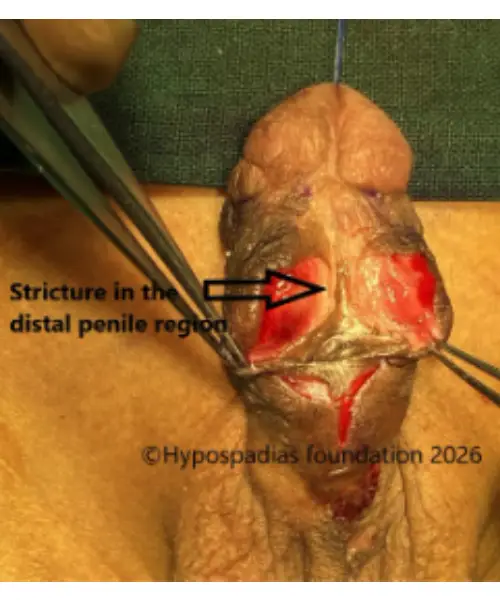
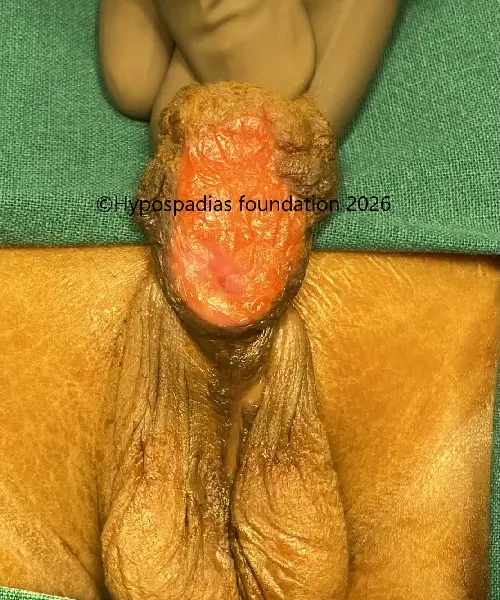
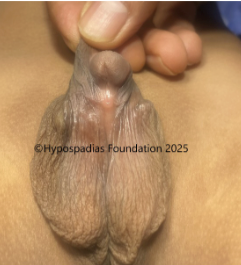
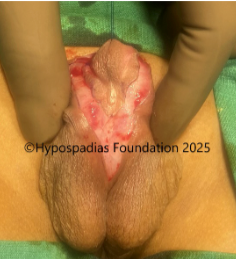
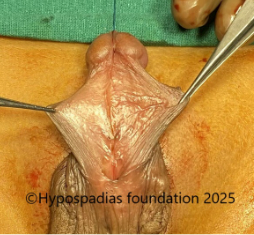
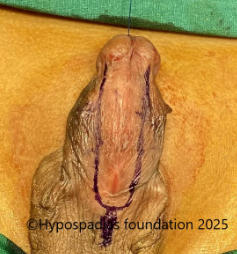
Mast A.T., a one-year-old male, presented to the Hypospadias Foundation clinic with an abnormal ventral urinary opening on underside of penis and downward penile curvature. Clinical examination revealed a distal penile hypospadias, deficient ventral foreskin, and
ventral chordee (penile curvature).

A single-stage surgical hypospadias repair was planned, comprising of chordee correction (Orthoplasty) and urethroplasty (reconstruction of the urinary channel)


Intraoperative Procedure

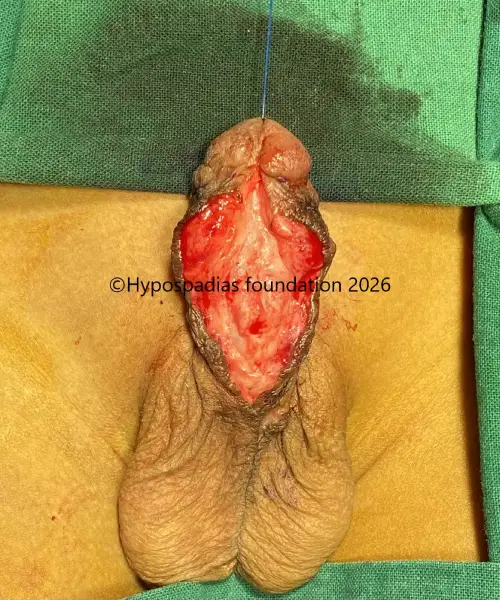
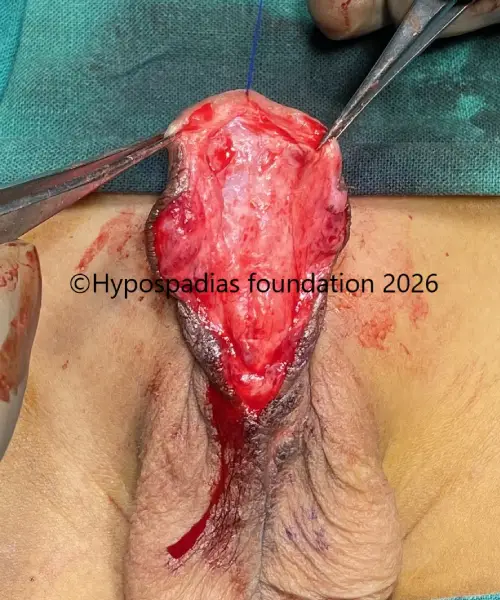
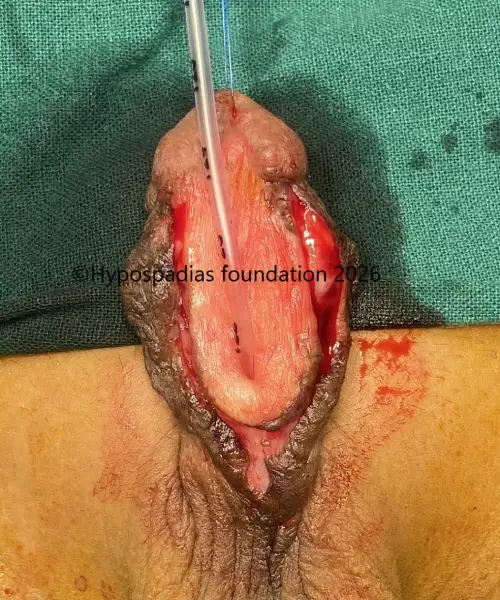
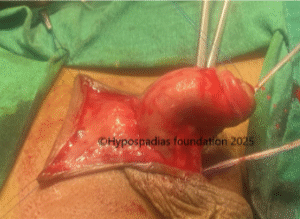
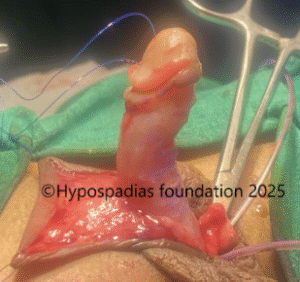
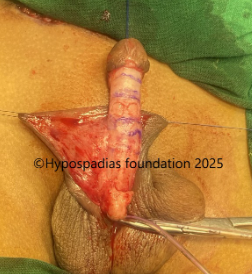
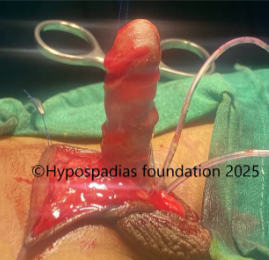
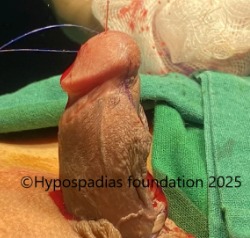
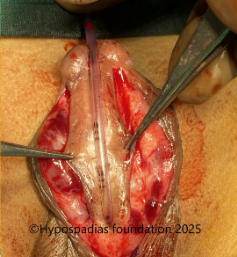
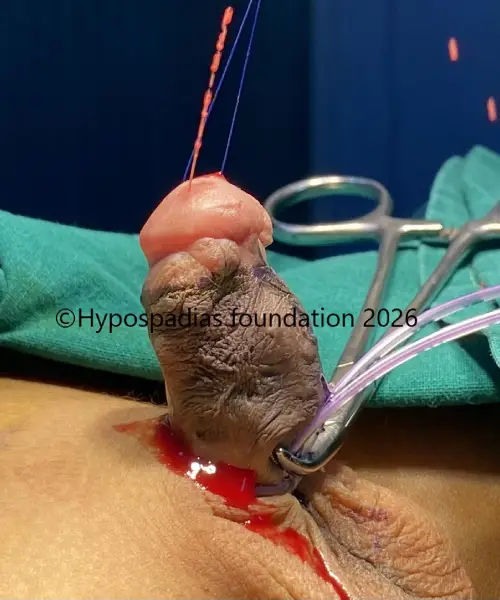
The procedure commenced with a 5-0 Prolene stay suture on the glans for traction. Local anaesthesia (Xylocaine with adrenaline) was infiltrated at the marked incision sites. Following the initial incision and complete degloving of the penis, an artificial erection test was performed to assess the degree of curvature.

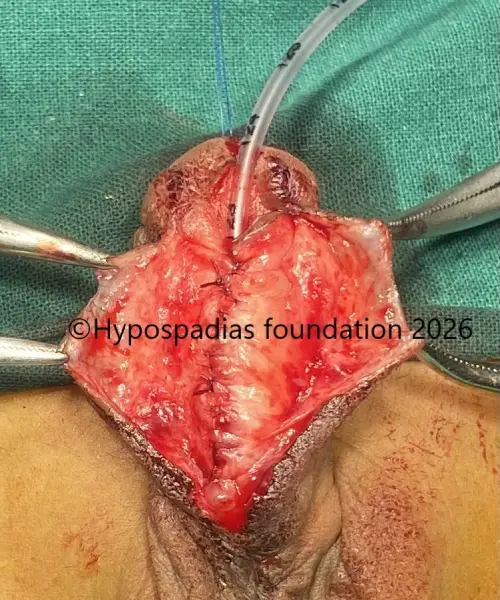
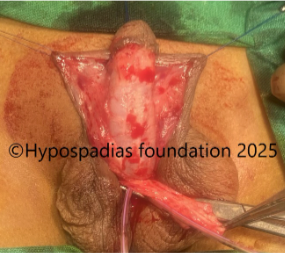
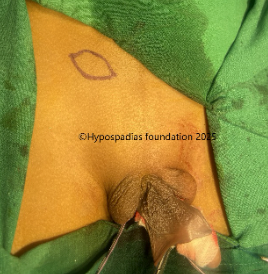
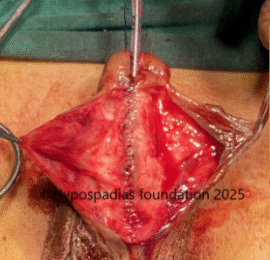
 Chordee Correction: A curvature of less than 30 degree was noted. This was corrected via Tunica Albuginea Plication (TAP) on the dorsal aspect (upper part) of the penis, opposite the site of maximum curvature. A repeat artificial erection test confirmed complete correction of the chordee.

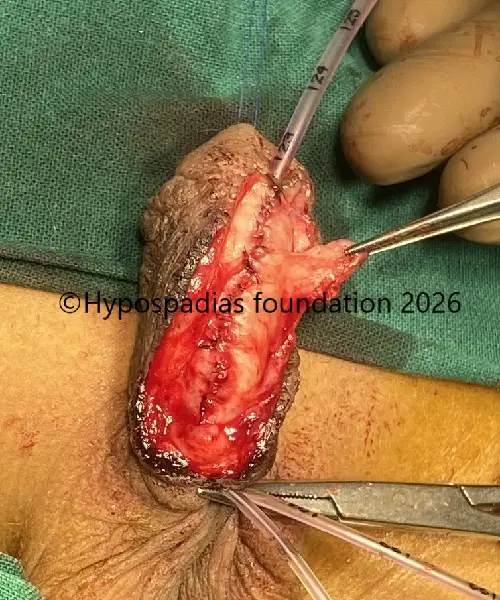
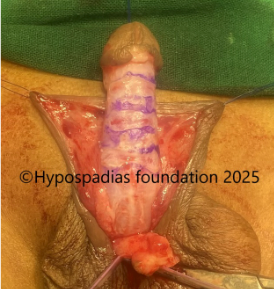
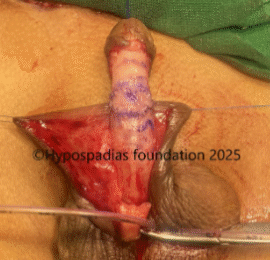
 Urethroplasty: The glans wings were marked, incised, and widely mobilized. A midline incision was made in the urethral plate to increase its width (TIP – Tubularized Incised Plate technique). The neo-urethra was constructed in two layers:

o Layer 1: Continuous subcuticular sutures.
o Layer 2: Interrupted sutures.

 Waterproofing: A preputial dartos flap was raised and transposed over the urethroplasty site to provide a vascularized waterproofing layer, significantly reducing the risk of a fistula (leak).

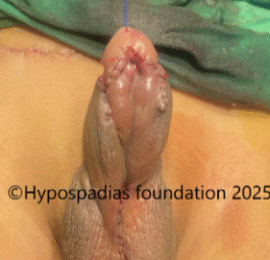
 Completion: Glansplasty was performed to reconstruct the glans. The skin was closed in two layers using 6-0 PDS and 6-0 vicryl Rapide.


Postoperative Outcome and Follow-up

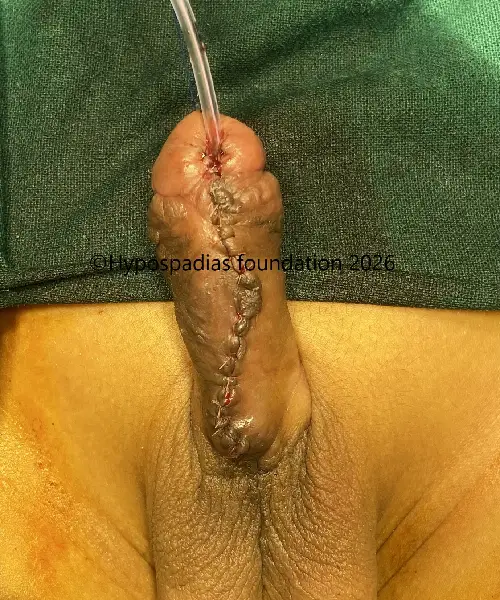
The repair was stented using a 7 Fr infant feeding tube, with the new meatus successfully positioned at the tip of the glans.

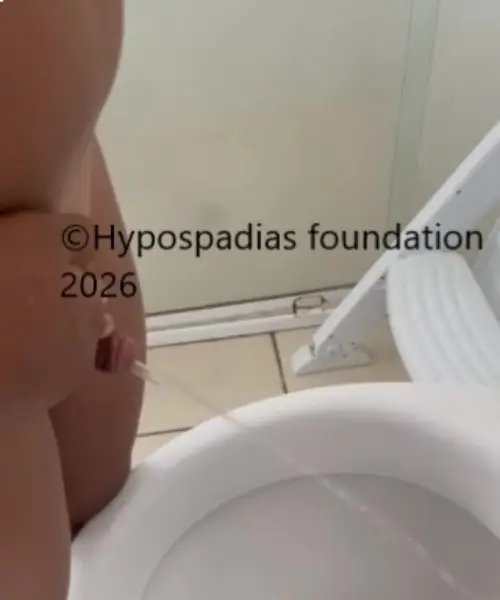
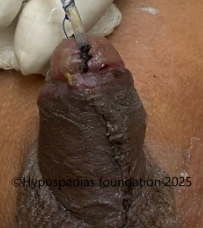
 Day 7: The catheter and dressings were removed. The patient demonstrated a strong, straight urinary stream with no associated pain.

 Healing: The surgical site healed by primary intention without complications (e.g., hematoma, infection, or dehiscence).

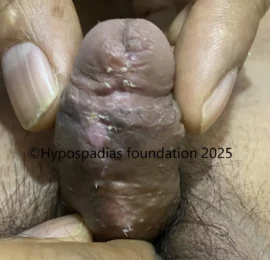
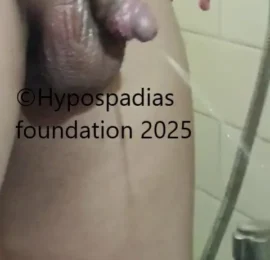
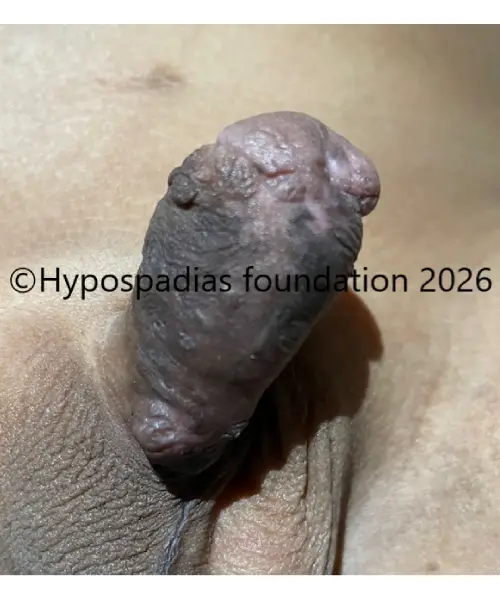
 1-Year Follow-up: The patient remains asymptomatic with excellent functional and cosmetic results.
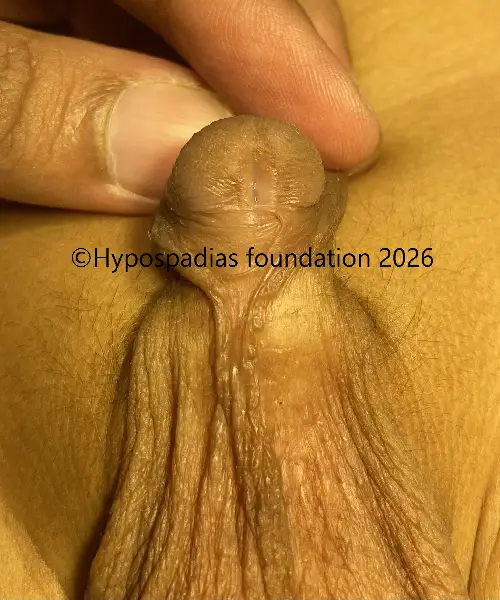
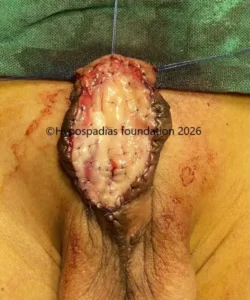
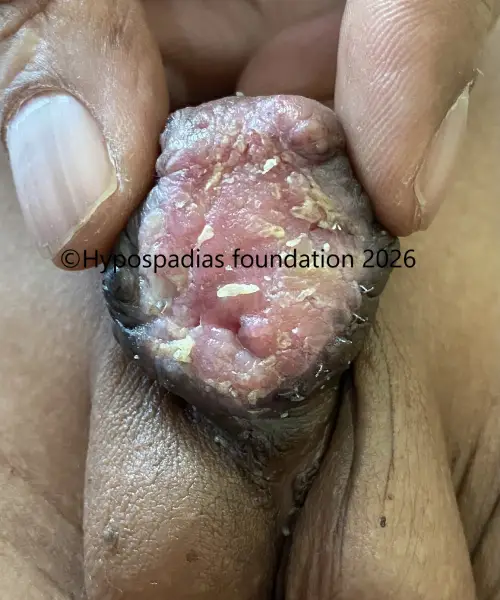
Pic 1: Clinical examination shows presence of chordee with meatus in the distal penile region
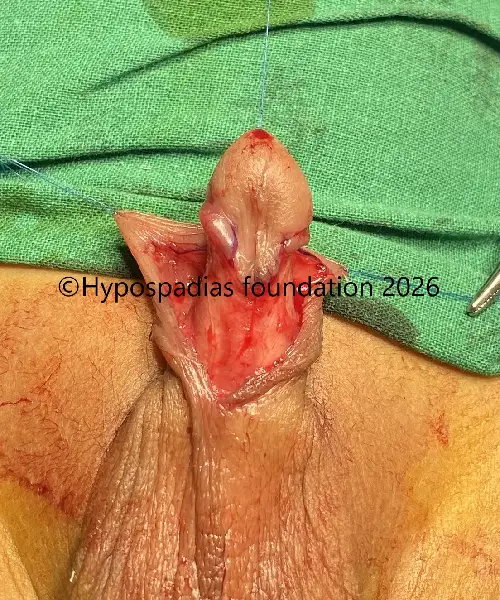
Pic 2: Complete degloving done
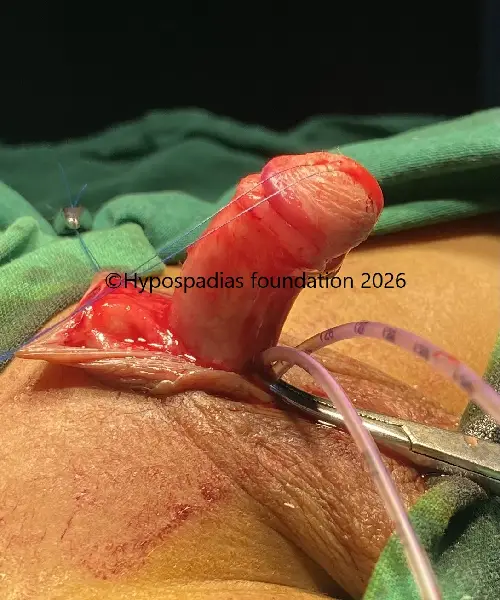
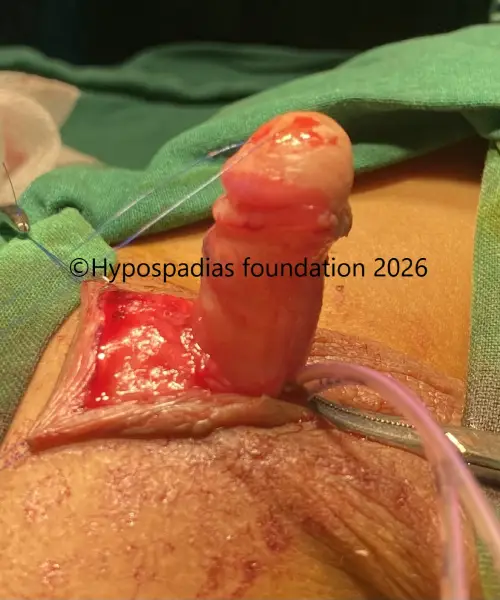
Fig 3: Artificial erection test shows less than 30-degree chordee which was corrected by 12’o clock dorsal tunica albuginea plication (dorsal TAP)
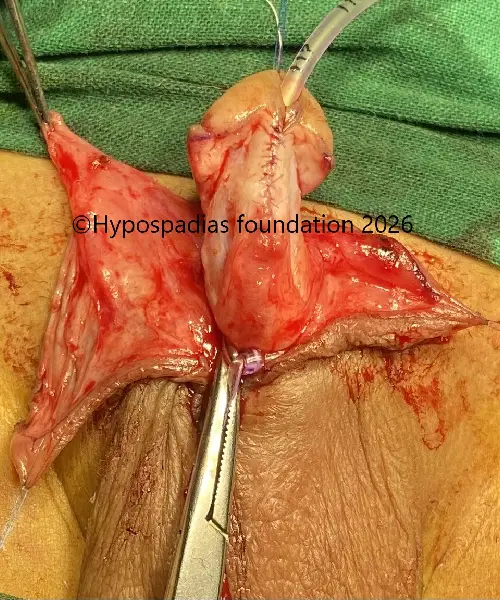
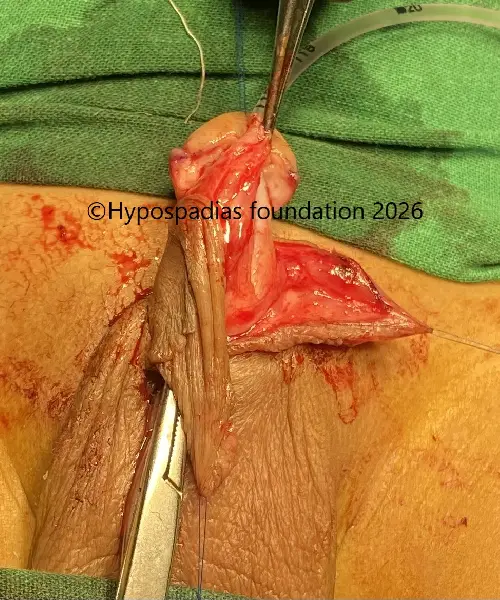
Fig 4: Glans wings raised and urethroplasty done over 7Fr infant feeding tube. Right dartos flap raised and sutured over the urethroplasty with 6-0 PDS.
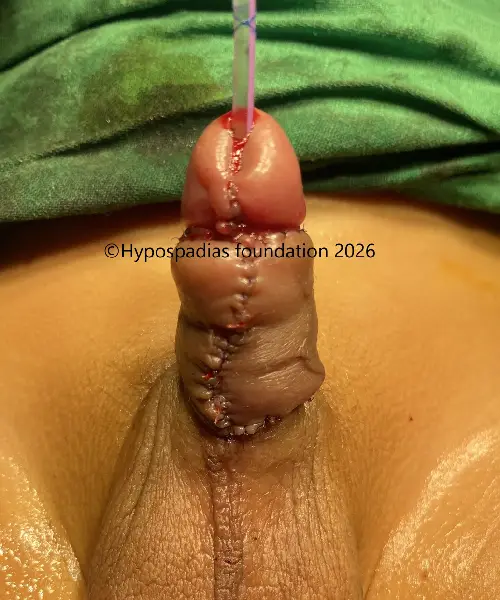
Fig 5: Single stage urethroplasty with chordee correction completed
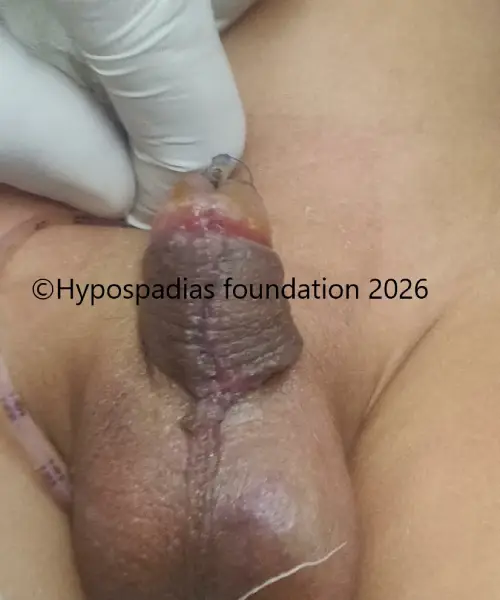
Fig 6: At 7 days follow up after surgery
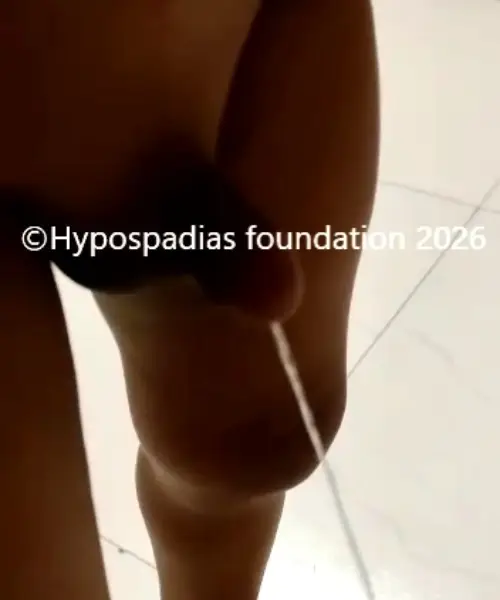
Fig 7: At 1 year follow up after surgery, passing urine in single straight stream

Single-stage hypospadias repair in distal penile hypospadias with chordee Single-stage hypospadias repair is the preferred surgery for distal penile hypospadias associated with mild chordee. Though the urinary opening is positioned near the glans, the reconstruction has to be done with utmost care by the hypospadias expert.Even a little bit of carelessness can lead to complications.

 Primary Technique: The Tubularized Incised Plate (TIP) urethroplasty—commonly referred to as the Snodgrass repair—is the most widely utilized method. This procedure involves a midline incision of the urethral plate to allow for tension-free tubularization, ensuring a functional and cosmetically normal neo-urethra.

 Optimal Age for Surgery: Pediatric urologists generally recommend performing this repair between 6 and 18 months of age. This "golden window" facilitates rapid tissue healing, simplifies postoperative diaper management, and minimizes the risk of long- term psychological impact on the child.


Outcomes and Success Rates

When performed by an expert hypospadias surgeon in a specialized center like Hypospadias Foundation India, the success rate for distal repairs exceeds 95%. However, clinical diligence is required to monitor for potential postoperative hypospadias complications.

Functional Rationale for Early Surgical Intervention

While distal hypospadias may appear manageable in infancy, untreated cases often lead to significant functional and psychosocial challenges as the patient matures:

1. Backward flow of urine: If the urinary opening is located on the underside of the penis, the stream is directed backwards causing inconvenience to the boys. Boys will have difficulty in using a urinal and they cannot urinate without getting urine on their clothes or shoes.

2. Sexual Health: Persistent chordee (ventral curvature) can lead to painful erections or Mechanical difficulties with intercourse in adulthood.

3. Psychosocial Impact: A non-apical urinary opening can cause significant social anxiety and hygiene concerns regarding standing to void.

Clinical Summary: Early repair of distal hypospadias with chordee is not merely cosmetic; it is a functional necessity that ensures optimal urogenital health and quality of life into adulthood.


The Hypospadias Foundation: A Global Center of Excellence

Located in Kharghar, Navi Mumbai, Maharashtra, the Hypospadias Foundation stands as India’s premier and best hypospadias specialty center and a globally recognized leader in hypospadias treatment.

Why Patients Choose Our Center:
For over 18 years, we have been a destination for both pediatric and adult patients from across India and the world. Our commitment to surgical precision and patient care is reflected in our clinical data:

 High Volume: Over 250 specialized surgeries performed annually.

 Proven Safety: A complication rate of less than 5%, significantly lower than the global average for complex reconstructions.

 Global Reach: Successfully treating international patients from more than 30 countries with diverse anatomical challenges.


Our Expert Surgical Team

The foundation’s success is built on the combined expertise of two of the world’s leading specialists in reconstructive urology.

Dr A. K. Singal is a top-tier expert hypospadias surgeon and pediatric urologist who has dedicated his career to the advancement of hypospadias repair. His refined techniques have consistently achieved excellent functional and aesthetic outcomes for both children and adults, particularly in complex "redo" or failed previous surgeries. He is rated the best hypospadias surgeon in India and the world.

Dr Ashwitha Shenoy is an expert pediatric urologist with a sub-specialty interest in pediatric urology and hypospadias. Her meticulous approach to neonatal and childhood reconstruction ensures long-term success from a young age. Together, Dr. Singal and Dr. Shenoy provide a collaborative, multidisciplinary approach that delivers the best results for hypospadias surgery in India.
Failed hypospadias with urethral stricture and fistula – Two stage oral mucosa graft urethroplasty

Failed hypospadias with urethral stricture and fistula – Two stage oral mucosa graft urethroplasty

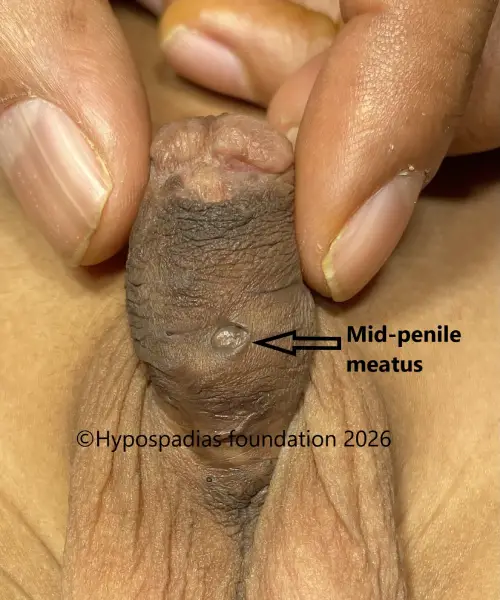
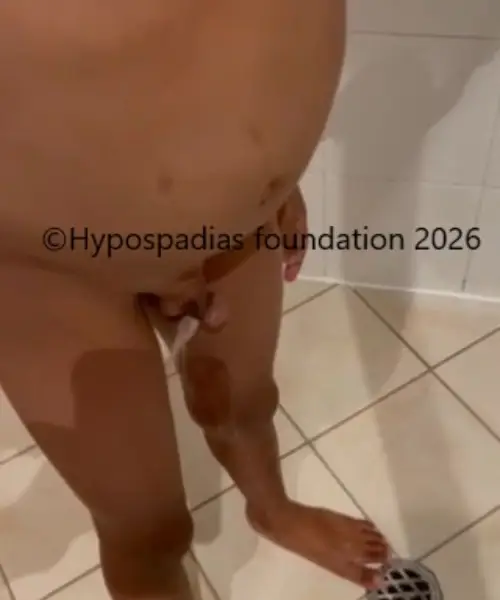
A 6-year male child presented to Hypospadias foundation OPD after 4 failed hypospadias surgeries in Australia. After the first surgery in Australia, he had complete breakdown of the newly reconstructed urethra. He further underwent redo surgery in 3 stages, but it was unsuccessful. Even after a redo surgery, child was unable to pass the urine from the distal penile meatus. On examination in the Hypospadias Foundation OPD, the urinary opening was at the midpenile region. The distal passage was completely strictured. There was no obvious chordee on examination. We counselled the parents that the entire repair needs to be done again in 2-3 stages.
At the start of hypospadias surgery, we performed cystoscopy. The urethra proximal to the midpenile meatus was normal. Scope could not be negotiated into the distal urethra. Chordee was assessed and there was no residual chordee. We decided to proceed with two stage oral mucosa graft repair since there was no residual chordee.

Glans stitch was taken with 4-0 prolene. The distal urethra was laid open and noted to be completely stenosed. Unhealthy fibrotic urethra was excised completely. Oral mucosa graft was harvested from the right cheek of size 5x2cm. Graft was placed on the ventral raw area and quilted thoroughly on the corpora with 6-0 PDS.

After stage 1, healing was good. Steroid massage was started 3 weeks after surgery and was continued for 5 months. There was 100% graft uptake. Second surgery was planned 8 months after stage 1 when graft was soft and pliable.


Second stage repair (Urethroplasty)

Local anesthesia, lignocaine with adrenaline was injected at the edges of the graft. Graft was incised at the margin keeping a width of 18mm. Graft was tubularized over a 7Fr infant feeding tube (IFT). Second layer was closed with local tissues. Glans wings were widely mobilized. Dartos flap was raised from the left side and sutured over the urethroplasty with 6-0 PDS. Glansplasty was done with 5-0 vicryl and glans epithelium was closed with 6-0 PDS. Skin was closed in 2 layers with 6-0 PDS and 6-0 vicry rapide.

Dressing change was done on day 7 and catheter was removed on post operative day 12. After catheter removal, the child was passing urine in single straight stream with no pain or leak.

Picture 1: On examination, the meatus was in the midpenile region. Chordee was assessed during stage 1, there was no residual chordee

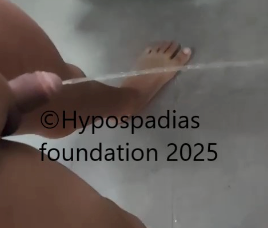
Picture 2: Pre surgery urine stream, passing urine from midpenile region with no flow from the distal penile meatus.

Picture 3: Distal urethra was laid open and noted to be completely stenosed.

Picture 4: Unhealthy urethra excised, glans wings widely raised for placement of oral mucosa graft

Picture 5: Oral mucosa graft harvested from right cheek, sutured on the ventral side and quilted to the underlying corpora with 6-0 PDS.

46c9
46c10

Picture 6: At 3 weeks after stage 1 OMG, the graft was examined. There was 100% graft uptake

Picture 6: Follow up at 6 months after surgery

Picture 7: Graft was soft and supple at 8 months after stage 1. Graft edges were incised keeping a width of 18mm for urethroplasty

Picture 8: Urethroplasty was done over 7Fr infant feeding tube. Dartos flap from the left side was raised and sutured over the urethroplasty.

Picture 9: Urethroplasty and glansplasty was completed. Catheter removal was done on post operative day 12

Picture 10: Cosmetic result and urine stream at 6 months after stage 2 urethroplasty

Surgery for failed hypospadias – stricture and fistula – Two stage oral mucosa graft repair

Failed hypospadias with stricture and fistula – Two stage oral mucosa graft urethroplasty

Urethral stricture and urethrocutaneous fistula are two well-recognized complications following hypospadias repair. A urethral stricture refers to narrowing of the reconstructed urethra due to scarring. This obstruction is one of the important factors contributing to fistula
formation.

In the above-mentioned case, the child developed distal urethral narrowing and was unable to pass urine through the distal penile meatus. As a result, the urethra opened in the mid- penile region, allowing urine to drain from the bladder. Since urine preferentially drained through the mid-penile opening, flow across the distal urethra ceased, leading to progressive stenosis of the distal segment. Over time, this resulted in narrowing of the entire distal urethra.

The most common causes of urethral stricture following hypospadias surgery include ischemia of the neourethra due to poor vascularity, excessive tension on the reconstructed urethra, and postoperative infection. Urethral strictures occurring after hypospadias repair differ significantly from non-hypospadias–related urethral strictures. In such cases, urethral dilatation is usually ineffective, and repeated dilatations may further worsen the scarring and narrowing.

Management of post-hypospadias urethral stricture typically requires replacement of the narrowed segment with healthy tissue. This is achieved using either oral mucosal grafts (such as buccal mucosa) or well-vascularized local skin flaps to adequately widen the urethra and restore normal urinary flow.

Complications following hypospadias repair are best managed by a trained and experienced pediatric urologist, particularly one with expertise in failed and complex hypospadias cases. Multiple previous surgeries significantly increase the complexity of subsequent repairs. In such situations, staged surgical reconstruction often provides better functional outcomes, improved cosmesis, and more durable long-term results.

At the Hypospadias Foundation India, children and adults from more than 30 countries worldwide seek treatment for hypospadias and its complications. The surgical team, led by experienced surgeons Dr. A. K. Singal and Dr. Ashwitha Shenoy, specializes in managing complex, multistage, and failed hypospadias repairs. Dr A.K.Singal is considered the best hypospadias surgeon in the world especially for children or adults who had a failed hypospadias surgery earlier. With a deep understanding of the nuances involved in challenging hypospadias surgery, the Hypospadias Foundation offers a dedicated and specialized approach for patients requiring advanced reconstructive care.

Two stage repair of deceptive distal penile hypospadias with hypoplastic urethra and severe chordee

6-year male from Kerala presented to the Hypospadias Foundation clinic with complaints of passing urine from distal penile region associated with downward curvature of the penis (chordee). On examination, meatus was in distal penile region, but the urethra was thin till the proximal penile region. The stretched penile length (SPL) was 40mm and glans diameter (GD) was 12.5mm. In view of small glans diameter, he received two doses of injection testosterone in the pre surgery period which were given 1 month apart. Following the two doses, the stretched penile length improved to 35mm and glans diameter to 15mm.

He was planned for hypospadias repair and the family was counselled for single or two stage repair based on the degree of chordee.

The surgery was started by complete degloving which means the penile skin was completely taken down preserving its blood supply. After degloving, the chordee was assessed by artificial erection test. Here in this case after complete degloving, artificial erection test showed chordee of more than 45 degrees. This was because of the hypoplastic (underdeveloped) tissues on the underside of the penis. We decided to divide the urethral plate and mobilise the urethra. Spongiosum was raised on the sides first, urethral plate divided at coronal level and urethra mobilised till penoscrotal junction to fully evaluate the chordee. Chordee was reassessed and there was persistent chordee of more than 45 degrees. Site of maximum curvature was marked on the ventral side (underside of the penis) and three corporotomies were made by placing horizontal incisions over the tunica with middle incision at the site of maximum curvature. Chordee was reassessed and there was still significant chordee necessitating a ventral penile lengthening procedure called as dermal graft. The central corporotomy incision was deepened to full divide tunica and then cavernosal tissue was mobilised from tunica on all sides. A skin ellipse was harvested from the inguinal region, de-epithelized, and defatted to create a dermal graft. This dermal graft was sutured at the site of tunical defect with 6-0 PDS interrupted sutures. An artificial erection test following dermal graft revealed no chordee.

Once the chordee was corrected, the proximal urethra was sutured in the proximal penile region with 6-0 PDS. Glans wings were raised. Byars flap was created. Byars flap involves division of the dorsal prepuce in the midline and then rotation to the underside of the penis to cover the whole underside of the penis from glans till all around the meatus.

41img1
41img2

Picture 1: On clinical examination, the meatus was in the distal penile region with thin urethra till the proximal penile region. Surgery was started by complete degloving

Picture 2: Artificial erection test showed chordee of more than 45 degrees

41img5

Picture 3: Urethral plate divided, mobilised and chordee reassessed. More than 45 degrees chordee noted

Picture 4: Three ventral corporotomies given and chordee reassessed, persistent chordee of more than 30 degrees noted, hence planned to go ahead with ventral lengthening procedure

Picture 5: Deep corporotomy given at the site of maximum curvature and tunica incised, dermal graft harvested from the right inguinal region

41img10
41img11

Picture 6: Dermal graft sutured at the site of tunical defect. No chordee noted after dermal graft.

41img12

Picture 7: Dorsal prepuce (foreskin) divided in the midline and flaps rotated to cover the underside of the penis

Second stage of Hypospadias Repair:

After 6 months of first hypospadias surgery, the child was taken up for second stage urethroplasty. We checked chordee again before starting the urethroplasty (urethral reconstruction) and the penis was completely straight. The prepucial flaps which were done in first stage had healed very well. The flaps were wide and supple. 15mm wide incision was marked on the flaps and, local anaesthesia was infiltrated at the marked site and incisions were deepened till the corpora. Urethroplasty was done over 7Fr Infant feeding tube in two layers with 6-0 PDS absorbable sutures. Dartos flap was harvested from both sides and sutured over the entire urethroplasty. Glans wings were raised. Distal urethroplasty and glansplasty was done, and a new meatus was created on the glans. The dressing in the post operative period was changed on post operative day 7 and catheter was removed on post operative day 12. Child was passing urine through the new opening in a good stream.

41img13
41img14

Picture 8: Prepucial flaps 6 months after stage 1 were healed very well. Flaps were wide and supple. Artificial erection test done before urethroplasty done showed no residual chordee

41img15
41img16

Picture 9: 15mm wide flaps marked and incised.

41img17

Picture 10: Urethroplasty done over 7Fr Infant feeding tube, dartos flap raised and sutured over the urethroplasty and glansplasty done

41img18
41img19

Picture 11: Completion of urethroplasty and follow-up at post operative day 12

41img20

Picture 12: Urine stream following catheter removal

Distal penile hypospadias with severe chordee (Deceptive hypospadias)

In some cases of hypospadias, the urethral opening is not only in an abnormal location but also the urethra can be underdeveloped or hypoplastic. Hypoplastic urethra is characterized by thin, underdeveloped, paperlike quality of urethral plate and the existing distal urethra. While the meatal opening may be near the tip, the presence of a hypoplastic or underdeveloped urethra indicates a more complex form of hypospadias, even if the urethral meatus appears relatively distal. This is often associated with chordee which contributes to the overall complexity of the hypospadias.

The hypospadias repair in hypoplastic urethra is more challenging. This thin urethra does not have enough robust tissue to create a new functional urethra. Using this thin urethra in reconstruction can lead to complications such as fistula formation, stricture, diverticulum formation or dehiscence.

The surgical management in hypoplastic urethra often requires specialized techniques. Degloving in these cases must be done carefully because of higher chance of injury to the urethra due to its paper-thin consistency. The type of surgical repair in cases with hypoplastic urethra is decided based on the degree of chordee. If the chordee is not significant and if single stage repair is planned, then either the thin urethra must be laid open before staring the urethral reconstruction or spongiosa around the thin urethra has to be mobilized and sutured over the thin urethra which is called as Spongioplasty.

For severe cases, like in the above-mentioned case with significant chordee and extensive hypoplastic urethra, two stage repair may be necessary. In the first stage, the penis is straightened and prepucial flaps are created. In the second stage which is 6 months after stage 1, the flaps are tubularized to form the new urethra.

Long term follow in cases of hypoplastic urethra is necessary because complications like stricture can develop years after hypospadias repair surgery. Hence these complex cases of hypoplastic urethra with hypospadias should be performed by an experienced hypospadias surgeon.

At hypospadias foundation, we have operated many cases of hypospadias with hypoplastic urethra. Each case is thoroughly examined in the preoperative period, carefully degloved during the surgery, meticulously assessed and hypospadias repair is done considering factors such as degree of chordee, severity of hypoplasia and quality of urethral plate. This has helped us achieve success rate of more than 95% even in the most complex cases.

The team at Hypospadias Foundation has two experienced hypospadias surgeons. Dr A.K Singal is considered the best hypospadias surgeon in India and the world and has a special expertise in managing complex hypospadias cases. His profound anatomical knowledge, meticulous surgical skill and an unwavering commitment to restoring both form and function in hypospadias has transformed various lives.

Dr Ashwitha Shenoy is an expert hypospadias surgeon who along with Dr Singal has dedicated her life to treating children and adults with hypospadias. Their dedication extends beyond the operating room, offering compassionate guidance and hope to families navigating a challenging diagnosis.

Guide to choose the best hypospadias surgeon for your child

Hypospadias is a common congenital anomaly diagnosed at birth. Most of the children will need repair surgery for hypospadias and this surgery should be done by 18 months of age in a child who is born full term and is otherwise healthy. The hypospadias surgery, when done, should be carried out by an expert hypospadias surgeon. The hypospadias surgeon should be trained in hypospadias surgeries and have extensive experience and dedication to hypospadias-related work. 

As a parent of a child with hypospadias, you may be confused about how to choose the best hypospadias surgeon. Any pediatric urologist or pediatric surgeon can operate on a child with hypospadias, but every surgeon may not get the desired and best post-surgery results. Here are a few tips that will help you shortlist the best hypospadias surgeon for your child.

  1. Ask your pediatrician: Pediatricians and pediatric urologists or surgeons often know each other well and work closely. Pediatricians are the first doctors to diagnose hypospadias and they can guide you to an experienced hypospadias surgeon who does lot of such surgeries and has good results for hypospadias surgery. Pediatricians often also get to see the children post-surgery and hence know the outcomes for each surgeon. Ask your pediatrician to guide you to seek the best hypospadias surgeon for your child. 
  2. Connect with parents of children with hypospadias: A parent of a child with hypospadias goes through a great deal of experience when it comes to hypospadias surgery. From pre-surgery OPD visits to post-surgery care, they become experts on how to manage their child in the hospital and after surgery. New parents can discuss with other parents whose child has already completed hypospadias repair and get an honest opinion regarding the hypospadias surgeon, experience in the hospital, and their overall experience. This will help other parents gain confidence and decide what’s best for their child.
  3. Search online for the best centres of expertise for Hypospadias Surgery: Most of the good centres for hypospadias treatment have a comprehensive website and a knowledge centre. Key things to look online are- qualification of the hypospadias doctor, years of experience, kind of cases they have managed, their success stories, their online reviews, the surgery videos, their publications and whether they are so good that they are training other surgeons. In the best hypospadias centres, their website will have enough information on all these points.
  4. Visit your hypospadias surgeon in the OPD: Make sure you visit your hypospadias surgeon or connect with them online for a hypospadias consultation at least once before you plan the surgery. In the Outpatient department (OPD) of a hypospadias surgeon you will find many other children with hypospadias which indicates hypospadias surgery is performed regularly at that hospital. Ask your hypospadias surgeon about the cases done so far, the success rate and similar cases done in the past which will help you gain confidence in the surgeon and take a decision if he/she is the right surgeon for your child.
  5. Success rate of hypospadias repair surgery: Every surgery has its own set of complications but when it comes to hypospadias the complication rates vary widely at various centers. The best hypospadias surgeon should have a success rate of more than 90% with a complication rate of under 10%.  When you visit your hypospadias surgeon do ask them about the success rate of surgery at their center. 
  6. Expertise in managing complex hypospadias: Complex hypospadias such as perineal, scrotal hypospadias and redo hypospadias (hypospadias after multiple previous failed attempts) need to be managed very differently. If your child has such a hypospadias, make sure that you ask your hypospadias surgeon about their experience in managing such cases and the technique which is going to be done in your child so that you are prepared for the post-surgery period. An experienced hypospadias surgeon will be well versed in managing complex cases as well as primary ones. 

The first surgery is the best chance for a complete cure from hypospadias. Once the first surgery fails, subsequent surgeries become difficult. Hence, it is important that you do full research and choose wisely. Choosing the right hypospadias surgeon is not an easy decision for any parent. Every parent wants the best surgeon for their child. 

At hypospadias foundation, we treat more than 200 children and adults every year with hypospadias. Our dedication and expertise in hypospadias makes us one of the leading centers for hypospadias repair in the world. Do not hesitate to write to us or visit us for more information on our expert hypospadias surgeons. We will be happy to offer a second opinion or help you with understanding hypospadias treatment for your child or yourself (adult hypospadias)


Fill up contact form: https://www.hypospadiasfoundation.com/contact/

Contact Form for Hypospadias Foundation

Please fill all clinical details and upload pictures and clinical summaries (if available)

    Attach Documents (pdf | jpeg | mp4)
    (upload size upto 5mb)

    Contact Us

    Call Now