
Failed hypospadias with urethral stricture and fistula – Two stage oral mucosa graft urethroplasty

Failed hypospadias with urethral stricture and fistula – Two stage oral mucosa graft urethroplasty

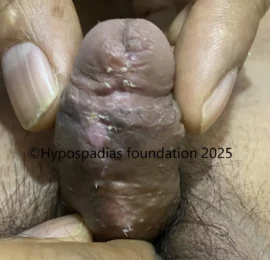
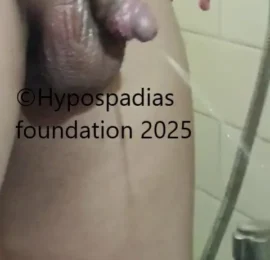
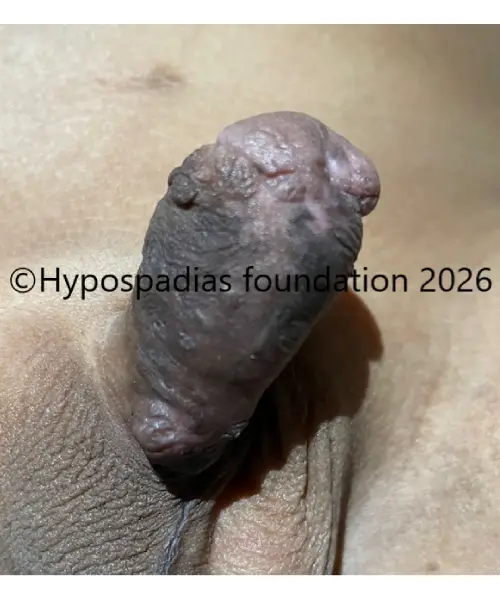
A 6-year male child presented to Hypospadias foundation OPD after 4 failed hypospadias surgeries in Australia. After the first surgery in Australia, he had complete breakdown of the newly reconstructed urethra. He further underwent redo surgery in 3 stages, but it was unsuccessful. Even after a redo surgery, child was unable to pass the urine from the distal penile meatus. On examination in the Hypospadias Foundation OPD, the urinary opening was at the midpenile region. The distal passage was completely strictured. There was no obvious chordee on examination. We counselled the parents that the entire repair needs to be done again in 2-3 stages.

At the start of hypospadias surgery, we performed cystoscopy. The urethra proximal to the midpenile meatus was normal. Scope could not be negotiated into the distal urethra. Chordee was assessed and there was no residual chordee. We decided to proceed with two stage oral mucosa graft repair since there was no residual chordee.

Glans stitch was taken with 4-0 prolene. The distal urethra was laid open and noted to be completely stenosed. Unhealthy fibrotic urethra was excised completely. Oral mucosa graft was harvested from the right cheek of size 5x2cm. Graft was placed on the ventral raw area and quilted thoroughly on the corpora with 6-0 PDS.

After stage 1, healing was good. Steroid massage was started 3 weeks after surgery and was continued for 5 months. There was 100% graft uptake. Second surgery was planned 8 months after stage 1 when graft was soft and pliable.


Second stage repair (Urethroplasty)

Local anesthesia, lignocaine with adrenaline was injected at the edges of the graft. Graft was incised at the margin keeping a width of 18mm. Graft was tubularized over a 7Fr infant feeding tube (IFT). Second layer was closed with local tissues. Glans wings were widely mobilized. Dartos flap was raised from the left side and sutured over the urethroplasty with 6-0 PDS. Glansplasty was done with 5-0 vicryl and glans epithelium was closed with 6-0 PDS. Skin was closed in 2 layers with 6-0 PDS and 6-0 vicry rapide.

Dressing change was done on day 7 and catheter was removed on post operative day 12. After catheter removal, the child was passing urine in single straight stream with no pain or leak.
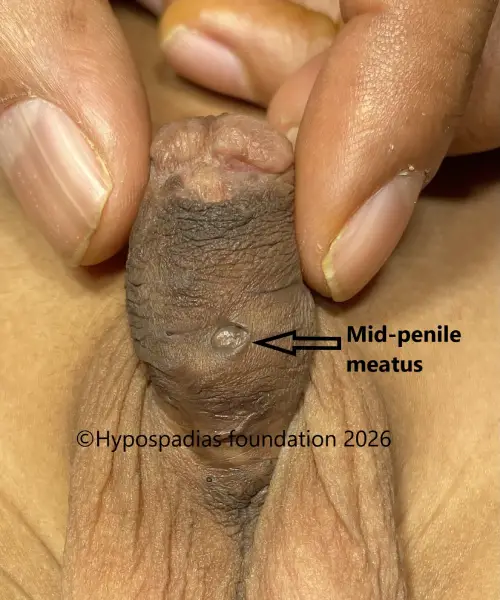
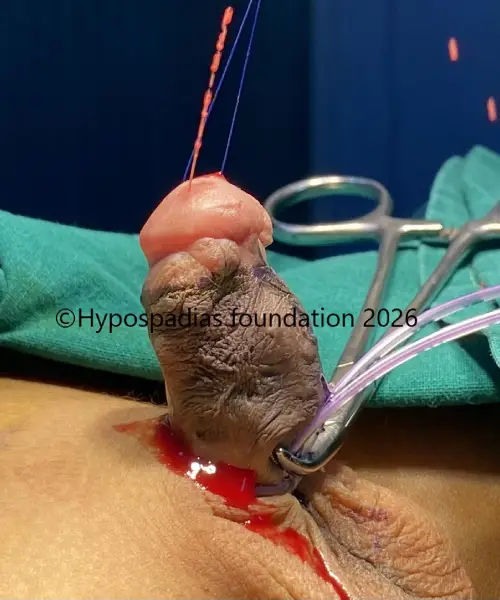
Picture 1: On examination, the meatus was in the midpenile region. Chordee was assessed during stage 1, there was no residual chordee
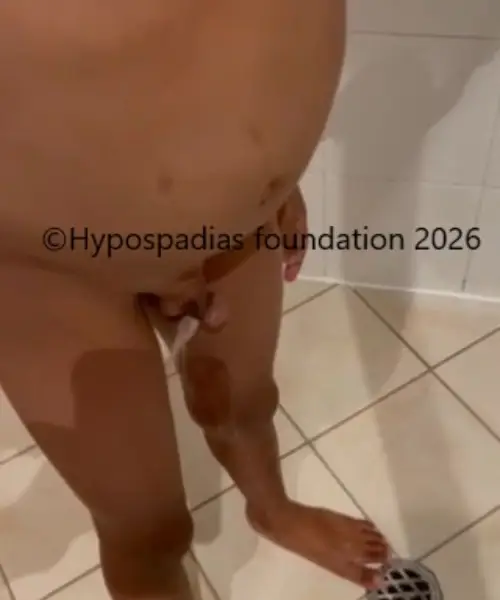
Picture 2: Pre surgery urine stream, passing urine from midpenile region with no flow from the distal penile meatus.
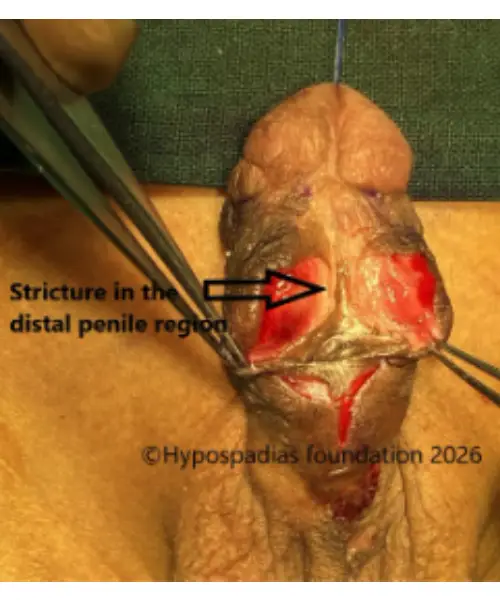
Picture 3: Distal urethra was laid open and noted to be completely stenosed.
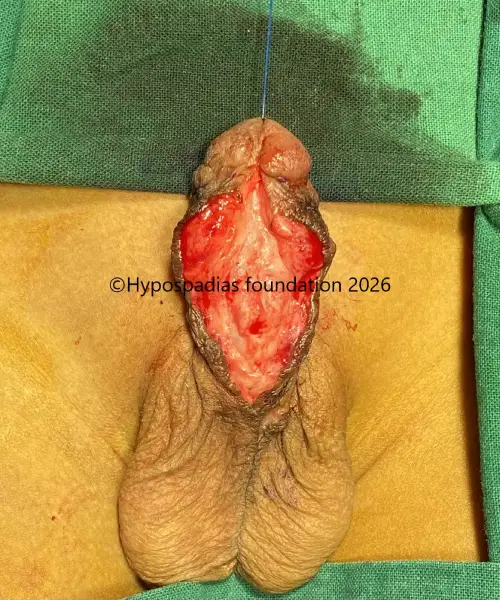
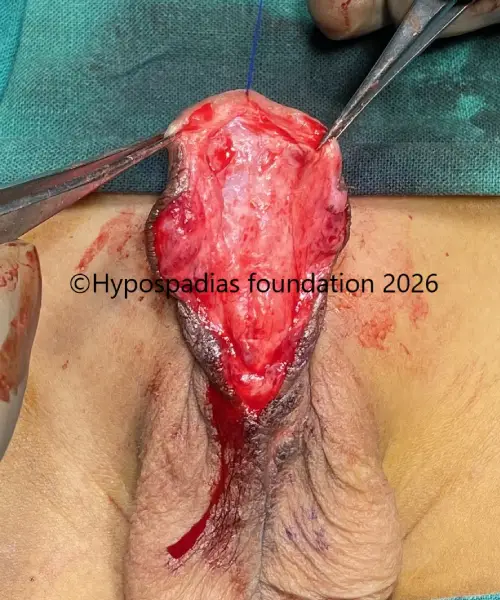
Picture 4: Unhealthy urethra excised, glans wings widely raised for placement of oral mucosa graft
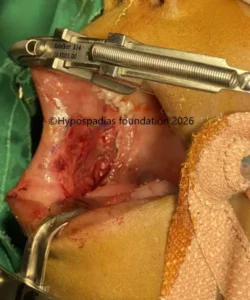
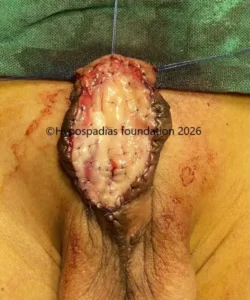
Picture 5: Oral mucosa graft harvested from right cheek, sutured on the ventral side and quilted to the underlying corpora with 6-0 PDS.
46c9
46c10

Picture 6: At 3 weeks after stage 1 OMG, the graft was examined. There was 100% graft uptake
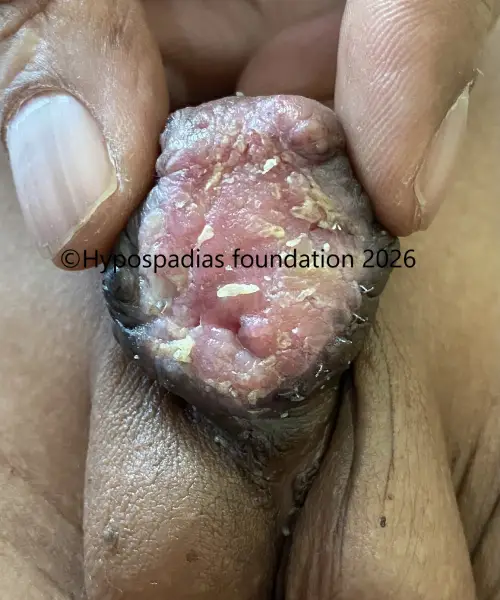
Picture 6: Follow up at 6 months after surgery
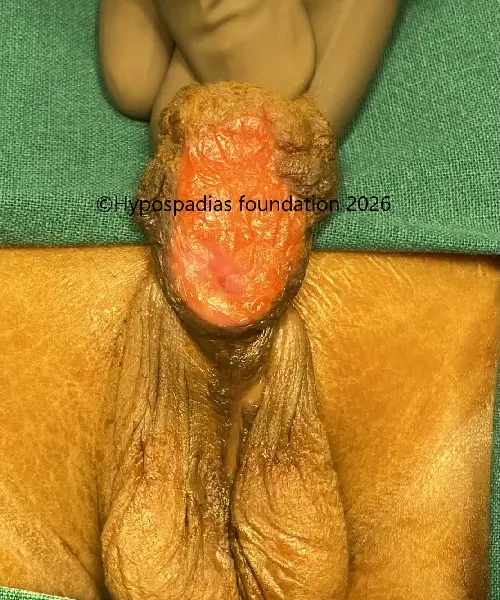
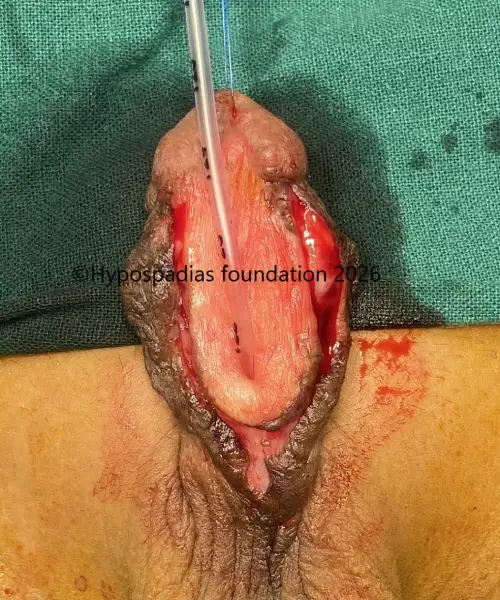
Picture 7: Graft was soft and supple at 8 months after stage 1. Graft edges were incised keeping a width of 18mm for urethroplasty
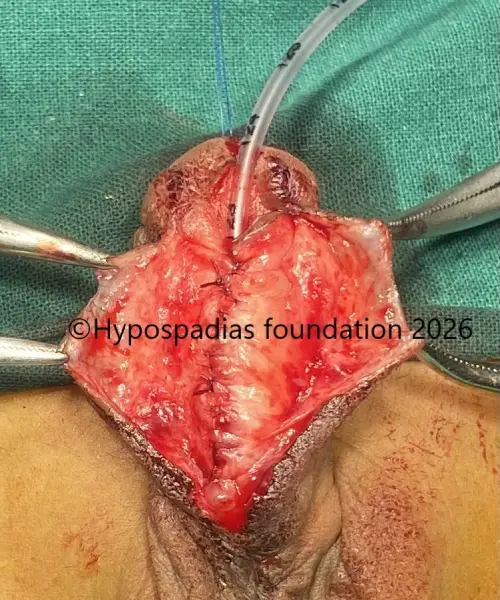
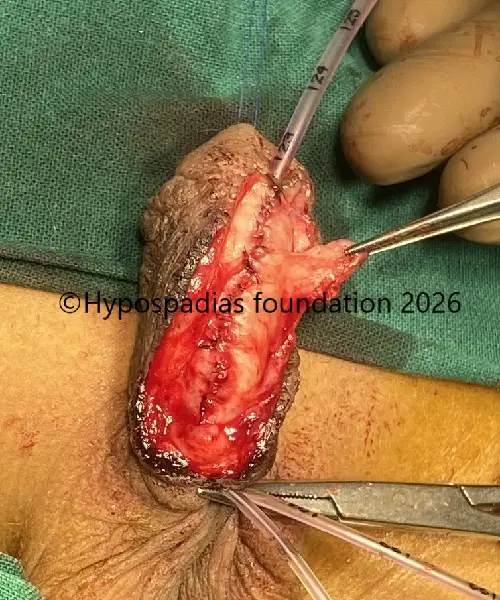
Picture 8: Urethroplasty was done over 7Fr infant feeding tube. Dartos flap from the left side was raised and sutured over the urethroplasty.
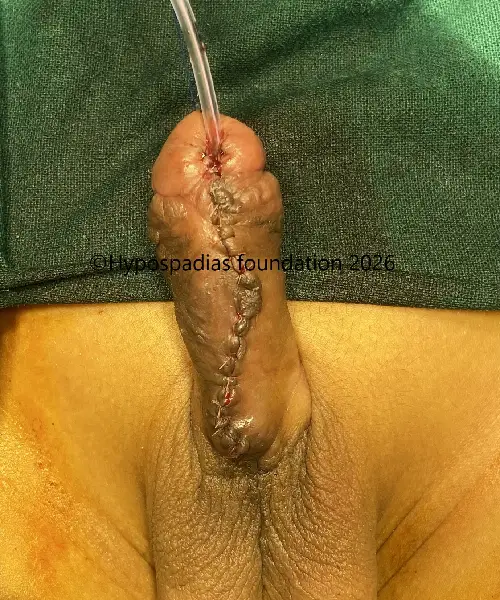
Picture 9: Urethroplasty and glansplasty was completed. Catheter removal was done on post operative day 12
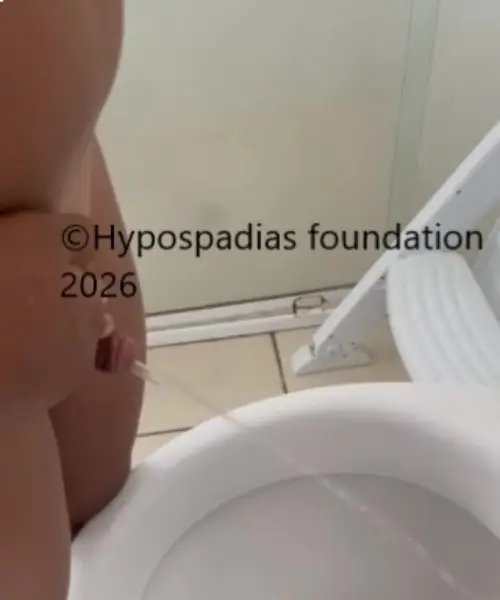
Picture 10: Cosmetic result and urine stream at 6 months after stage 2 urethroplasty

Surgery for failed hypospadias – stricture and fistula – Two stage oral mucosa graft repair

Failed hypospadias with stricture and fistula – Two stage oral mucosa graft urethroplasty

Urethral stricture and urethrocutaneous fistula are two well-recognized complications following hypospadias repair. A urethral stricture refers to narrowing of the reconstructed urethra due to scarring. This obstruction is one of the important factors contributing to fistula
formation.

In the above-mentioned case, the child developed distal urethral narrowing and was unable to pass urine through the distal penile meatus. As a result, the urethra opened in the mid- penile region, allowing urine to drain from the bladder. Since urine preferentially drained through the mid-penile opening, flow across the distal urethra ceased, leading to progressive stenosis of the distal segment. Over time, this resulted in narrowing of the entire distal urethra.

The most common causes of urethral stricture following hypospadias surgery include ischemia of the neourethra due to poor vascularity, excessive tension on the reconstructed urethra, and postoperative infection. Urethral strictures occurring after hypospadias repair differ significantly from non-hypospadias–related urethral strictures. In such cases, urethral dilatation is usually ineffective, and repeated dilatations may further worsen the scarring and narrowing.

Management of post-hypospadias urethral stricture typically requires replacement of the narrowed segment with healthy tissue. This is achieved using either oral mucosal grafts (such as buccal mucosa) or well-vascularized local skin flaps to adequately widen the urethra and restore normal urinary flow.

Complications following hypospadias repair are best managed by a trained and experienced pediatric urologist, particularly one with expertise in failed and complex hypospadias cases. Multiple previous surgeries significantly increase the complexity of subsequent repairs. In such situations, staged surgical reconstruction often provides better functional outcomes, improved cosmesis, and more durable long-term results.

At the Hypospadias Foundation India, children and adults from more than 30 countries worldwide seek treatment for hypospadias and its complications. The surgical team, led by experienced surgeons Dr. A. K. Singal and Dr. Ashwitha Shenoy, specializes in managing complex, multistage, and failed hypospadias repairs. Dr A.K.Singal is considered the best hypospadias surgeon in the world especially for children or adults who had a failed hypospadias surgery earlier. With a deep understanding of the nuances involved in challenging hypospadias surgery, the Hypospadias Foundation offers a dedicated and specialized approach for patients requiring advanced reconstructive care.

Typical worries in parents of boys with hypospadias

Hypospadias though common is still unknown to the general population. When a parent finds out that their child has a genital abnormality (hypospadias) they get very worried thinking of the child’s future, which often leads to heightened parental worries. Due to limited resources which are available in the online platform, parents do not get a clear idea when it comes to hypospadias. This blog is directed to parents who have children with hypospadias, to ease their concern and improve the knowledge surrounding hypospadias and parental worries.

  1. Is surgery needed for Hypospadias? Surgery is required in hypospadias to correct the chordee, to create a urinary passage and bring the opening to the tip of the penis. The repair can be staged or single stage depending on the degree of chordee (downward bent of the penis) and severity of hypospadias. The risk of complications following surgery at our centre is less than 5%. The most common complications which we encounter are wound infection, fistula formation, diverticulum formation and meatal stenosis. An additional surgery may be required in some of these complications. Following hypospadias surgery, the cosmetic result will be similar to a circumcised penis. The meatus will be at the tip on the glans and the child would be able to pass urine in a single straight stream.
  2. Anaesthesia during hypospadias surgery: Hypospadias surgeries are done under general anaesthesia. It is important that besides a pediatric urologist, a pediatric anesthesiologist doctor is available to give anesthesia safely to children. Right from dosage of medications to managing airway is very different in children when compared to adults. Hence, at Hypospadias Foundation we have 3 skilled pediatric anesthesia experts who give anesthesia for hypospadias surgery. In addition to general anaesthesia the anaesthetist will also give an injection in the lower spine (caudal anaesthesia) which gives good pain relief to children for 12 hours after the surgery. Pain relief is our priority after surgery so that children can be comfortable after surgery and don’t remember hospitalisation as a painful episode. Besides caudal anaesthesia(during the surgery), we provide adequate pain relief with analgesics for a few days post-surgery.
  3. Pain after hypospadias surgery: Besides common surgical pain, which is easily manageable with pain killer medicines, two main reasons why children can develop pain in the post operative period are either due to bladder spasms or erections. Bladder spasms are controlled by a tablet oxybutynin which is started after the surgery and is continued till the catheter removal. Erection in the penis mainly occurs during early morning hours but can occur anytime in the day. Mostly the pain which occurs during erection is also managed well by the painkillers. The pain decreases significantly once the dressing and catheter are removed. However, penis continues to be sensitive for 2-3 weeks after the hypospadias repair surgery.
  4. Infertility in hypospadias:  Hypospadias can cause male infertility due to various reasons. They may be due to abnormal location of the meatus, presence of chordee and low semen count. The altered opening of the urethra can cause problems in ejaculation, hence causing infertility. Presence of chordee can make sexual intercourse difficult or painful. Presence of an associated undescended testis may be associated with a low sperm count. We need to understand that not all men with hypospadias will have fertility problems. The severity of hypospadias and the success of surgical repair will ultimately decide if they will be able to father a child. Hence in men with hypospadias suffering from infertility they need to get in touch with a hypospadias surgeon because getting the hypospadias repaired will increase their chances of having children.  
  5. Risk of hypospadias in future generation: The risk of hypospadias in future generations is influenced by a number of factors such as genetic and environmental factors. Some studies suggest that the risk of hypospadias may be increasing. The prevalence of hypospadias in the United states has increased by 10% from 1970 and 2000 as per the study published in the journal Nature in 2011. Hypospadias is a condition that can be inherited from the parents. If the father has hypospadias, then the risk of developing hypospadias in future generations will be 5-10%. Similarly, if first child has hypospadias, the risk in second boy is almost 5%. 
  6. Cost of surgery and insurance coverage/cashless/mediclaim: Hypospadias being a penis birth defect is classified as an external birth defect which can be easily diagnosed as soon as the baby is born. Hence, if parents take an insurance policy after the baby is born, hypospadias surgery treatment costs as cashless Mediclaim are not covered by most of the insurance companies in India atleast while in USA, UK it is covered under insurance benefits. The situation is different for some of the corporate insurance group policy holders. Some big corporates issue very employee friendly mediclaim policies which cover all medical and surgical treatments for the employees and their families. Such mediclaim policies may cover all pre-existing as well as birth defects for their employees and hence hypospadias repair procedure may be covered by the insurance companies in these circumstances.

At Hypospadias foundation, we see almost 500 children and adults with hypospadias every year. The counselling in clinic, before surgery and after surgery focussing on making the families and patients comfortable, increasing their knowledge, and solving their queries regarding Hypospadias and parental worries. While there may be information available with pediatricians or on google, it is always better to consult a specialist hypospadias surgeon to have genuine answers to all the questions.


Fill up contact form: https://www.hypospadiasfoundation.com/contact/

Contact Form for Hypospadias Foundation

Please fill all clinical details and upload pictures and clinical summaries (if available)

    Attach Documents (pdf | jpeg | mp4)
    (upload size upto 5mb)

    Contact Us

    Call Now