When and How to Talk to Your Child About Hypospadias Surgery

Hypospadias is a common congenital condition in boys where the urinary opening (urethral opening) is located on the underside of the penis instead of the tip. Hypospadias surgery is usually performed in early childhood, ideally before the age of five.

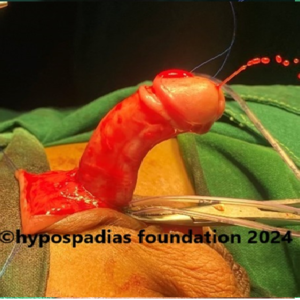
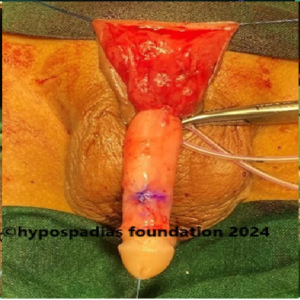
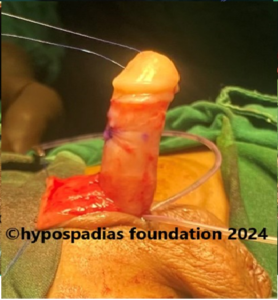
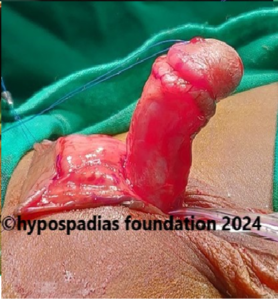
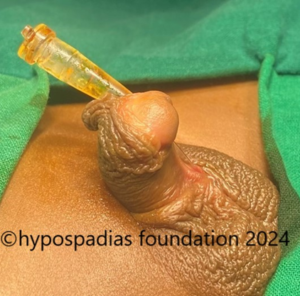
After successful hypospadias repair, the penis appears similar to a circumcised penis with urinary opening on tip and no curvature. The child will be able to pass urine in a single straight stream from the tip of the penis without pain or difficulty.

Because the surgery is performed very early in life, many children do not remember the condition or the procedure. As a result, many parents wonder:

Should we tell our child about his hypospadias surgery?

The answer is yes—open communication is important for your child’s long-term emotional and medical well-being.
Why parents have difficulty in talking to their son about hypospadias?

Many parents struggle with discussing hypospadias with their child due to social and emotional concerns such as

1. Cultural Taboo Around Genital Health

In many families, conversations about genitals or sexual health are considered uncomfortable or inappropriate. Parents who grew up in such environments may find it difficult to discuss these topics openly.

2. Fear of disclosure leading to social judgement and stigma

Parents often hesitate to disclose such conditions to their child due to fear that the child might share it with others, leading to social judgment. They may worry about teasing, stigma, or misunderstandings from peers, relatives, or the wider community. Concerns about how
the information could affect the child’s social relationships, self-esteem, and even future aspects like marriage or fertility can make parents cautious. As a result, some choose to delay or limit discussions, hoping to protect the child from potential negative reactions.

3. Concern About the Child’s Emotional Reaction

Some parents fear that their child may feel embarrassed, feel different from others, or become emotionally distressed if he learns about his hypospadias condition. Although these concerns are understandable, keeping the condition completely hidden may lead to problems later in life.

Why It Is Important to Tell Your Child About Hypospadias

1. Prevents Trust Issues

Children may eventually discover their medical history through records, online searches, or medical consultations. Learning about hypospadias surgery later in life from another source may make them feel betrayed or confused. Hence open communication is necessary to build trust and prevent unnecessary anxiety.

2. Reduces Body Image Concerns

As boys grow into adolescence, they naturally become more aware of their bodies. If they notice that their penis looks slightly different without understanding the reason, it may lead to unnecessary insecurity.

3. Prevents Anxiety During Puberty

Puberty brings many physical and emotional changes. Understanding their medical history helps adolescents feel confident and reduces anxiety about their bodies.

4. Helps With Healthy Relationships in Adulthood

Men who are unaware of their hypospadias repair history may feel worried or embarrassed about their appearance during intimate relationships. Knowing the truth early helps build confidence and reduces fear of judgment.

5. Seek help if they have medical issues

While with current hypospadias surgery techniques, the long-term results are very good, some of the children may develop issues in adulthood related to hypospadias or surgery done in childhood. These issues may include stricture, diverticulum, recurrent chordee or rarely urinary infections. Hence, it is important that the parents handover the medical records and tell their child about surgery so that they can seek proper help should anything happen.

6. Future urological interventions

Even in men without prior hypospadias, some of them develop kidney stones or prostate issues in late adulthood. At time of intervention, there is often cystoscopy done via urethra. Hence, it is important for them to know that they have a reconstructed urethra and share the same surgery record with their treating adult urologist.

What Is the Right Age to Talk About Hypospadias?

The best time to discuss about hypospadias with your child is during adolescence. At this stage, teenagers are mature enough to understand medical information and can process the explain logically.

Parents can explain that:
 He was born with a small difference in the position of the urinary opening.
 A hypospadias surgery was performed in childhood to correct it.

The condition has been successfully treated. It will not affect his normal life, urination, or future relationships. Having this conversation in a calm and supportive manner helps the child feel reassured and informed.

Why Medical Records of Hypospadias Surgery Are Important

When your child becomes an adult, it is important to provide him with all documents related to his hypospadias repair surgery. These records can help doctors if he ever needs medical evaluation later in life. Although most boys who undergo hypospadias surgery in childhood live completely normal lives, some rare complications can occur in adulthood, including:

1. Urethral Stricture: The reconstructed urethra may become narrow over time, affecting urine flow.
2. Urethral Diverticulum: The reconstructed urethra may become slightly dilated or relaxed.
3. Residual Chordee: A mild curvature of the penis that was not fully corrected in childhood may become more noticeable in adulthood.

Having the surgical history and medical records helps doctors provide appropriate treatment if any issue arises.

Who Should Explain about Hypospadias to the Child?

The best approach is for parents to have the conversation along with the hypospadias surgeon.

Together, they can reassure the child that:
 The condition was corrected successfully.
 He can lead a completely normal life.
 If he has questions or concerns, he can discuss them privately with the doctor.

We also recommend a follow-up consultation around 18 years of age so that the young adult fully understands his medical history and can address any concerns.

Final Thoughts

Talking to your child about hypospadias and hypospadias surgery may feel uncomfortable at first, but open and honest communication is important. When parents discuss the condition At the right age, it helps build trust, confidence, and a healthy body image. Providing accurate information ensures that your child grows into adulthood feeling reassured, informed, and comfortable with his medical history.

About hypospadias foundation

Hypospadias Foundation, located at MITR Hospital in Kharghar, Navi Mumbai in the state of Maharashtra, India is a centre specialized for the treatment of children and adults with hypospadias. Our expertise in hypospadias makes us one of the best centres for hypospadias repair in the world. We treat children from more than 30 countries in the world and from all over India. Our dedication in this field has helped us achieve excellent outcomes.

Dr A K Singal is an expert and top hypospadias surgeon in India. He is a gifted surgeon and his expertise in this area has helped us achieve excellent outcomes in primary and failed hypospadias in children as well as adults. Dr Ashwitha Shenoy is an expert hypospadias surgeon with a special interest in hypospadias and pediatric urology. Both Dr Singal and Dr Shenoy work together to give best results for hypospadias surgery in India for both children and adults.

Contact Form for Hypospadias Foundation

Please fill all clinical details and upload pictures and clinical summaries (if available)

    Attach Documents (pdf | jpeg | mp4)
    (upload size upto 5mb)

    Is there an age limit for hypospadias repair surgery?

    Hypospadias is a congenital condition in which the urinary opening (meatus) is located on the underside of the penis instead of at the tip. Hypospadias repair surgery is a well-established and successful procedure that can be performed in infants, children, adolescents, and adults. However, choosing the best age for hypospadias repair plays an important role in healing, recovery, and long-term outcomes.

    What Is the Best Age for Hypospadias Surgery?

    Most expert hypospadias surgeons recommend performing surgery between 6 and 18 months of age. Surgery before 3 years of age is considered ideal, and if someone misses this period, surgery before 8 years of age is still strongly recommended if early repair was not possible.

    Hypospadias Surgery in Infants (6–18 Months)

    The ideal age for hypospadias surgery is between 6 and 18 months. At this age:

    • Penile tissues are soft, elastic, and heal faster
    • Scarring is minimal due to high tissue regeneration
    • Infants are unaware of their genitalia and body image
    • There is no psychological impact or memory of surgery

    Early hypospadias repair also allows normal toilet training and smooth bladder control development. Post-operative care is easier in infants, as diaper changes simplify wound care and recovery is less stressful for parents.

    Pic 1 for blog

    Hypospadias Surgery Before 3 Years of Age

    If surgery cannot be done in infancy, completing hypospadias repair before 3 years of age still provides excellent results. Children recover well, healing is fast, and long-term functional and cosmetic outcomes remain very good.

    Hypospadias Surgery in Older Children

    Hypospadias surgery in older children is safe and effective, though recovery can be more challenging.

    Older children:

    • Are more aware of their genitalia and may feel shy or anxious
    • Experience more fear and perceived pain after surgery
    • May find dressing changes difficult
    • Sometimes hold urine after catheter removal due to fear of pain

    Despite these challenges, healing and success rates remain high when surgery is performed by an experienced hypospadias surgeon.

    Hypospadias Surgery in Teenagers

    Teenage boys with untreated or failed hypospadias often feel embarrassed and reluctant to undergo surgery. In cases of hypospadias with chordee (penile curvature), we recommend delaying surgery until penile growth is complete. Avoiding surgery during active growth may prevent interference with natural penile development

    Hypospadias Surgery in Adults

    Hypospadias repair in adults is possible and can be highly successful. However, recovery is slower compared to children because:

    • Adult penile skin is thicker and less elastic
    • Healing takes longer
    • Pubic hair can affect wound care
    • Night-time erections may stress sutures and increase complication risk
    • Infection issues are higher
    • Urethral and extra safety supra-pubic catheter are also needed.

    Even in adulthood, good outcomes are achievable in expert hands. Adult hypospadias surgery success rates at Hypospadias Foundation India are over 95%, which are best in the world.

    Is There an Age Limit for Hypospadias Surgery?

    There is no upper age limit for hypospadias surgery. The success of repair depends more on the experience of the hypospadias surgeon than the age of the patient. With proper evaluation and surgical expertise, excellent results can be achieved even in adulthood.

    Importance of Choosing an Expert Hypospadias Surgeon

    Before planning hypospadias surgery, it is essential to consult a specialist hypospadias surgeon. An experienced surgeon will:

    • Carefully examine the child or adult
    • Assess severity, chordee, and previous surgeries
    • Recommend the best timing and surgical technique

    At Hypospadias Foundation, children and adults from over 30 countries undergo hypospadias repair. The oldest successfully treated patient was a 50-year-old man with failed hypospadias repair and urethral stricture, operated without complications. This highlights the importance of choosing a specialized center for hypospadias treatment.

    Dr A K Singal is a highly experienced and internationally renowned hypospadias surgeon in India, widely regarded as one of the leading experts in hypospadias repair for both children and adults. He has dedicated his professional life to the treatment of complex and failed hypospadias cases, helping patients achieve excellent functional and cosmetic outcomes.

    With decades of focused experience in primary and redo hypospadias surgery, Dr Singal’s expertise has contributed to consistently high success rates in infants, older children, adolescents, and adults with hypospadias.

    Dr Ashwitha Shenoy is an expert pediatric surgeon with a special interest in pediatric urology and hypospadias surgery. Her training and experience in managing hypospadias in children ensure meticulous surgical care, age-appropriate planning, and excellent long-term outcomes.

    Together, Dr A K Singal and Dr Ashwitha Shenoy work as a dedicated team to provide comprehensive hypospadias treatment in India. Their combined expertise allows them to manage simple to complex hypospadias cases, including failed repairs and adult hypospadias, delivering some of the best outcomes for hypospadias surgery in India.

    Contact us:

    For appointment kindly contact us at the contact details given below.

    MITR hospital & Hypospadias Foundation, Kharghar, Navi Mumbai, India – Tue/Saturday 4:00pm-6:00pm, Call for appointments: +91-6262840940. Or email us at hypospadiasfoundationindia@gmail.com

    Contact Form for Hypospadias Foundation

    Please fill all clinical details and upload pictures and clinical summaries (if available)

      Attach Documents (pdf | jpeg | mp4)
      (upload size upto 5mb)

      Navigating Uncertainty: Understanding the Risk of Hypospadias in a Second Child

      The birth of a child brings immense joy, but also concerns about their health and well-being. For parents who have experienced the challenges of hypospadias in their firstborn, questions about the risk of recurrence in a second child understandably arise. This blog aims to provide insights and guidance on this sensitive topic.

      What is Hypospadias and is it necessary to repair it?

      Hypospadias is a birth defect affecting boys, characterized by an abnormally positioned urethral opening. This opening, which normally lies at the tip of the penis, can be located anywhere along the shaft, scrotum, or even perineum. While the severity varies, hypospadias can affect urination, sexual function, and self-esteem. For very minor hypospadias without any chordee, family may choose to not do surgery but after consultation with an expert hypospadias surgeon. For all other hypospadias, correction surgery is recommended.

      Is My Second Child at Risk of Hypospadias?

      The possibility of hypospadias occurring in a second child depends on several factors:

      • Family history: If the father or a brother has hypospadias, the risk in subsequent sons increases. Estimates suggest 5-6% risk for a second son and this risk increases further if both father and brother are affected.
      • Environmental factors: Exposure to certain environmental toxins, such as pesticides and herbicides, may play a role. These pesticides are known to be endocrine disruptors, they interfere with the androgen and oestrogen signalling pathways during genital development, hence causing hypospadias. This is a hypothesis, and studies are still under process to clearly link exposure of pesticides to occurrence of hypospadias. There have been studies showing higher risk of hypospadias due to plasticisers in the single use plastic bottles. The chemicals here act as male hormone blockers and interrupt development of penis, hence causing hypospadias.
      • Hormonal exposure in pregnancy: During pregnancy, certain hormones may be advised for the mother to decrease the chance of preterm labour or miscarriage. This is common after invitro fertilization (IVF) conception, twin pregnancy and in precious pregnancies. Carmichael in his study reported that the use of progesterone to prevent early pregnancy loss was associated with risk of developing moderate to severe hypospadias1.
      • Maternal health: Maternal smoking, pre pregnancy obesity, folic acid deficiency is some of the associated factors causing hypospadias.

      Understanding the Probabilities of second child with hypospadias

      While the above factors influence the risk, it’s important to understand that they do not guarantee the condition’s recurrence. Each pregnancy is unique, and predicting with certainty is impossible.

      Here’s a breakdown of the estimated risks:

      • For a family with no history of hypospadias, the general risk is around 1 in 250 births
      • If the father has hypospadias, the risk rises to about 1 in 50
      • With a brother affected, the risk increases to approximately 1 in 30
      • When both father and brother are affected, the risk becomes roughly 1 in 20

      Moving Forward: Taking Charge

      Despite the uncertainty, proactive measures can empower parents to understand hypospadias and get proper counselling to understand the possibility of hypospadias in their second child. This includes:

      • Genetic counselling: Consulting a genetic counsellor can provide personalized risk assessment and guidance based on your specific family history. Genetic analysis can help us know the possibility of hypospadias in subsequent pregnancies.
      • Preconception care: Maintaining good health and avoiding harmful substances during pregnancy can minimize potential environmental influences. Folic acid supplementation should be started before conception and continued during the first trimester to avoid hypospadias.
      • Prenatal testing: While currently no specific tests diagnose hypospadias in utero, advanced ultrasound technology may detect anatomical abnormalities suggestive of the condition. This is possible only in countries where predetermination of sex of the child is allowed in ultrasound in pregnancy.
      • Early diagnosis and intervention: If hypospadias is diagnosed after birth, early intervention through specialized treatment can optimize outcomes. Early referral to an expert hypospadias surgeon, early surgery can help the parents and child to overcome the hypospadias problem.

      Remember that Knowledge is power. By understanding the risk factors and available resources, parents can navigate the uncertainty surrounding hypospadias and make informed decisions about their second pregnancy.

      Let’s work together to raise awareness and offer support to families affected by hypospadias.

      Additional Resources:

      1. Carmichael SL, Shaw GM, Laurent C, Croughan MS, Olney RS, Lammer EJ. Maternal Progestin Intake and Risk of Hypospadias. Arch Pediatr Adolesc Med.2005;159(10):957–962. doi:10.1001/archpedi.159.10.957
      2. Urology Care Foundation: https://www.urologyhealth.org/educational-resources/hypospadias
      3. National Institute of Child Health & Human Development: https://pubmed.ncbi.nlm.nih.gov/35398463/
      4. Hypospadias Association: https://heainfo.org/

      About Hypospadias Foundation

      Hypospadias Foundation is a centre specialized for treatment of children with hypospadias. Our expertise in hypospadias makes us one of the best centres for hypospadias repair in the world. We treat children from more than 25 countries in the world and from all over India. Our dedication in this field has helped us achieve excellent outcomes. Hypospadias foundation is located at MITR Hospital in Kharghar, Navi Mumbai in the state of Maharashtra.

      Dr A K Singal is an expert and top hypospadias surgeon in India. He is a gifted surgeon and his expertise in this area has helped us achieve excellent outcomes in primary and failed hypospadias in children as well as adults.

      Dr Ashwitha Shenoy is an expert hypospadias surgeon with special interest in hypospadias and pediatric urology. Both Dr Singal and Dr Shenoy work together to give best results for hypospadias surgery in India for both children and adults.

      Contact Form for Hypospadias Foundation

      Please fill all clinical details and upload pictures and clinical summaries (if available)
        Attach Documents (pdf | jpeg | mp4)
        (upload size upto 5mb)

        Can chordee recur or come back after chordee correction or hypospadias repair surgery?

        Chordee is a condition where the penis is curved downward. Most of the times it is associated with hypospadias but can occur without hypospadias. Chordee correction is very crucial step during hypospadias repair. Without chordee correction, urethroplasty should not be attempted because there will be a stress of the urethral passage and there is high risk of complications after surgery.

        Chordee surgery is usually successful in correcting the curvature of the penis completely. However, there is a small chance that chordee can come back after surgery. This is called recurrent chordee.

        Risk factors for recurrent chordee:

        • Incomplete correction of chordee: When the chordee is severe, it must be corrected completely during chordee correction surgery. If there is any residual chordee after chordee correction surgery, it will only worsen in the future.
        • Fibrosis during healing: After chordee correction, fibrosis can occur on the underside of the penis during healing process. Sometimes the fibrosis can improve with steroid massage but if it persists then recurrent chordee correction may be required. This fibrosis can be at the level of skin, tissue under skin or even urethra.
        • Due to flaps: Recently we have seen some cases where tunica vaginalis flaps were used for second layer cover during hypospadias surgery at other centres. Somehow the flaps didn’t heal well and they caused chordee to come back. Similar outcomes we have seen when a very tight urethra was made from prepucial flaps or koyanagi repair in first surgery.

        Symptoms of recurrent chordee:

        The common symptoms which children present with are downward bending of the penis, urine which goes backward and may have occasional pain during erections.

        Adults with recurrent chordee may have pain during erection, inability to perform sexual intercourse, painful sexual intercourse and infertility

        Treatment for recurrent chordee:

        If you think you may have recurrent chordee or your child has recurrent chordee, it is important that you see a doctor right away. You need to visit a hypospadias surgeon or a pediatric urologist who has expertise in the field of hypospadias and chordee correction.

        Chordee correction can be done by various methods. First and foremost, the cause for recurrent chordee has to be identified and then appropriate method is used to correct chordee. Chordee correction method differs for children and adults.

        1. If a child presents with residual chordee due to incomplete chordee correction in the past, then the following methods of chordee correction are used: Complete degloving is done and chordee is assessed, if chordee persists even after degloving then the following methods are adopted.  If the chordee is due to short urethra due to flaps or tunica vaginalis flaps, we divide them at this stage.
        Recurrent chordee treatment in India
        Recurrent chordee treatment in Navi Mumbai

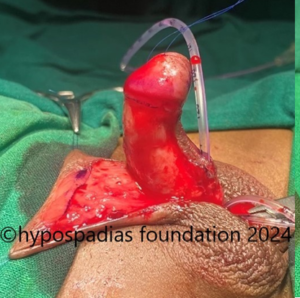
        Pre degloving and post degloving chordee assessment

        (a) Dorsal tunica Albugenia Plication (TAP): If the chordee is less than 30 degree then it can be easily corrected by placing a non-absorbable suture at the site of maximum curvature on the dorsal side(upper side) of the penis. This will correct the chordee completely.

        Recurrent chordee treatment in Kharghar
        Recurrent chordee treatment

        Post Degloving showed less than 30-degree chordee. 12’o clock dorsal tunica albuginea plication done. Chordee completely corrected by this plication.

        Recurrent chordee treatment in India

        No chordee noted after 12’o clock dorsal tunica albuginea plication

        (b) Urethral plate division and Proximal urethral mobilization: If the chordee is more than 30 degrees then one of the reasons for persistent chordee is short urethra, in these cases we will have to divide the urethral plate ventrally and mobilize the proximal urethra. This will effectively correct chordee if it is due to congenital short urethra.

        chordee Repair in India
        Hypospadias repair surgery

        Urethral plate division and proximal urethral mobilization

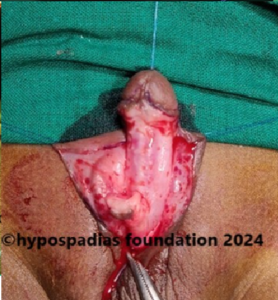
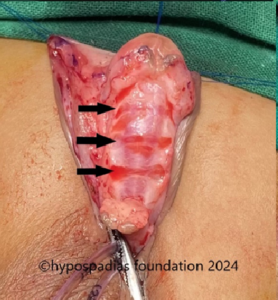
        (c)If chordee persists inspite of urethral plate division then urethral mobilization, ventral corporotomies are done. This will correct the chordee if the cause for chordee is due to disproportionate corporal bodies.

        Chordee repair in Navi Mumbai

        Three ventral corporotomies

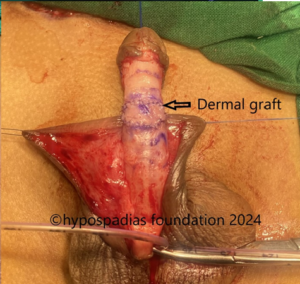
        (d) If none of the above measures can correct chordee then we perform a ventral lengthening procedure called as the dermal graft. Deep incision is given in the tunica on the ventral side at the site of maximum curvature and dermal graft is placed at the site. This method is adopted in cases of severe chordee.

        Hypospadias repair surgery

        Dermal graft

        The chordee is corrected completely after the above steps of chordee correction.

        2. If the child presents with severe chordee inspite of complete chordee correction in the past, then it is most likely due to ventral fibrosis. In these cases, along with some or all the above methods, removal of fibrotic tissues from the underside of the penis is important to correct the chordee.

        Adults with recurrent chordee after previous surgery

        In most of the adults at first we assess the fibrosis and degloving is done. If the chordee is still there, then we divide the urethral plate and mobilise it. Post this, if the chordee still persists, we can correct chordee completely by a method called as “16 dot plication”. In this method, 4 sutures are placed on either side of maximum curvature on the dorsal side, which will correct the chordee uniformly in an adult penis.

        In most of the cases of recurrent chordee in addition to chordee correction, urethroplasty will also be required. In redo cases, chordee correction and urethroplasty will most likely be done in two to three stages and oral mucosa graft will be used in more than 95% of such cases. Only in few exceptional we may be able to repair everything in single stage.

        About Hypospadias Foundation India:

        Hypospadias Foundation in Navi Mumbai, India is dedicated to offering care and cure for chordee and hypospadias in children and adults. Set up in 2008, more than 3000 children and adults have benefitted from care and achieved best in class results for chordee and hypospadias. Dr A.K.Singal and Dr Ashwitha Shenoy, hypospadias expert surgeons at Hypospadias foundation have dedicated their lives to the art and science of hypospadias repair.

        If you feel your child or you are suffering from recurrent chordee even after previous chordee correction, then do get it checked by an expert pediatric urologist or a hypospadias surgeon. Chordee correction surgery has good result when done in childhood than in adulthood. Do not hesitate to write to us or contact us

        Contacting the Hypospadias Foundation:

        Fill up contact form: https://www.hypospadiasfoundation.com/contact/

        Keywords: recurrent chordee, residual chordee, chordee repair, chordee repair surgery, chordee correction surgery, bent penis repair, best hospital for hypospadias in india, best hypospadias surgeon, hypospadias repair in india, adult chordee repair, dermal graft repair, 16 dot plication for chordee

        To contact Hypospadias foundation, you can either write to us at hypospadiasfoundationindia@gmail.com or fill up this contact Form

        Contact Hypospadias Foundation

        Watch Videos of Hypospadias Repair surgery procedure by Dr A.K.Singal, Specialist Hypospadias Surgeon

        Contact Form for Hypospadias Foundation

        Please fill all clinical details and upload pictures and clinical summaries (if available)
          Attach Documents (pdf | jpeg | mp4)
          (upload size upto 5mb)

          Contact Us

          Call Now