
Failed Hypospadias Surgery in Two Brothers from Shillong: Redo Hypospadias Repair Offered New Hope
When a child undergoes hypospadias surgery, parents hope that the problem will be corrected and their child can grow up without urinary difficulties. But when complications develop after surgery, families may find themselves facing repeated procedures, uncertainty, and fear about the future.
This was the situation faced by a family from Shillong whose two young sons had undergone hypospadias surgery elsewhere but continued to experience complications. Despite previous operations in Mumbai, neither child&s problems had been fully resolved. Their parents
approached the Hypospadias Foundation outpatient department (OPD), worried about whether their children would ever recover after multiple surgeries.
Both boys had penoscrotal hypospadias, a more complex form of the condition in which the urinary opening is located near the junction of the penis and scrotum. Detailed examination revealed additional complications from previous surgery, markedly small penile size, and hormonal findings suggestive of 5-alpha-reductase deficiency.
Their treatment involved careful hormonal evaluation, topical dihydrotestosterone (DHT) therapy, and individualized reconstructive surgery.
The two brothers ultimately achieved an encouraging functional outcome, passing urine in a single, straight stream without reported complications.
Their journey illustrates why a detailed reassessment and a treatment plan by a pediatric urologist is important when dealing with failed hypospadias repair.
Case 1: Recurrent Urethral Diverticulum and Stricture After Hypospadias Surgery
Persistent urinary problems after previous operations
The elder brother was a four-year-old boy with penoscrotal hypospadias. He underwent his first hypospadias repair at one year and seven months of age in Shillong. A single-stage repair was performed.
Following surgery, he developed a large urethral diverticulum, requiring diverticulum excision and redo urethroplasty six months after the initial operation in a hospital in Mumbai.
Despite these procedures, he continued to pass urine through two separate sites and had trouble and pain during urination.
His parents sought further hypospadias treatment because the urinary problems had persisted even after repeat surgery.
Hormonal evaluation and DHT treatment
During assessment at the Hypospadias Foundation OPD, the child's penile size was found to be markedly small.An hCG stimulation test and hormonal evaluation were performed. The testosterone-to-dihydrotestosterone (T/DHT) ratio was 30 (elevated), raising suspicion of 5- alpha-reductase deficiency.
The child was started on topical DHT (Dihydrotestosterone) gel, applied locally over the penis once daily. Penile size was measured monthly to monitor the response to treatment. After three months of DHT therapy, a good improvement in penile size was observed. The child was then planned for further reconstructive surgery.
Redo urethroplasty and oral mucosal graft reconstruction
Cystourethroscopy revealed a urethral diverticulum extending up to the proximal penile urethra, along with a stricture involving the distal penile urethra. There was no residual chordee.
The urethral stricture and diverticulum were laid open, and the diverticulum was excised. Redo urethroplasty was performed up to the mid penile region.
The distal penile urethra was unhealthy and significantly strictured. Therefore, a staged reconstruction using an oral mucosal graft (OMG) was planned. The strictured urethral segment was excised, the oral mucosa graft was placed in the distal urethra, and tubularization performed during the second stage after approximately six months.
Oral mucosa, usually obtained from the inner lining of the cheek, is a useful graft material in selected complex urethral reconstructions when the existing tissue is scarred or unsuitable.
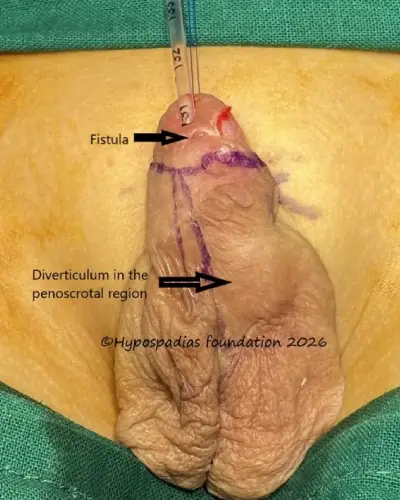
Pic 1: Clinical examination showed diverticulum in the penoscrotal region and fistula in the distal penile region
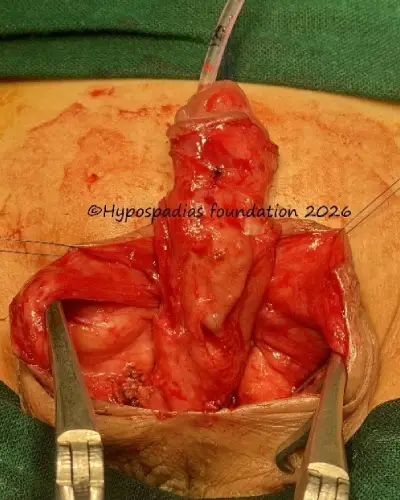
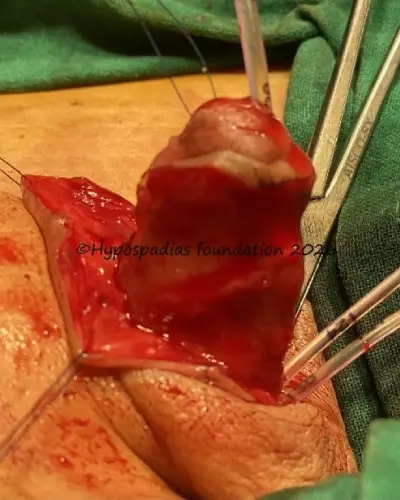
Pic 2 & 3: Complete degloving done and chordee assessed. No chordee noted.
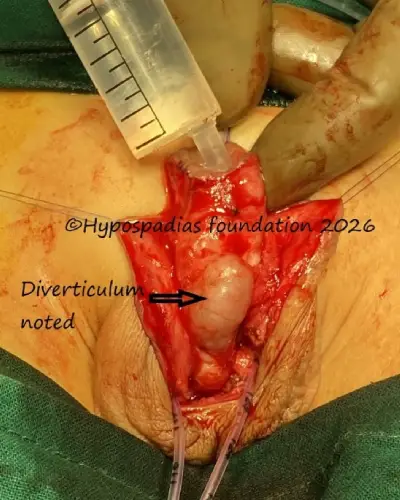
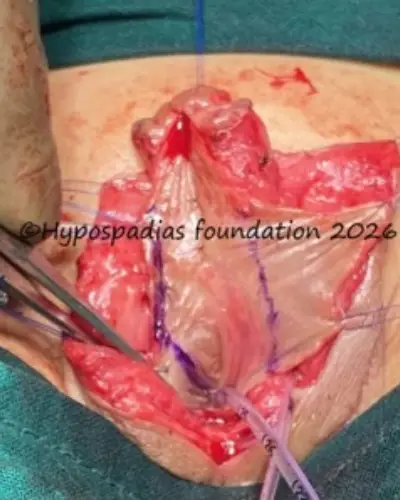
Pic 4 & 5: Urethral diverticulum noted extending from midpenile to penoscrotal region. Entire urethra upto the site of diverticulum was laid open.
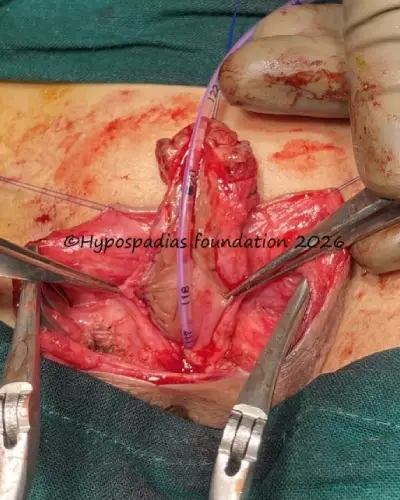
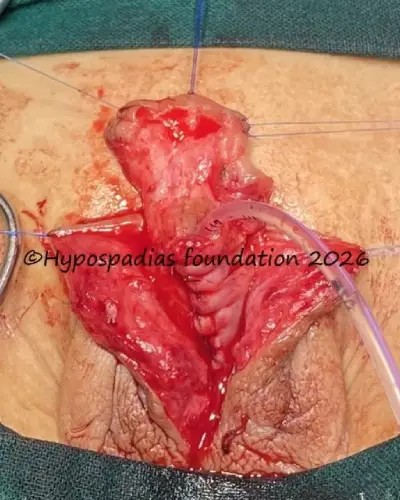
Pic 6 & 7: Excess skin was trimmed on either side and redo urethroplasty was done upto the mid penile region. Glans wings were widely raised.
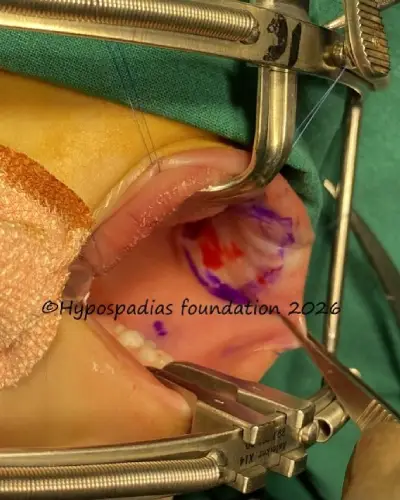
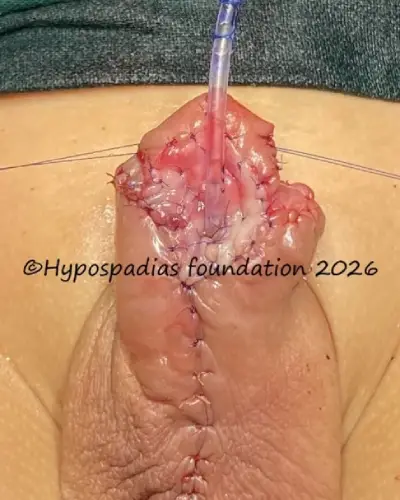
Pic 8 & 9: Oral mucosa graft was harvested from the right cheek, sutured and quilted in the distal penile region.
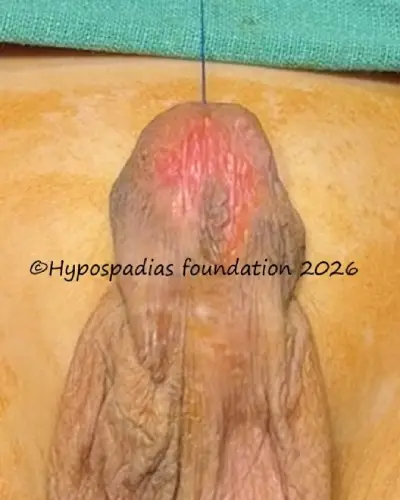
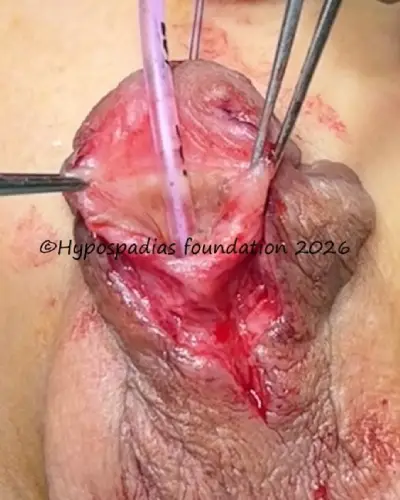
Pic 10 & 11: Oral mucosa graft had healed well after 6 months and was ready for tubularization. Incision was given at the edges of the graft keeping a width of 15mm.
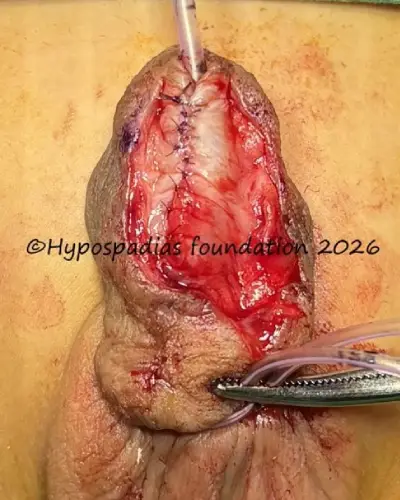
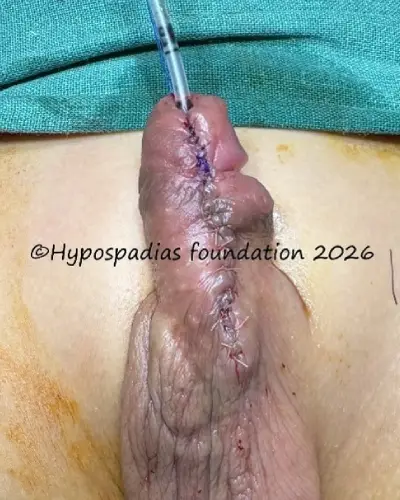
Pic 12 & 13: Tubularization was done in multiple layers and skin closure was done.
The outcome
After completion of the second-stage repair, the child was passing urine in a single, straight stream, with no reported complications. This case demonstrates the importance of identifying the precise cause of persistent urinary symptoms before planning another operation for failed hypospadias surgery.
Case 2: Multiple Urethral Fistulae and Residual Chordee
The younger brother was a two-year-old boy with penoscrotal hypospadias. He had undergone his initial hypospadias surgery at seven months of age.
Following surgery, he developed multiple urethrocutaneous fistulae in the proximal penile region. He had persistent residual chordee and had severe pain while passing urine.
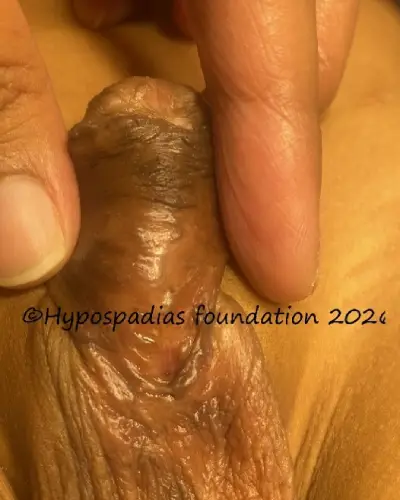
On examination at the Hypospadias Foundation, his penile size was also found to be markedly small, similar to that of his elder brother. The residual prepuce was covering the glans and was fused with the glans. Meatus was not visible but mostly he had a meatal stenosis or urethral stricture.
Hormonal evaluation and DHT therapy
An hCG stimulation test and hormonal evaluation were performed. His reported T/DHT ratio was 37.9, which was considered abnormal and suggestive of 5-alpha-reductase deficiency in the clinical context.
He was started on topical DHT gel, applied locally over the penis once daily. His penile size was measured monthly to monitor the response. After three months of treatment, a good improvement in penile size was observed.
The hormonal findings in both brothers raised the possibility of a shared underlying genetic disorder affecting androgen metabolism.
Why three-stage hypospadias repair was planned
In addition to multiple urethrocutaneous fistulae, the younger brother had residual chordee (persistent penile curvature) also.
This made his reconstructive surgery more complex than that of his elder brother. In such cases, correction of the curvature comes first followed by urethral reconstruction.
He underwent examination under anaesthesia which revealed completely stenosed meatus. The meatus was laid open and neomeatus was created in the distal penile region. Following this, a three-stage surgical approach was planned.
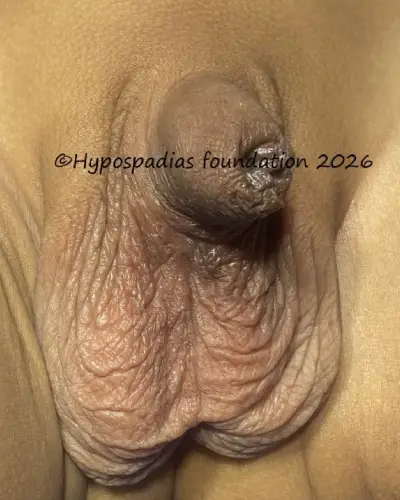
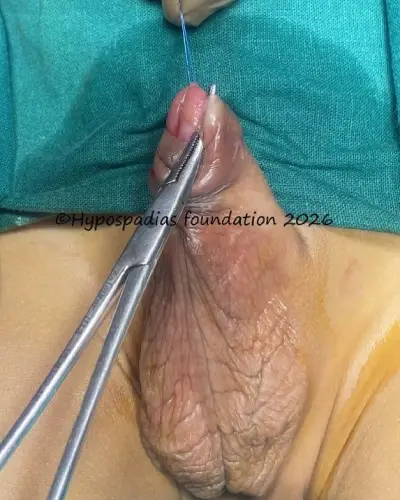
Pic 14 & 15: Clinical examination showed residual prepuce and prepuce fused to the glans
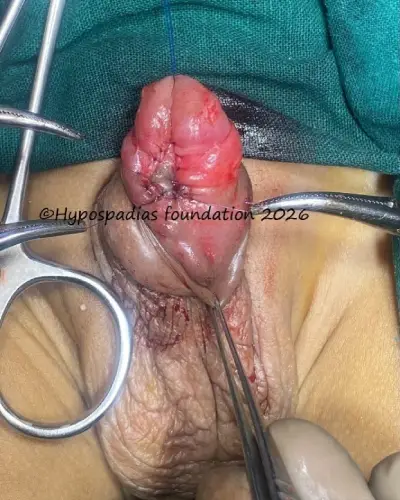
Pic 16: Urethra was laid open upto the distal penile region and new meatus was created in the distal penile region.
Stage 1: Chordee correction
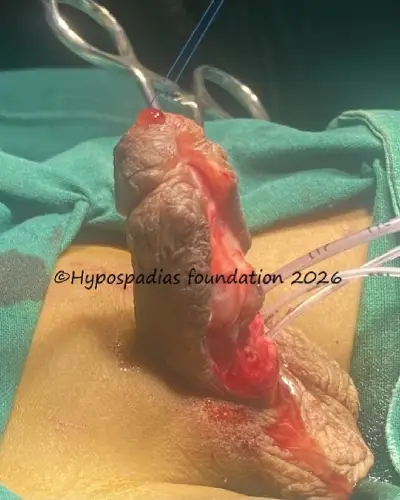
The first stage focused on correcting the residual penile curvature. Complete degloving was done and chordee was assessed. Chordee was significant (more than 60 degrees). Chordee correction was done by urethral plate division, proximal urethral mobilization, three ventral corporotomies and ventral lengthening procedure dermal graft. Residual skin was rearranged.
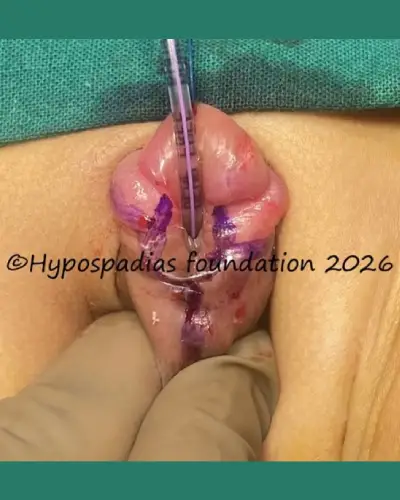
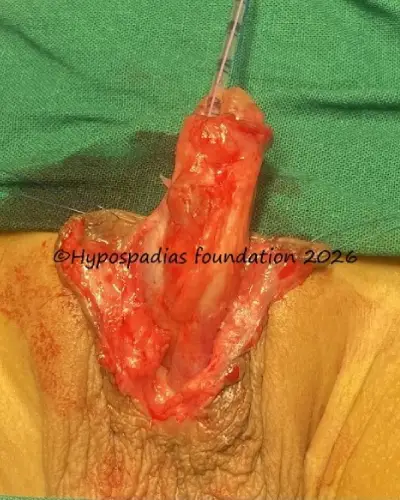
Pic 17 & 18: Degloving marking was done and complete degloving done
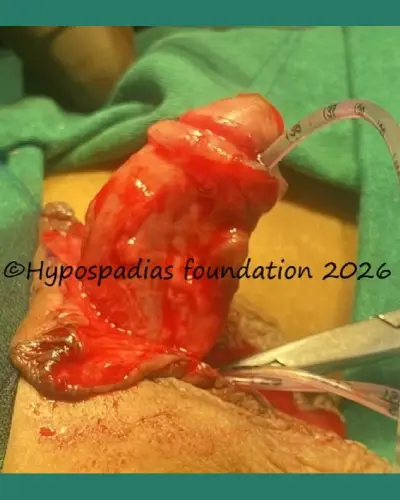
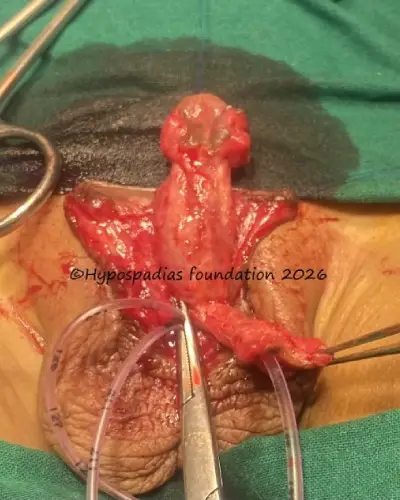
Pic 19 & 20: Chordee of more than 60 degrees noted. Urethral plate divided and proximal urethra was mobilized.
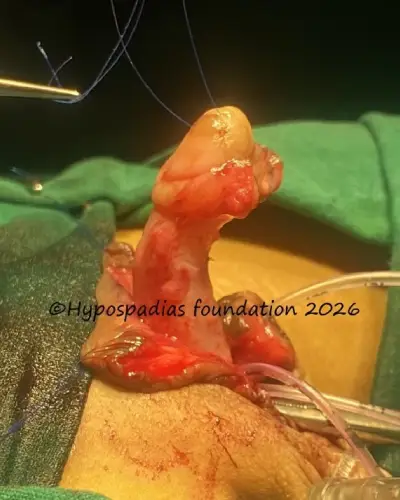
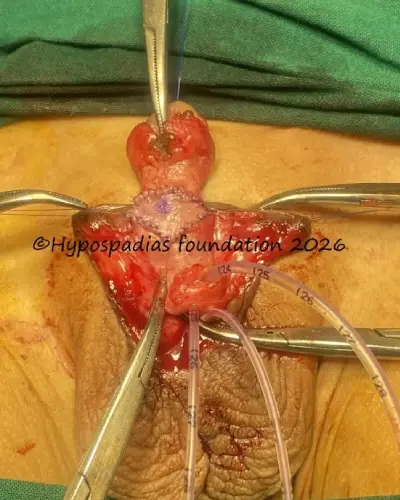
Pic 21 & 22: Persistent chordee of more 30 degree noted even after three ventral corporotomies, hence ventral lengthening procedure in the form of dermal graft was done to correct the chordee.
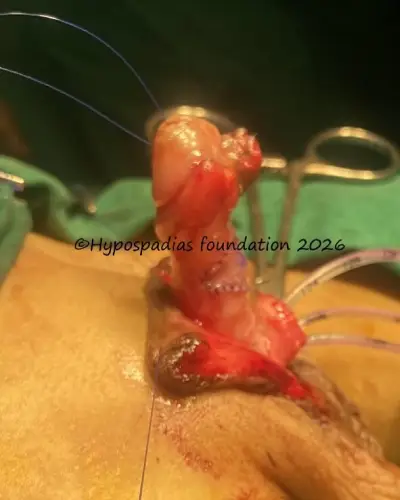
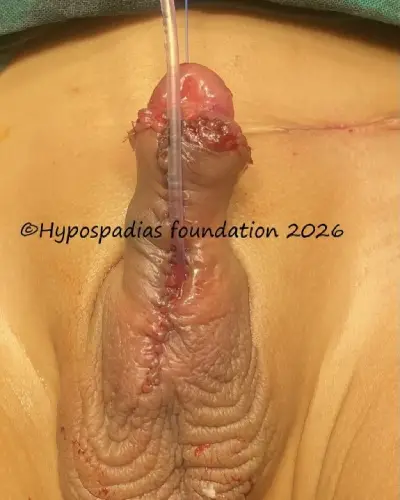
Pic 23 & 24: Complete correction of chordee was achieved with dermal graft placement. Residual skin was rearranged.
Stage 2: Proximal urethroplasty and Oral mucosal graft placement
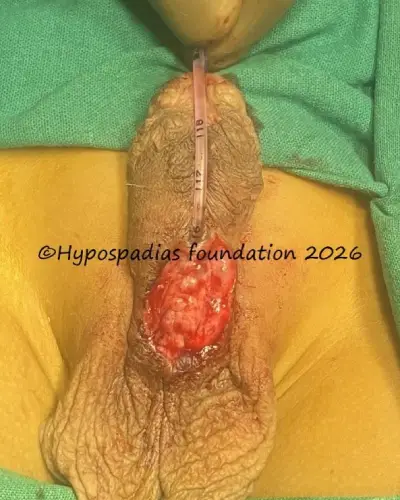
After approximately six months, the ventral penile skin had healed well. The proximal skin, extending from the meatus to the proximal penile region, was soft and supple; therefore, urethroplasty was performed using the local penile skin from penoscrotal region to proximal penile region. The remaining distal ventral skin was firm and unsuitable for tubularization. Hence, an oral mucosal graft was harvested and placed over the remaining ventral surface of the penis for urethral reconstruction.
Pic 25 & 26: 6 months after stage 1 chordee correction, the skin had helaed well. Chordee was assessed and no chordee was noted.
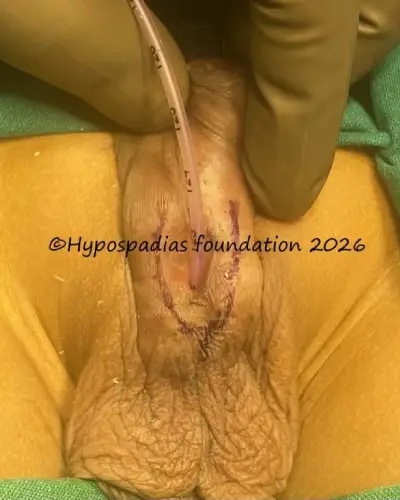
Pic 27 & 28: The skin was soft and supple till the proximal penile region hence tubularization was done upto this point.
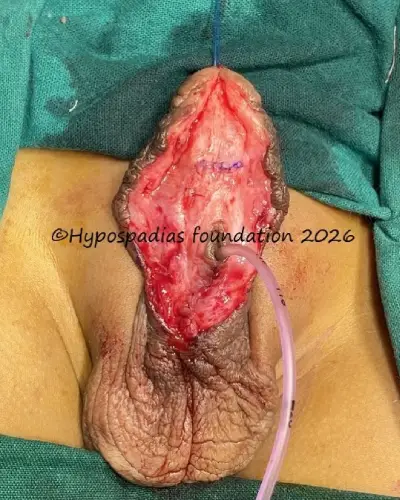
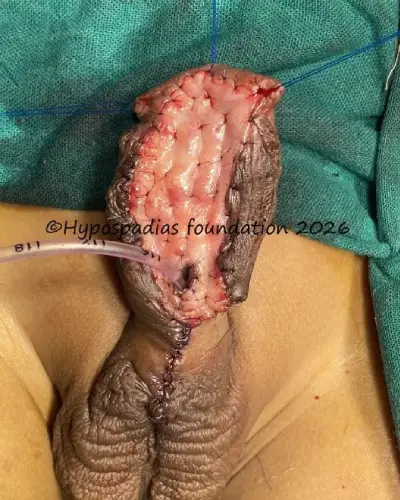
Pic 29 & 30: Midline incision given in the rest of the ventral area and oral mucosa graft was sutured in this area.
Stage 3: Urethroplasty
Following an additional healing interval of 6 months, the oral mucosal graft was tubularized to reconstruct the urethra.
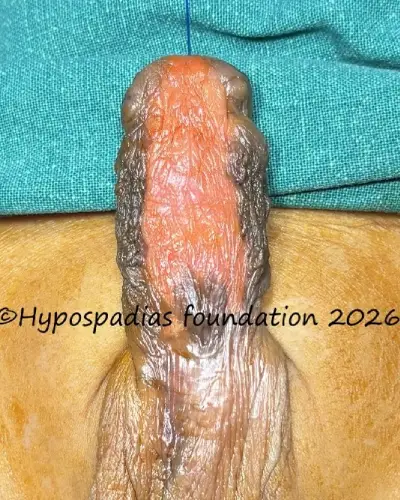
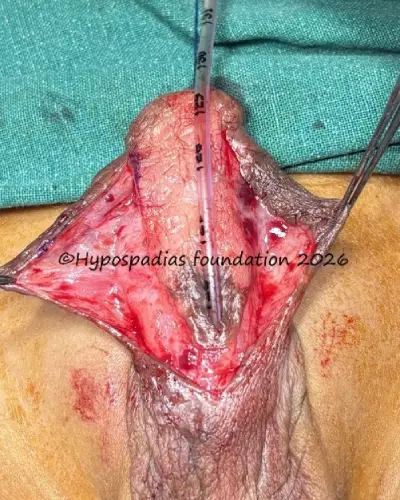
Pic 31 & 32: Oral mucosa graft was soft and supple at 6 months after stage 1. Incision given at the edges of the graft keeping a width of 15mm
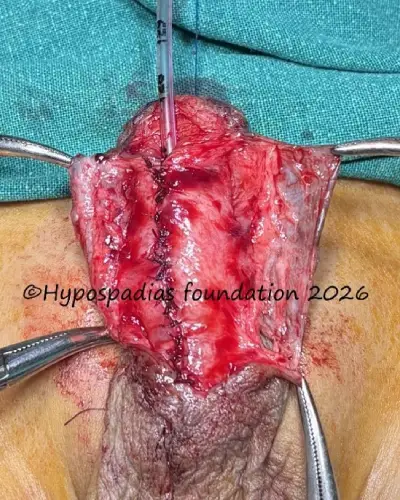
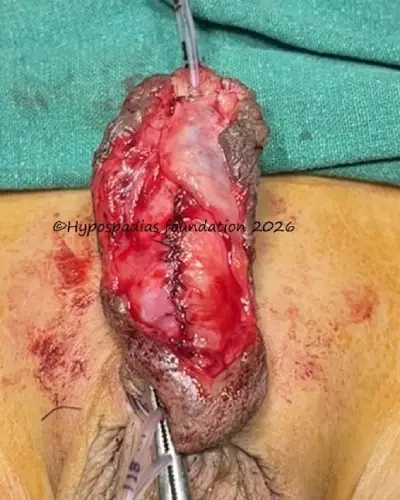
Pic 33 & 34: Tubularization of the graft done over 7 Fr infant feeding tube. Dartos flap raised and sutured over the urethroplasty
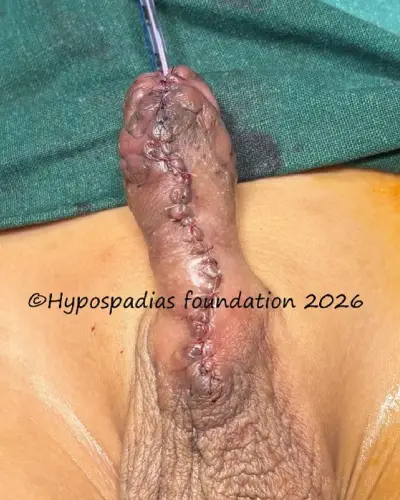
Pic 35: Appearance at the end of surgery
This staged approach allowed the different anatomical problems to be addressed in a planned sequence.
The outcome
The child underwent the planned hypospadias reconstruction without complications at any stage. Following completion of urethroplasty, he was passing urine in a single, straight stream without any complications.
His case highlights why children with multiple fistulae and residual chordee may require a different reconstructive strategy from those whose main problems are urethral stricture or diverticulum.
Why Do Some Children Need Redo Hypospadias Surgery?
Parents often wonder whether a failed hypospadias repair can be corrected and why another operation might be necessary.
The answer depends on the original severity of the condition, the type of complication, the quality of the remaining tissue, and the results of previous procedures.
A urethral fistula may require closure of the abnormal opening. A urethral stricture may need scarred tissue to be released or reconstructed. A large diverticulum may require excision and repair of the underlying urethra. Residual chordee may require correction before further urethral reconstruction.
After several operations, scar tissue can make reconstruction more challenging. For this reason, a hypospadias specialist evaluation is important before deciding whether a single- stage repair or a staged procedure is appropriate.
The goal of redo hypospadias surgery is not simply to perform another operation, but to identify the cause of failure and choose the most appropriate reconstruction for that child.
In the elder brother, recurrent diverticulum and distal urethral stricture required redo urethroplasty and two staged graft reconstruction. In the younger brother, residual chordee and multiple fistulae led to a planned three-stage approach.
These cases show why hypospadias reconstructive surgery must be individualized rather than treating every failed hypospadias repair in the same way.
What Is the Role of DHT Hormonal Therapy in Selected Children with Hypospadias?
Both brothers had markedly small penile size and hormonal findings suggestive of 5-alpha- reductase deficiency.
Dihydrotestosterone, or DHT, is an androgen involved in the development of the external male genitalia. In selected children with micropenis or an underlying disorder of androgen metabolism, specialist-prescribed androgen hormonal therapy may be considered as part of preoperative management for growth in penis size.
In these cases, topical DHT gel was applied once daily for three months, and penile size was measured monthly. Both children showed improvement in penile size before further reconstruction.
An elevated T/DHT ratio can raise suspicion of 5-alpha-reductase deficiency. However, DHT hormonal therapy for penis growth is not required for every child with hypospadias. Its use should be guided by an appropriate endocrine assessment with monitoring for response.
A Message of Hope for Parents Facing Failed Hypospadias Surgery
For the parents of these two brothers, repeated surgical complications had created understandable fear and uncertainty. They came seeking answers after previous operations had failed to resolve their childrens problems.
Their experience highlights an important message: a failed hypospadias does not mean that further treatment is impossible.
A careful reassessment can help identify the reason for failure and determine whether another operation, graft-based reconstruction, or a staged surgical approach may be appropriate.
Both brothers achieved a satisfactory functional outcome, passing urine in a single, straight stream without reported complications. Long-term follow-up remains important to monitor urinary function, recurrent narrowing, fistula formation, and penile development as the children grow.
Every child is different, and outcomes depend on the underlying anatomy, the extent of previous surgery, and the response to reconstruction.
Looking for Treatment for Failed Hypospadias Surgery?
If your child has urine leakage through an abnormal opening, difficulty passing urine, a weak urinary stream, pain during urination, or persistent penile curvature after hypospadias surgery, seek assessment from a hypospadias surgeon clinician experienced in complex hypospadias reconstruction.
Hypospadias Foundation provides evaluation for children with hypospadias and complications following previous repairs. A detailed examination can help determine the cause of the problem and the available treatment options.
If your child has undergone failed hypospadias surgery, a specialist evaluation can help you understand the next steps and make an informed decision about further treatment.
Expert Care for Primary and Failed Hypospadias Surgery at Hypospadias Foundation
The surgical team at the Hypospadias Foundation comprises Dr. A. K. Singal and Dr. Ashwitha Shenoy, who have extensive experience in managing children and adults with hypospadias, including both primary hypospadias repair and complex failed hypospadias surgery.
Treating failed hypospadias requires a thorough understanding of the complications that can develop after previous operations. Urethral fistulae, urethral strictures, urethral diverticula, residual penile curvature, and scarred urethral tissue may require different surgical approaches depending on the child's condition.
An experienced hypospadias surgeon can carefully assess the existing anatomy, identify the underlying reasons for previous surgical failure, and recommend an individualized treatment plan. While some children may be suitable for a single-stage redo hypospadias repair, others may benefit from staged reconstruction using an oral mucosal graft or other appropriate techniques.
Contact Form for Hypospadias Foundation
Please fill all clinical details and upload pictures and clinical summaries (if available)