Hypospadias vs Circumcision

Hypospadias vs Circumcision: Why Circumcision Alone Cannot Fix Hypospadias

One of the most common questions parents ask when their child is diagnosed with hypospadias is: “Can circumcision alone correct hypospadias?”

The simple answer is no. Circumcision and hypospadias repair are two very different surgical procedures, and understanding the distinction is crucial for achieving the best outcome for your child.

What is Hypospadias?

Hypospadias is a congenital condition in which the urinary opening (meatus) is located on the underside of the penis instead of at the tip. It is often associated with:

 A hooded foreskin (foreskin present on the upper side but deficient on the
underside)
 Penile curvature (chordee)
 Abnormal urinary stream

The goals of hypospadias surgery are to straighten the penis, reconstruct the urethra, and create a normal appearance.
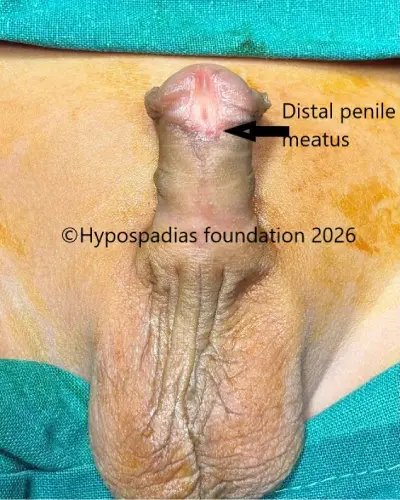
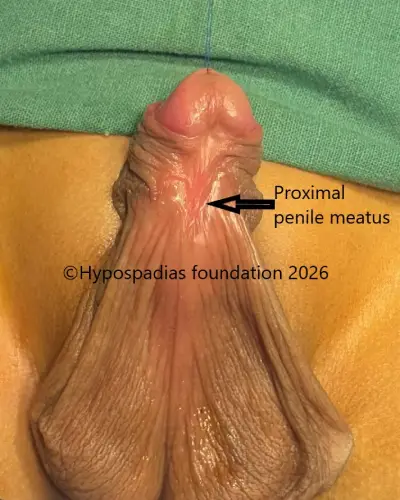
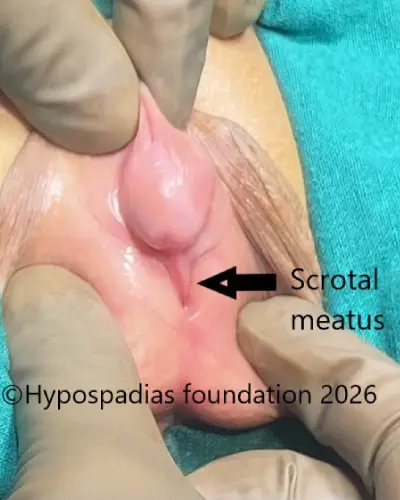
Pic 1: Case of distal penile, proximal penile and scrotal hypospadias

What Does Hypospadias Repair Involve?

Hypospadias surgery is a reconstructive procedure that is far more extensive than a circumcision. Depending on the severity of the condition, the surgery involves the following steps:

1. Degloving

The penile skin is carefully mobilized around the shaft to release adhesions, fibrotic strands and correct any skin-related curvature.

2. Chordee Assessment

An artificial erection test is performed during surgery to assess the degree of penile curvature. The severity of chordee helps determine whether a single-stage or two-stage repair is required.

 Chordee less than 30 degrees: Usually suitable for single-stage repair.
 Chordee greater than 30 degrees: Often requires more extensive reconstruction and sometimes a staged approach.

3. Chordee Correction

Depending on the degree of curvature, correction may be achieved through:

 Dorsal tunica albuginea plication for mild curvature
 Urethral plate division
 Urethral mobilization
 Corporotomies
 Ventral lengthening procedures using dermal grafts or pericardial patches for severe curvature

4. Urethroplasty

Once the penis is straightened, the urethra is reconstructed to bring the urinary opening to the tip of the penis.

5. Circumcision

The foreskin is frequently used during hypospadias reconstruction to create the new urethra and provide skin coverage on the underside of the penis. As a result, the foreskin is usually consumed during the repair process, making circumcision a component of the surgery rather than the treatment itself.

Why Circumcision Alone Cannot Correct Hypospadias

Circumcision simply removes the foreskin. It does not:

 Correct penile curvature
 Reconstruct the urethra
 Move the urinary opening to the tip of the penis

Therefore, circumcision alone cannot treat hypospadias.

In fact, performing circumcision before a planned hypospadias repair can create significant challenges because the foreskin is often needed for reconstruction. Loss of this tissue may limit surgical options and can sometimes convert a straightforward single-stage repair into a more complex two-stage procedure.

What to Expect After Hypospadias Surgery

Following hypospadias repair:

 A dressing is placed around the penis.
 A urinary catheter is usually left in place to drain urine.
 The dressing and catheter are typically removed after 7–10 days, depending on the type of repair performed.

The final appearance is usually that of a circumcised penis because the foreskin has been used during reconstruction. The foreskin does not regrow, as it was either deficient from birth or utilized during surgery.

Attempts to reconstruct the foreskin solely for cosmetic purposes may increase the risk of complications such as tightness, scarring, or breakdown of the repair.

How is Circumcision Different?

Circumcision is a relatively minor procedure involving removal of the foreskin covering the glans penis. Common indications include:

 Recurrent phimosis
 Recurrent foreskin infections
 Balanitis Xerotica Obliterans (BXO)
 Failure of medical treatment for phimosis
 Religious or cultural reasons

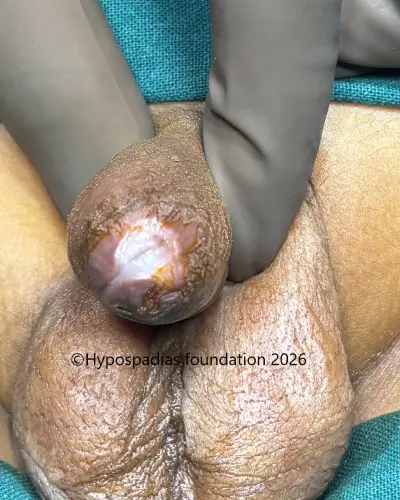
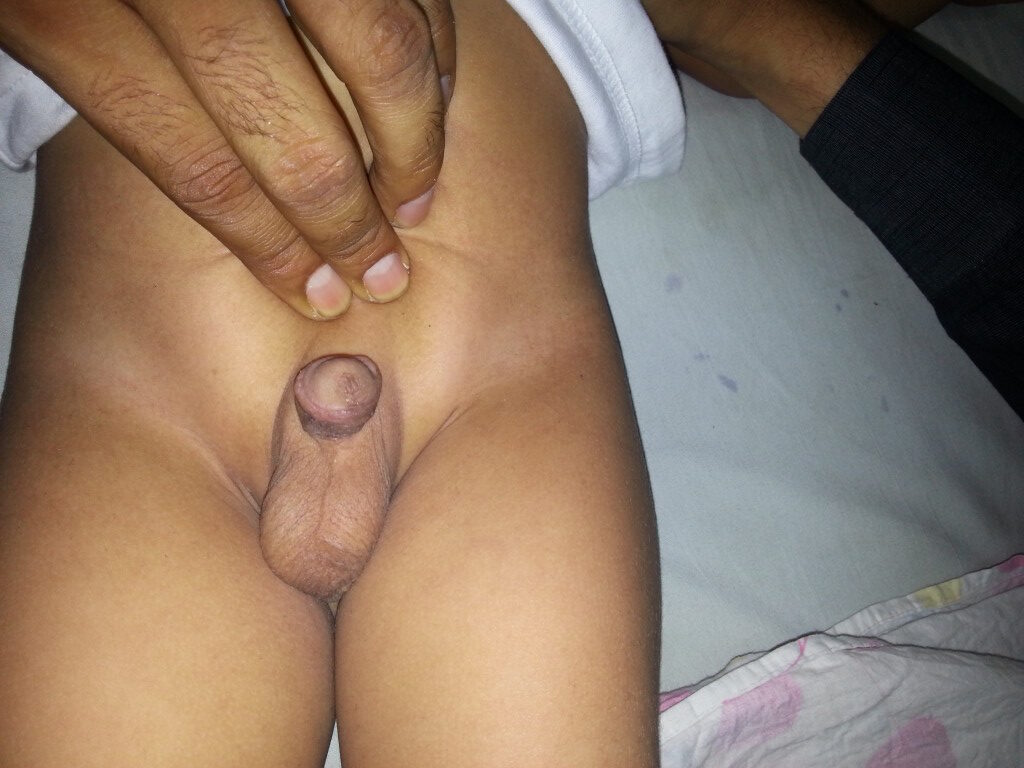
Pic 2: BXO (Balanitis Xerotica Obliterans) changes noted at the tip of foreskin

Unlike hypospadias repair, circumcision generally does not require urethral reconstruction or urinary catheterisation.

The Important Exception: MIP Variant of Hypospadias

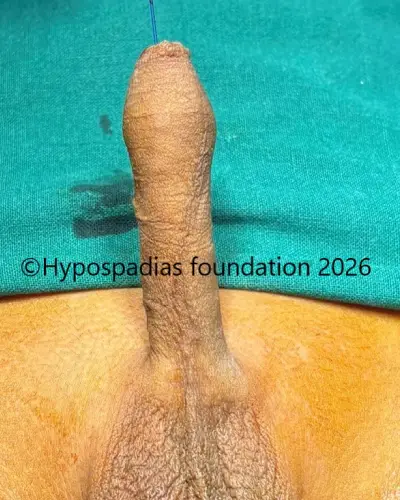
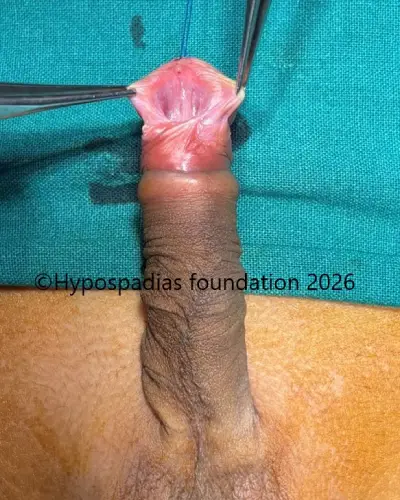
Not all hypospadias cases present with a hooded foreskin. A special subtype called the Megameatus Intact Prepuce (MIP) variant may have a completely normal foreskin.
Pic 3: MIP variant of hypospadias with complete prepuce

Because the foreskin appears normal, the diagnosis can occasionally be missed before circumcision. For this reason, surgeons should always retract the foreskin and examine the position of the urinary opening before beginning a circumcision procedure.

Take-Home Message

Circumcision does not correct hypospadias. Hypospadias is a reconstructive condition that requires correction of penile curvature and relocation of the urinary opening to the tip of the penis. In many cases, the foreskin plays an essential role in reconstruction and should be preserved until evaluation by an experienced hypospadias surgeon.

If your child has hypospadias or there is any doubt about the position of the urinary opening, consult a pediatric urologist or an experienced hypospadias specialist before proceeding with circumcision.

Hypospadias foundation is a centre located in Kharghar, Navi Mumbai, Maharashtra, India with surgeons having expertise in hypospadias repair in children and adults. We regularly manage both primary hypospadias repairs and complex cases including those with previous multiple failed repairs. A significant focus of our patient base consists of children and adults who have had failed hypospadias surgeries elsewhere. Our approach involves not just good surgical technique but also diligent pre-operative assessment, focussed post-surgery care and critical decision making for good long-term outcomes.

Dr A.K. Singal is the founder and head of hypospadias foundation, India. He is considered the best hypospadias surgeon in India and the world and has successfully treated thousands of children and adults with hypospadias with excellent results.

Dr Ashwitha Shenoy is an expert hypospadias surgeon with special interest in the field of hypospadias and pediatric urology. Both Dr Singal and Dr Shenoy strive toachieve excellent outcomes in adults and children with hypospadias. Our success rate at hypospadias foundation for all types of repairs including complex and failed repairs are more than 95%.

Contact Form for Hypospadias Foundation

Please fill all clinical details and upload pictures and clinical summaries (if available)
    Attach Documents (pdf | jpeg | mp4)
    (upload size upto 5mb)

    Safe and Effective Anesthesia for Hypospadias Repair Surgery in Children

    Hypospadias surgery is a procedure to correct the opening of the urethra on the underside of the penis. It is one of the most common pediatric urological surgeries. Ensuring your child’s safety and comfort throughout the surgery is paramount. Anesthesia plays a crucial role in achieving this goal.

    Types of Anesthesia for Hypospadias Surgery:

     General Anesthesia: The most common approach, general anesthesia renders your child unconscious and pain-free. Medications are typically
    administered intravenously (through an IV) or via inhalation through a breathing mask. The anaesthesia is usually short and there is no significant
    effect on the child.

     Regional Anesthesia: Regional anaesthesia is one which works only in the specific area of the body. The regional anaesthesia used in hypospadias
    repair is a caudal block, an injection near the tailbone for targeted pain control. This caudal block gives good pain relief for six to eight hours and
    sometimes even up to ten hours after hypospadias surgery. Older children may feel tingly and numb in the lower limbs and may find it difficult to walk till it wears off, usually within first 12 hours

     Combined Anesthesia: Combining general and regional anesthesia offers the benefits of both: comprehensive pain management during surgery and a smoother recovery from general anesthesia.

    The anaesthesia medicines chosen in children is such that there are minimal side effects and, we can resume oral intake as early as 1-2 hours after the hypospadias correction surgery.

    Pediatric Anesthesiologists:

    Anesthesia for hypospadias surgery is administered by a trained pediatric anesthesiologist, a medical doctor specializing in anaesthesia for infants and children and takes good care before, during, and after hypospadias repair surgery. They will meticulously assess your child’s health before hypospadias surgery, discuss anesthesia options, and choose the safest and most suitable approach for your child’s individual needs.

    Communicate and Ask Questions:

    Open communication with your child’s hypospadias surgeon & urologist and anesthesiologist is vital. Don’t hesitate to ask questions regarding the anesthesia plan and any concerns you may have. Feeling informed and involved in your child’s care can significantly ease anxieties.

    At Hypospadias foundation, we have trained pediatric anesthesiologists who have managed more than thousands hypospadias correction repairs. From airway management, right medications to post operative pain relief we believe in a complete care of the child from pre surgery to post surgery. Safe and effective anaesthesia is necessary for good post operative recovery after hypospadias surgery.

    Effective Pain Relief After Hypospadias Surgery

    Pain relief is very important especially in a child because a cranky child makes the parents and the hypospadias surgeon anxious. After any procedure, it’s natural for your child to experience some discomfort but the discomfort should be manageable. Here’s a guide to effective pain relief after hypospadias surgery:

    Doctor-Prescribed Medications:

     Pain relievers: After surgery we prescribe pain medications, often starting with acetaminophen(paracetamol) or ibuprofen. The medicines must be given as advised because good pain relief means a comfortable child and in turn leads to good healing after hypospadias repair.

     Antibiotics: To prevent infection, antibiotics are prescribed after hypospadias surgery. They must be continued till the catheter removal and
    sometimes for a few days even after the hypospadias catheter is removed. Infection can destroy the entire hypospadias repair hence we need to be
    vigilant and avoid infection at all costs.

     Bladder antispasmodics: The presence of a urinary tube can cause urinary bladder contractions. The only way to manage this is by prescribing anti spasmodic medicines. Hence after hypospadias surgery till the catheter removal, the child will be on anti-spasmodic medicines.

     Pain due to erection: Painful erections after hypospadias surgery occur in every child and are even more prominent in teenagers and adults. This pain can be quite bad due to swelling of penis and the presence of a urinary tube. Hence we prescribe a stronger painkiller diclofenac in the form of
    suppository during these episodes of severe pain. This medicine gives good pain relief in times of extreme pain. For adults we also add more medicine to decrease painful erections at night.

    At-Home Pain Management Strategies:

     Positioning: Encourage your child to rest comfortably, positioning themselves to minimize tension on the surgical area. This can be lateral or
    supine position with pillow support.

     Distraction: Engaging your child in their favourite activities or games can help take their mind off any discomfort after hypospadias surgery

     Loose Clothing: Tight clothing can apply pressure on the operated site and cause discomfort to the child. Opt for loose-fitting clothing made from
    breathable fabrics to avoid irritation.

     Dietary Adjustments: Prefer healthy nutritious food over processed food. Processed food does not have fibre and cause constipation in a child which in turn can cause bleeding at the operated site during straining. Maintaining hydration is also essential to prevent constipation.

     Hygiene: Maintain proper hygiene around the hypospadias surgical site as instructed by your doctor. Change inner diaper frequently when dirty and be vigilant for soling of dressing. If dressing gets dirty at any point, do visit the hospital and get a hypospadias dressing change.

     Activity Restrictions: Follow the doctor’s recommendations regarding activity levels to promote healing and prevent complications. Any vigorous
    activities are generally avoided typically for 4-6 weeks after hypospadias surgery. Children can play at home and other board games comfortably.

    Remember:

     Consult your Hypospadias Doctor: If pain seems excessive or worsens, consult your child’s doctor for further evaluation and possible medication
    adjustments.

     Be Patient: Healing takes time after a hypospadias surgery. Be patient with your child and offer support throughout the recovery process.

    At Hypospadias Foundation India, we have treated thousands of children and adults with hypospadias. Our approach to hypospadias repair includes
    comprehensive care from preoperative to post operative period. Remember, every child heals at their own pace. By being prepared, informed, and supportive, you can help your child through this journey and ensure a successful recovery. Dr A.K.Singal and Dr Ashwitha Shenoy are rated as the best hypospadias surgeons in India. Their experience in the field of hypospadias makes them the best surgeons for hypospadias repair for both children and adults. If you need an opinion or consult us for your child, please do write to us at hypospadiasfoundationindia@gmail.com or fill up this contact form or visit us at the hospital.

    Contact Form for Hypospadias Foundation

    Please fill all clinical details and upload pictures and clinical summaries (if available)
      Attach Documents (pdf | jpeg | mp4)
      (upload size upto 5mb)

      Post-operative instructions and home care after hypospadias repair surgery

      Hypospadias surgery is a delicate, skillful and complicated surgery. The good thing about hypospadias treatment is that young babies heal very fast and become well within a week to ten days after the hypospadias repair. Fortunately, unlike adults, the children do not think about pain. They live their life happily soaking in, everything moment to moment. Adults on the other hand think and anticipate pain too much hence they land up having more pain. It is the anticipation of the pain which is worse than the pain itself.

      That being said, here we have tried to give detailed post hypospadias repair instructions for the parents and patients so that they can understand the care which needs to be taken after hypospadias surgery. Please note that these are generalized instructions after hypospadias surgery and there will be some variations on a case to case basis and it is best to discuss with your hypospadias surgeon for other details.

      • Diet: Children can often be fed 2-3 hours after hypospadias repair if the surgery was done under sedation and caudal epidural anesthesia. Some complex or failed hypospadias may require general anesthesia for surgery and these kids are kept empty stomach for 3-4 hours after surgery.
      • Urine passage: In almost all the hypospadias repairs, there is urinary pipe called catheter which is left across the hypospadias repair site. This goes into the bladder and drains drops of urine continuously. It is generally removed after 5-10 days by the hypospadias specialist depending on the type of the repair.
      • Diaper care: Post hypospadias treatment babies are kept in double diapers till the time the catheter is there. If the child is more than 6-7 years of age, then diapers may be difficult to maintain- hence we prefer to use a urine bag for drainage of urine. We ask the parents to make a hole on the front side of inner diaper and bring out the catheter to drain into the outer diaper. This way the inner diaper is changed only when the child passes motions and hence remains dry. Outside diaper is changed whenever it is full of urine.
      • Hypospadias Dressing care: At the end of hypospadias surgery, we place a soft gauze roll dressing on penis to give some support to the healing penis. There may be minor bleeding into the diaper on and off for first 3-4 days which is nothing to worry about. The hypospadias dressing sometimes becomes loose and comes out. If this happens within first 2-3 days, then we change the hypospadias dressing. If it happens later, we just remove the dressing and leave the wound open.
      • Discharge after hypospadias surgery: Most of the children who have a simple primary hypospadias are discharged the same day of surgery by evening- daycare hypospadias surgery. Children who are traveling from far may come the night before to hospital and stay for a day or two after surgery as well. Children who have undergone a failed hypospadias or a complex surgery are kept in hospital for 2 nights after surgery also for antibiotic injections or pain relief etc.
      • Pain relief: We prescribe an oral syrup of analgesic medicine mostly a combination of ibuprofen and paracetamol for first few days after surgery. This ideally should be given post feeds and not on empty stomach. We also give a medicine called oxybutynin which is an anticholinergic and prevents bladder spasms (painful bladder contractions due to catheter).
      • Medications: A broad spectrum antibiotic such as cephalexin is also prescribed to prevent infections along with an antacid medicine such as Lansoprozole for the first few days.
      • Activity, walking, playing within the house is allowed even the day of surgery by evening but we ask the parents to make sure that the child does not use cycle or any toy on which straddling is needed. Child can sleep on his tummy if he likes to sleep that way. Double diapers prevent too much compression of the hypospadias repair site.
      • Visits with doctor: We like to see the patients on day 5 after surgery for removal of dressing and for some minor hypospadias repairs we remove the catheter also at the same time. If its moderate or severe hypospadias surgery, we generally remove the catheter after 7-10 days and hence the catheter is removed on second visit then.
      • Bathing: Once the dressing is out on day 5, the child can be given a short warm tub bath. We ask parents not to use any cotton or cloth for drying the area of hypospadias repair surgery as fibers can stick to the raw area. It is better than after drying the rest of the body the diaper is put on directly and that will dry the area.
      • Ointments on penis: We advise putting a broad spectrum antibiotic ointment such as neosporin locally on the penis at each diaper change so that it prevents infection and also protects the raw area from sticking to the diaper.

      We hope this little primer on care of children after hypospadias surgery helped you. Please feel free to get in touch with us if you need any further information. We hope and pray that your little kid becomes better soon and recovers well from hypospadias surgery.

      About the author:

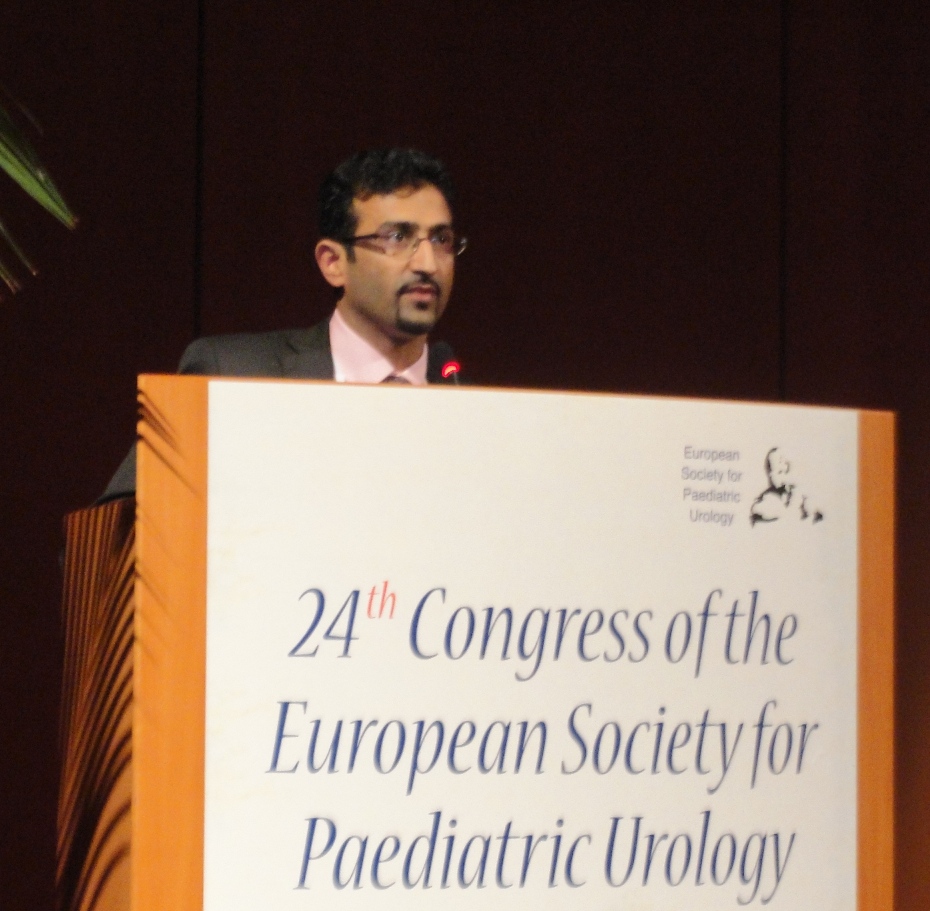
      Dr A.K.Singal delivering his talk at ESPU

      Dr A.K.Singal is one of the best hypospadias surgeons and Pediatric Urologists in India. He practices in Navi Mumbai, Thane and Mumbai area of India. Dr Singal believes in giving as much information to parents and families as possible about surgery, pre surgery and post surgery course. It helps the parents to be fully informed as he says in his own humorous way- “it decreases my stress and time per consult”

      In case you have a child with hypospadias, you can contact him at the following places:

      1.      MITR Hospital & Hypospadias Foundation

      74-90, 1st Floor, Above IDBI Bank, Chaturbhuj, Shilp Chowk

      Sector-21, Kharghar, Navi Mumbai- 410210

      Mon & Fri: 5:00-6:30pm, Tues: 12-1pm, Appointments: +91-22-27743558/4229 & 09324180553

       2.      Fortis Hospital, Mulund

      Mulund Goregaon Link Road, Mulund, Mumbai – 400078

      Wed & Sat: 4:00pm-5:00pm, Appointments: +91- 22- 43654365; 67994185

      3.      Jupiter Hospital, Thane

      Wed & Saturday, 2:00pm-3:00pm, Appointments: +91-22-21725563/ 55 

      4.      MGM’s New Bombay Hospital, Vashi.

      Sector-3, Vashi-400703, Navi Mumbai

      Mon, Wed & Fri: 7:00-8:00pm, Phone: +91-22-61526666/ 6675/ 6607

      5.      MITR Clinic, Vashi

      C1/8, Sector- 2, Opp. Green City, Vashi, Navi Mumbai

      Tue & Sat: 7:00pm-8:00pm, Appointments: +91-22-65163816 & 9324502572

      6.      Fortis Hiranandani Hospital, Vashi

      Miniseashore road, Sector-10, Vashi, Navi Mumbai

      Tue & Sat: 6:00pm-7:00pm, Appointments: +91-22-39199200, 222


      Email address: arbinders@gmail.com

      Websites:

      www.pediatricurology.inwww.hypospadiasfoundation.comwww.mitrhospital.com

      Youtube channel: www.youtube.com/pedurohypospadias

      Videos:

      Single stage repair of severe hypospadias

      Interview: Dr Singal speaks about Hypospadias

      Contact Form for Hypospadias Foundation

      Please fill all clinical details and upload pictures and clinical summaries (if available)
        Attach Documents (pdf | jpeg | mp4)
        (upload size upto 5mb)

        Excellent results of Hypospadias repair surgery – TIP urethroplasty (Snodgrass Repair) for distal penile hypospadias

        Hypospadias is one of the most common malformations in boys and affects more than 1 lakh kids in India. At Hypospadias foundation and MITR Hospital, Kharghar, Navi Mumbai, India – we see and manage more than 200 kids every year who have hypospadias and need surgery. These cases are either primary (75%) or those have failed surgery elsewhere (25%)- some of them have failed multiple surgeries elsewhere.

        We strongly believe that hypospadias surgical correction should not be taken lightly or casually by any surgeons as first hypospadias surgery is the best chance which the child has. Once the first hypospadias surgery has a complication, more surgeries are needed and still the result may not be optimal. Hence, the surgeon needs to be well trained for hypospadias repair procedure and should have a very keen and passionate interest before he takes up any child up for surgery for hypospadias.

        Amongst the various techniques for hypospadias surgery, one of the most popular one is Tubularised Incised Plate (TIP) urethroplasty. TIP repair was first described by Prof Warren Snodgrass and it currently constitutes 70% of all distal and midpenile hypospadias repairs across the world. Due to its universal adoption and remarkable results, it is also known as Snodgrass repair. I had the good fortune of assisting Dr Warren Snodgrass during his multiple visits to India when I was a resident in pediatric surgery at All India Institute of Medical Sciences. I keep bumping him into now and then at pediatric urology conferences, the last one of which was European Society of Pediatric urology Congress in Genoa Italy. We received the best paper award at the conference and it was nice to see Dr Warren Snodgrass applauding us.

        While TIP repair or Snodgrass urethroplasty has excellent results, case selection before surgery is very important. The criteria are:

        1. Distal or midpenile hypospadias
        2. Mild to moderate chordee which is correctable
        3. Wide pink elastic urethral plate.

        In certain selected proximal hypospadias, Snodgrass repair can be used but on a personal level- a long Snodgrass repair may not be the best option in most cases. We have started using Onlay Island flap repair in most of our proximal hypospadias and all distal/ mid penile hypospadias which are unsuitable for TIP Urethroplasty.

        Steps of surgery:

        1. Degloving the penis and chordee correction – straightening of the curvature of the penis
        2. Midline urethral plate incision
        3. Neo-urethra formation on a catheter
        4. Second layer coverage with either a dartos flap or spongiosum
        5. Penile skin cover with Byars flap which helps in creating a midline closure on underside of penis. After the healing is finished, penis looks like just a circumcised penis. In some selected cases Prepucial reconstruction can be offered.

        You can watch the video of a Snodgrass Urethroplasty for a distal penile hypospadias here.

        In my experience as an expert hypospadias surgeon, while doing TIP urethroplasty everything has to be done meticulously to prevent complications. If I have to narrow down on two things which have really lessened the complications of hypospadias repair with Snodgrass urethroplasty at our centre are:

        • Fashioning a wide caliber neo-meatus- so that there is no narrowing later on
        • Providing a second layer cover on new urethra with either spongiosum or a dartos flap.

        Master Soham’s parents stay in Latur, Maharashtra and their son was diagnosed to have a distal penile hypospadias at birth. Worried about multiple surgeries and poor outcomes for hypospadias repair- They searched for the best hypospadias surgeon on the internet and landed up in our pediatric urology clinic at MITR Hospital in Kharghar, Navi Mumbai. We did the surgery using a Snodgrass repair technique in First week of May 2014. The surgery went well and child was discharged the evening of surgery. The dressing and catheter were removed 5 days after surgery and now one month after followup the child has an excellent outcome after hypospadias repair surgery. The cosmetic appearance is excellent with a meatus at the tip of penis, straight penis and just a circumcised appearance.

        Good cosmetic outcome after single stage hypospadias repair surgery

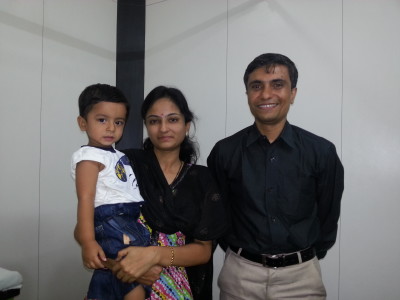
        Parents are also happy and overjoyed.

        Happy parents – after successful hypospadias repair surgery

        If you wish to consult Dr Singal you can fill up this contact form here:

        http://hypospadiasfoundation.com/contact-patient.htm

        Or call up Dr Rajkumar at +91-9821261448 to discuss anything

        Contact Form for Hypospadias Foundation

        Please fill all clinical details and upload pictures and clinical summaries (if available)

          Attach Documents (pdf | jpeg | mp4)
          (upload size upto 5mb)

          Contact Us

          Call Now