Dr A.K.Singal presents his work at Hypospadias World Congress at Childrens Hospital of Philadelphia, USA

Hypospadias Foundation starts Clinic for Hypospadias Treatment & Surgery in Bahrain

Dr A.K.Singal was an invited speaker at Hypospadias World Congress at Children’s Research Center at Children’s Hospital of Philadelphia, USA, held between 30th October 2019-1st Nov 2019. Dr Singal presented four papers on hypospadias treatment and moderated scientific sessions during the conference.

The conference saw participation from more than 150 pediatric urologists and hypospadias specialists from across the world. The conference solely focussed on hypospadias. Various aspects of hypospadias were discussed such as etiology, diagnosis, hormonal tests and supplementation (testosterone injections), surgery techniques and complications/ results of hypospadias surgeries.

Dr A.K.Singal

Dr A.K.Singal

best hypospadias surgeon in india

Dr Singal with Dr Long & Dr Zaontz

Dr Singal presented the following lectures and papers in the World Congress:

  • Buccal inlay graft for failed hypospadias- Dr Singal showed technique of buccal (oral) mucosa graft inlay surgery and its results in failed hypospadias cases.
  • Considerations in adult hypospadias repairs- Adult hypospadias are difficult to manage especially if the surgery done in childhood has failed. Dr Singal showed innovative surgery techniques for such adult hypospadias cases for best outcomes.
  • Reimagined Byar’s flaps for staged hypospadias repairs- For hypospadias with severe chordee, it is important that the penile curvature gets fully corrected in first stage and then second stage surgery is done for bringing the urethra to the tip of penis. In expert hands the results of two stage surgery for hypospadias with severe chordee is very good. Dr Singal showed finer nuances of surgery to achieve best results to the audience.
  • Parental Awareness survey for families with hypospadias: Families of children or adults with hypospadias are often not fully aware of the extent of disease and what it means in the long run. Dr Singal and his team conducted a study of 150 families to understand about their concerns about hypospadias and their knowledge level about the disease/ surgery.

Overall the three-day conference resulted in great mutual exchange of ideas and also helped younger generation of surgeons learn from eminent faculty from all over the world.
What is chordee (bent penis) and why do hypospadias have chordee? How is chordee correction surgery done?

Chordee means that the penis is bent (curved penis). Penis mostly gets bent downwards hence it is called ventral chordee and is seen commonly seen in children with hypospadias. In children with other type of anomaly which is much rarer than hypospadias called epispadias the penis may be bent upwards, it is called dorsal chordee. Hypospadias is atleast 20-30 times more common than epispadias, hence when someone uses the word chordee it is by fault supposed to mean ventral chordee as seen in hypospadias.

Why does chordee happen?

When the penis is getting formed between 8-12 weeks of pregnancy, the urethra (urinary passage) also starts getting formed from the base of penis to the tip of penis. This happens gradually under the 3influence of male hormones produced by the testis. All around urethra, a special tissue called corpus spongiosum is also formed through which the urethra runs. The two cylinders of tissue called corpus cavernosa are also formed. Together equal sizes of spongiosum and two cavernosa cylinder are responsible for a straight penis. When the urethra is short as in hypospadias, the spongiosum tissue is a3lso short, the skin and dartos tissue under skin is also short and sometimes the corpora can also be curved. Hence chordee results from this shortage of these tissues on underside of penis.

Do all hypospadias have chordee?

Chordee is seen more than 50% of all hypospadias but this also depends on the severity of hypospadias. Generally, the more severe the hypospadias is, higher the chances of chordee. Hence, chordee is more common in scrotal hypospadias than distal penile hypospadias. This is a generalization and it is not true in all cases as we have seen lot of cases of chordee without hypospadias and also minor hypospadias having a major degree of chordee.

How is chordee checked and graded?

Chordee can sometimes be seen by the parents when the child has an early morning erection which happens even in small babies. Generally we tell the parents to click the picture from the side to document the chordee degree. Chordee must always be checked during hypospadias surgery by doing an artificial erection test. This is infact a mandatory test for all hypospadias and the most important thing to be taken care of during hypospadias surgery. If chordee is not checked and left untreated, it can create lot of issues in adulthood and need surgery again which is much more difficult in adulthood. Chordee is graded in degrees like 30 degrees, 45 degrees or 90 degrees or also as mild, moderate or severe.

Does chordee always need surgery repair?

A straight penis is important to have straight stream of urine as well as for having normal sexual intercourse. Hence, if the penis has anything more than 15-20 degrees of bend should be corrected.

How is chordee repair surgery done?

  • Degloving of penis: In any hypospadias surgery or chordee repair surgery, the first step is called degloving of penis. Degloving means that the penis skin is taken down till the base of penis by a circular incision around head of penis while saving the opening of hypospadias and urethral plate. Generally, there are some abnormal tissues around base of penis which cause chordee and once these are divided chordee gets corrected in most cases. Then a tourniquet is applied on the base of penis and saline solution is injected into the head of penis or corporal bodies. This is called artificial erection test and allows the hypospadias surgeon to assess the degree of chordee.
  • Tunica albuginea plication: If there is still chordee then further steps need to be done to correct chordee. If the chordee is mild, then we perform tighten the top side of penis with a non-absorbable stitch to straighten the penis.
  • Division of urethral plate: If the chordee is still severe then a cut needs to be given to divide the urethral plate between hypospadias opening and the head of penis.
  • Dermal graft for chordee correction: Chordee is again checked and if it still severe then corpora needs to be lengthened by placing a dermal graft on underside of penis. In case a dermal graft is placed, then a single staged repair can’t be done and a staged hypospadias repair is done.

It is important for a hypospadias surgeon to make sure that the chordee is completely corrected during hypospadias surgery. It requires experience to do a stepwise assessment of the chordee in every individual case and then proceed with chordee repair as detailed above. The importance of having a straight penis cannot be overemphasized.

About the author:

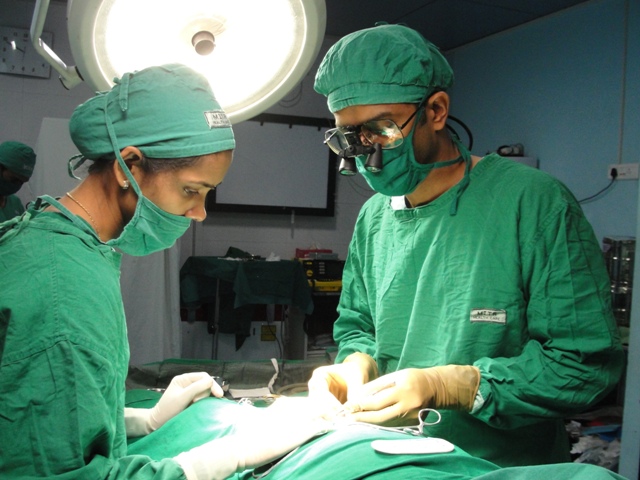
Dr A.K.Singal during Hypospadias surgery

Dr A.K.Singal is a renowned Pediatric urologist and is one of the best & most experienced hypospadias surgeons across India and world. His deep interest, research, knowledge has helped hundreds of children and adults with hypospadias achieve a satisfactory cosmetic and functional results of hypospadias. Dr Singal is available in Fortis Hospital in Mulund Mumbai, Jupiter hospital in Thane, Fortis Hospital in Vashi (Navi Mumbai) and MITR Hospital & Hypospadias Foundation in Kharghar, Navi Mumbai, India. To reach him you can send him an email at hypospadiasfoundationindia@gmail.com or fill up this form:

Contact form for Dr Singal

Also, you can call up Dr Rajkumar, Dr Singal’s assistant and Coordinator of Hypospadias Foundation on +91-9821261448

Video of Glanular Hypospadias with chordee surgery repair by Dr A.K.Singal

Video of Distal penile hypospadias repair procedure by Dr A.K.Singal

Video of proximal penile hypospadias repair surgery procedure by Dr A.K.Singal

Video of scrotal hypospadias single stage repair procedure by Dr A.K.Singal

Please fill all clinical details and upload pictures and clinical summaries (if available)

    Attach Documents (pdf | jpeg | mp4)
    (upload size upto 5mb)

    Distal Penile Hypospadias in a child: Single stage repair surgery video using TIP urethroplasty (Snodgrass repair)

    Distal penile hypospadias is the most common type of hypospadias in children. The urethral opening is located on the underside of penis but in last 1/3 of the penis. While some of the distal hypospadias may have an associated bend in penis called Chordee, most of the distal hypospadias may not have a chordee. There are many types of hypospadias surgery techniques described and the hypospadias surgeon selects the type of repair depending on the anatomy.

    The key factors in deciding the repair are:

    1. Severity of Chordee
    2. Severity of hypospadias
    3. Quality of urethral plate
    4. Experience of the surgeon

    Snodgrass repair or Tubularised incised plate urethroplasty was described by Dr Warren Snodgrass in 1992 and relies on using the natural tissues of penis on the underside for making a new urinary passage. The basic concept is midline incision of the open urethra from the urinary opening till the head of penis. This expands the urethral plate and allows it rolled into a new urethral tube which can heal very well.

    The critical steps are:

    • Degloving of the penis: Incisions are marked preserving the urethral plate and all the penile skin is taken down to correct chordee. This step doesn’t harm the nerve and blood supply of penis as that runs deep inside the penis.
    • Artificial erection test: After applying a tourniquet, artificial erection test is done to check for any curvature (chordee). If there is no curvature, urethroplasty can be started.
    • Chordee correction: In most of the children with distal hypospadias, degloving alone releases the bands on underside of the penis and chordee gets corrected. In some children with hypospadias, chordee correction may be needed. This can be done by either putting a stitch – Tunica albuginea plication or by dividing the urethral plate. Urethral plate division is needed only in patients with severe chordee. But once the urethral plate is divided, TIP urethroplasty can’t be done, other types of repairs have to be planned.
    • Glans wings: Urethral plate is dissected into glans, creating glans wings on either side which are mobilized deep. Midline urethral plate incision (TIP incision) is given to expand the urethral plate and then urethra is closed with a fine absorbable suture such as PDS or vicryl to construct the new tube. The sutures are taken in a subepithelial fashion to invert the mucosa.
    • Second layer coverage: If there is good corpus spongiosum around urethral plate, it is mobilized for spongioplasty to provide security from urethral fistula. We also routinely use Dartos flap to cover the urethroplasty and prevent complications such as urethral fistula.
    • Glansplasty and skin coverage: Glans wings are closed with absorbable sutures and excess foreskin on the top is divided in midline and brought ventrally for complete skin coverage. Midline closure is achieved after excising excess skin so that a pleasing cosmetic outcome can be sought.
    • Dressing and catheter: Though lot surgeons use bulky dressings after hypospadias surgery, we use mostly a Tegaderm (transparent plastic wrap) followed by a soft gauze dressing. The catheter is tied to the glans stitch and allowed to drip urine into the diaper.

    Follow-up and care after hypospadias repair surgery with TIP urethroplasty:

    Most of the children are discharged by the evening of hypospadias surgery. Antibiotic syrup, pain killers and antispasmodic medicines are given for a week’s time. The parents are taught double diaper care and we call the children for follow-up after 5-7 days for removal of dressing and catheter at the same time. The hypospadias dressing is removed in clinic itself and the parents are advised to apply an antibiotic ointment on the penis for 2-3 weeks. Bath can be given as soon as the dressing is removed. We call for follow-up two weeks after catheter removal and after 3 months if everything is healing well.

    About the author:

    Dr A.K.Singal is a renowned Pediatric Urologist and Hypospadias Surgeon practicing in western india in area of Mumbai, Navi Mumbai and Thane. He is counted as one of the best hypospadias expert surgeons in the world and every year manages more than 200 kids and adults with hypospadias. He started Hypospadias Foundation in 2008 and Hypospadias Foundation remains the world’s only organisation dedicated to children with Hypospadias. Children from more than 20 countries travel every year to India to consult for hypospadias treatment under his team’s care.

    Dr A.K.Singal during Hypospadias surgery

    He is available at the following clinics : Clinics and Timings for Dr A.K.Singal

    Watch video of Distal penile hypospadias repair surgery video by Dr A.K.Singal

    Watch video of Single stage repair surgery of severe hypospadias by Dr A.K.Singal

    Watch Video of repair of glanular hypospadias with chordee by Dr A.K.Singal

    To send an enquiry to Dr Singal’s team please fill up this form:

    Contact form for Hypospadias enquiry

    Contact Form for Hypospadias Foundation

    Please fill all clinical details and upload pictures and clinical summaries (if available)

      Attach Documents (pdf | jpeg | mp4)
      (upload size upto 5mb)

      Post-operative instructions and home care after hypospadias repair surgery

      Hypospadias surgery is a delicate, skillful and complicated surgery. The good thing about hypospadias treatment is that young babies heal very fast and become well within a week to ten days after the hypospadias repair. Fortunately, unlike adults, the children do not think about pain. They live their life happily soaking in, everything moment to moment. Adults on the other hand think and anticipate pain too much hence they land up having more pain. It is the anticipation of the pain which is worse than the pain itself.

      That being said, here we have tried to give detailed post hypospadias repair instructions for the parents and patients so that they can understand the care which needs to be taken after hypospadias surgery. Please note that these are generalized instructions after hypospadias surgery and there will be some variations on a case to case basis and it is best to discuss with your hypospadias surgeon for other details.

      • Diet: Children can often be fed 2-3 hours after hypospadias repair if the surgery was done under sedation and caudal epidural anesthesia. Some complex or failed hypospadias may require general anesthesia for surgery and these kids are kept empty stomach for 3-4 hours after surgery.
      • Urine passage: In almost all the hypospadias repairs, there is urinary pipe called catheter which is left across the hypospadias repair site. This goes into the bladder and drains drops of urine continuously. It is generally removed after 5-10 days by the hypospadias specialist depending on the type of the repair.
      • Diaper care: Post hypospadias treatment babies are kept in double diapers till the time the catheter is there. If the child is more than 6-7 years of age, then diapers may be difficult to maintain- hence we prefer to use a urine bag for drainage of urine. We ask the parents to make a hole on the front side of inner diaper and bring out the catheter to drain into the outer diaper. This way the inner diaper is changed only when the child passes motions and hence remains dry. Outside diaper is changed whenever it is full of urine.
      • Hypospadias Dressing care: At the end of hypospadias surgery, we place a soft gauze roll dressing on penis to give some support to the healing penis. There may be minor bleeding into the diaper on and off for first 3-4 days which is nothing to worry about. The hypospadias dressing sometimes becomes loose and comes out. If this happens within first 2-3 days, then we change the hypospadias dressing. If it happens later, we just remove the dressing and leave the wound open.
      • Discharge after hypospadias surgery: Most of the children who have a simple primary hypospadias are discharged the same day of surgery by evening- daycare hypospadias surgery. Children who are traveling from far may come the night before to hospital and stay for a day or two after surgery as well. Children who have undergone a failed hypospadias or a complex surgery are kept in hospital for 2 nights after surgery also for antibiotic injections or pain relief etc.
      • Pain relief: We prescribe an oral syrup of analgesic medicine mostly a combination of ibuprofen and paracetamol for first few days after surgery. This ideally should be given post feeds and not on empty stomach. We also give a medicine called oxybutynin which is an anticholinergic and prevents bladder spasms (painful bladder contractions due to catheter).
      • Medications: A broad spectrum antibiotic such as cephalexin is also prescribed to prevent infections along with an antacid medicine such as Lansoprozole for the first few days.
      • Activity, walking, playing within the house is allowed even the day of surgery by evening but we ask the parents to make sure that the child does not use cycle or any toy on which straddling is needed. Child can sleep on his tummy if he likes to sleep that way. Double diapers prevent too much compression of the hypospadias repair site.
      • Visits with doctor: We like to see the patients on day 5 after surgery for removal of dressing and for some minor hypospadias repairs we remove the catheter also at the same time. If its moderate or severe hypospadias surgery, we generally remove the catheter after 7-10 days and hence the catheter is removed on second visit then.
      • Bathing: Once the dressing is out on day 5, the child can be given a short warm tub bath. We ask parents not to use any cotton or cloth for drying the area of hypospadias repair surgery as fibers can stick to the raw area. It is better than after drying the rest of the body the diaper is put on directly and that will dry the area.
      • Ointments on penis: We advise putting a broad spectrum antibiotic ointment such as neosporin locally on the penis at each diaper change so that it prevents infection and also protects the raw area from sticking to the diaper.

      We hope this little primer on care of children after hypospadias surgery helped you. Please feel free to get in touch with us if you need any further information. We hope and pray that your little kid becomes better soon and recovers well from hypospadias surgery.

      About the author:

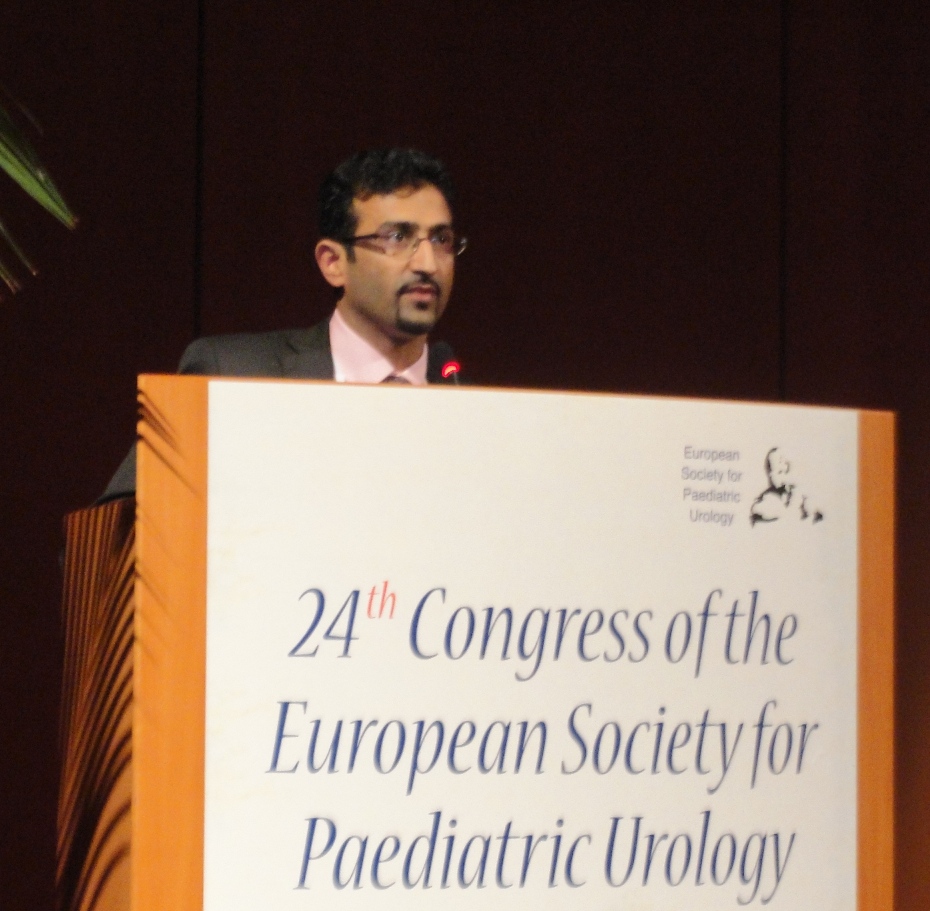
      Dr A.K.Singal delivering his talk at ESPU

      Dr A.K.Singal is one of the best hypospadias surgeons and Pediatric Urologists in India. He practices in Navi Mumbai, Thane and Mumbai area of India. Dr Singal believes in giving as much information to parents and families as possible about surgery, pre surgery and post surgery course. It helps the parents to be fully informed as he says in his own humorous way- “it decreases my stress and time per consult”

      In case you have a child with hypospadias, you can contact him at the following places:

      1.      MITR Hospital & Hypospadias Foundation

      74-90, 1st Floor, Above IDBI Bank, Chaturbhuj, Shilp Chowk

      Sector-21, Kharghar, Navi Mumbai- 410210

      Mon & Fri: 5:00-6:30pm, Tues: 12-1pm, Appointments: +91-22-27743558/4229 & 09324180553

       2.      Fortis Hospital, Mulund

      Mulund Goregaon Link Road, Mulund, Mumbai – 400078

      Wed & Sat: 4:00pm-5:00pm, Appointments: +91- 22- 43654365; 67994185

      3.      Jupiter Hospital, Thane

      Wed & Saturday, 2:00pm-3:00pm, Appointments: +91-22-21725563/ 55 

      4.      MGM’s New Bombay Hospital, Vashi.

      Sector-3, Vashi-400703, Navi Mumbai

      Mon, Wed & Fri: 7:00-8:00pm, Phone: +91-22-61526666/ 6675/ 6607

      5.      MITR Clinic, Vashi

      C1/8, Sector- 2, Opp. Green City, Vashi, Navi Mumbai

      Tue & Sat: 7:00pm-8:00pm, Appointments: +91-22-65163816 & 9324502572

      6.      Fortis Hiranandani Hospital, Vashi

      Miniseashore road, Sector-10, Vashi, Navi Mumbai

      Tue & Sat: 6:00pm-7:00pm, Appointments: +91-22-39199200, 222


      Email address: arbinders@gmail.com

      Websites:

      www.pediatricurology.inwww.hypospadiasfoundation.comwww.mitrhospital.com

      Youtube channel: www.youtube.com/pedurohypospadias

      Videos:

      Single stage repair of severe hypospadias

      Interview: Dr Singal speaks about Hypospadias

      Contact Form for Hypospadias Foundation

      Please fill all clinical details and upload pictures and clinical summaries (if available)

        Attach Documents (pdf | jpeg | mp4)
        (upload size upto 5mb)

        Contact Us

        Call Now