
Hypospadias vs Circumcision: Why Circumcision Alone Cannot Fix Hypospadias
One of the most common questions parents ask when their child is diagnosed with hypospadias is: “Can circumcision alone correct hypospadias?”
The simple answer is no. Circumcision and hypospadias repair are two very different surgical procedures, and understanding the distinction is crucial for achieving the best outcome for your child.
What is Hypospadias?
Hypospadias is a congenital condition in which the urinary opening (meatus) is located on the underside of the penis instead of at the tip. It is often associated with:
A hooded foreskin (foreskin present on the upper side but deficient on the
underside)
Penile curvature (chordee)
Abnormal urinary stream
The goals of hypospadias surgery are to straighten the penis, reconstruct the urethra, and create a normal appearance.
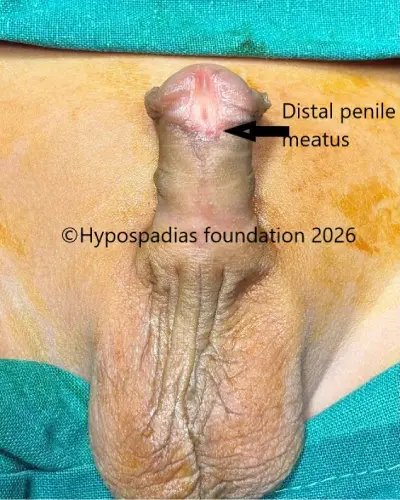
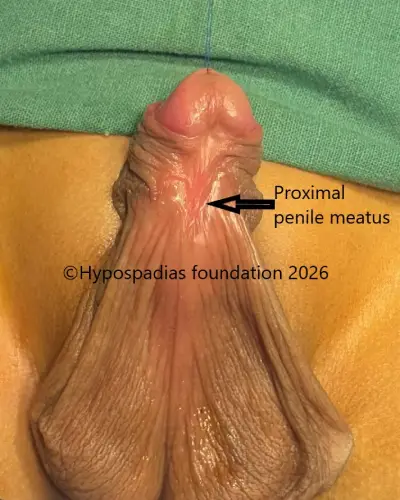
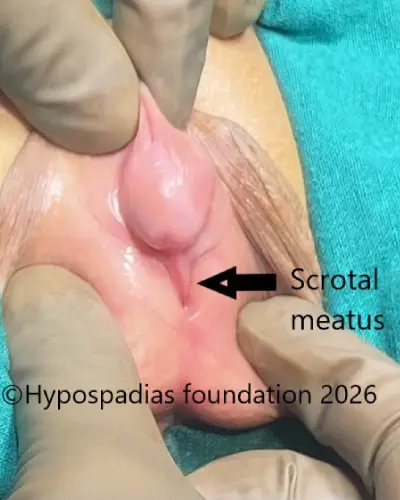
Pic 1: Case of distal penile, proximal penile and scrotal hypospadias
What Does Hypospadias Repair Involve?
Hypospadias surgery is a reconstructive procedure that is far more extensive than a circumcision. Depending on the severity of the condition, the surgery involves the following steps:
1. Degloving
The penile skin is carefully mobilized around the shaft to release adhesions, fibrotic strands and correct any skin-related curvature.
2. Chordee Assessment
An artificial erection test is performed during surgery to assess the degree of penile curvature. The severity of chordee helps determine whether a single-stage or two-stage repair is required.
Chordee less than 30 degrees: Usually suitable for single-stage repair.
Chordee greater than 30 degrees: Often requires more extensive reconstruction and sometimes a staged approach.
3. Chordee Correction
Depending on the degree of curvature, correction may be achieved through:
Dorsal tunica albuginea plication for mild curvature
Urethral plate division
Urethral mobilization
Corporotomies
Ventral lengthening procedures using dermal grafts or pericardial patches for severe curvature
4. Urethroplasty
Once the penis is straightened, the urethra is reconstructed to bring the urinary opening to the tip of the penis.
5. Circumcision
The foreskin is frequently used during hypospadias reconstruction to create the new urethra and provide skin coverage on the underside of the penis. As a result, the foreskin is usually consumed during the repair process, making circumcision a component of the surgery rather than the treatment itself.
Why Circumcision Alone Cannot Correct Hypospadias
Circumcision simply removes the foreskin. It does not:
Correct penile curvature
Reconstruct the urethra
Move the urinary opening to the tip of the penis
Therefore, circumcision alone cannot treat hypospadias.
In fact, performing circumcision before a planned hypospadias repair can create significant challenges because the foreskin is often needed for reconstruction. Loss of this tissue may limit surgical options and can sometimes convert a straightforward single-stage repair into a more complex two-stage procedure.
What to Expect After Hypospadias Surgery
Following hypospadias repair:
A dressing is placed around the penis.
A urinary catheter is usually left in place to drain urine.
The dressing and catheter are typically removed after 7–10 days, depending on the type of repair performed.
The final appearance is usually that of a circumcised penis because the foreskin has been used during reconstruction. The foreskin does not regrow, as it was either deficient from birth or utilized during surgery.
Attempts to reconstruct the foreskin solely for cosmetic purposes may increase the risk of complications such as tightness, scarring, or breakdown of the repair.
How is Circumcision Different?
Circumcision is a relatively minor procedure involving removal of the foreskin covering the glans penis. Common indications include:
Recurrent phimosis
Recurrent foreskin infections
Balanitis Xerotica Obliterans (BXO)
Failure of medical treatment for phimosis
Religious or cultural reasons
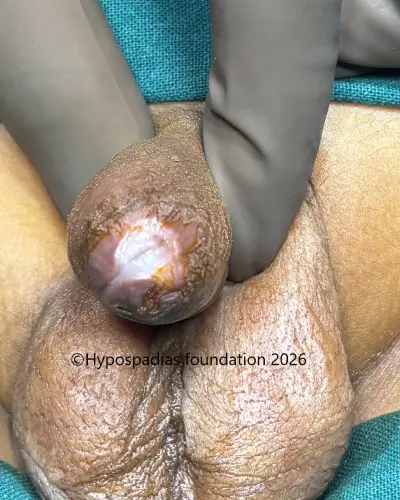
Pic 2: BXO (Balanitis Xerotica Obliterans) changes noted at the tip of foreskin
Unlike hypospadias repair, circumcision generally does not require urethral reconstruction or urinary catheterisation.
The Important Exception: MIP Variant of Hypospadias
Not all hypospadias cases present with a hooded foreskin. A special subtype called the Megameatus Intact Prepuce (MIP) variant may have a completely normal foreskin.
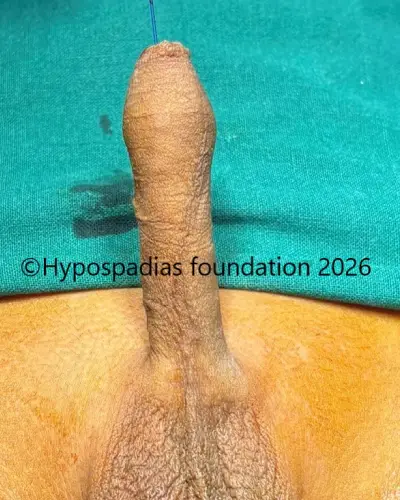
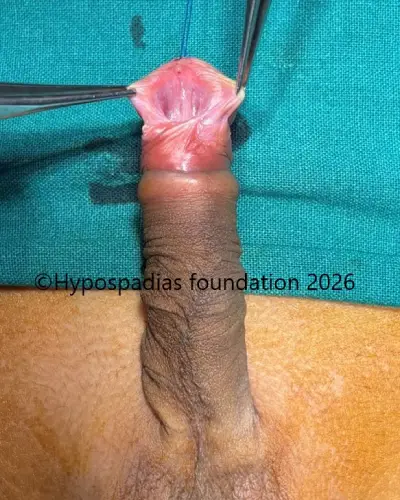
Pic 3: MIP variant of hypospadias with complete prepuce
Because the foreskin appears normal, the diagnosis can occasionally be missed before circumcision. For this reason, surgeons should always retract the foreskin and examine the position of the urinary opening before beginning a circumcision procedure.
Take-Home Message
Circumcision does not correct hypospadias. Hypospadias is a reconstructive condition that requires correction of penile curvature and relocation of the urinary opening to the tip of the penis. In many cases, the foreskin plays an essential role in reconstruction and should be preserved until evaluation by an experienced hypospadias surgeon.
If your child has hypospadias or there is any doubt about the position of the urinary opening, consult a pediatric urologist or an experienced hypospadias specialist before proceeding with circumcision.
Hypospadias foundation is a centre located in Kharghar, Navi Mumbai, Maharashtra, India with surgeons having expertise in hypospadias repair in children and adults. We regularly manage both primary hypospadias repairs and complex cases including those with previous multiple failed repairs. A significant focus of our patient base consists of children and adults who have had failed hypospadias surgeries elsewhere. Our approach involves not just good surgical technique but also diligent pre-operative assessment, focussed post-surgery care and critical decision making for good long-term outcomes.
Dr A.K. Singal is the founder and head of hypospadias foundation, India. He is considered the best hypospadias surgeon in India and the world and has successfully treated thousands of children and adults with hypospadias with excellent results.
Dr Ashwitha Shenoy is an expert hypospadias surgeon with special interest in the field of hypospadias and pediatric urology. Both Dr Singal and Dr Shenoy strive toachieve excellent outcomes in adults and children with hypospadias. Our success rate at hypospadias foundation for all types of repairs including complex and failed repairs are more than 95%.
Contact Form for Hypospadias Foundation
Please fill all clinical details and upload pictures and clinical summaries (if available)