
Can Hypospadias Surgery Fail? Causes, Complications and Treatment of Failed Hypospadias Repair
Hypospadias surgery is a delicate reconstructive procedure performed to correct the abnormal position of the urinary opening and, penile curvature (chordee) when present. Although modern surgical techniques have significantly improved the outcomes of hypospadias repair, complications after hypospadias surgery can still occur.
Parents often ask: “Can hypospadias surgery fail?”
The answer is yes. However, it is important to understand that a complication does not always mean that the entire surgery has failed. Some complications are minor and can be treated relatively easily, while others may require redo hypospadias surgery or a staged reconstruction.
The likelihood of complications depends on several factors, including the severity of the hypospadias, presence of chordee, tissue quality, surgical technique, previous operations, postoperative healing, and most importantly the experience of the surgeon.
What is hypospadias surgery?
Hypospadias is a congenital condition in which the urinary opening (meatus) is located on the underside of the penis rather than at the tip.
Depending on the severity of hypospadias, the condition may also be associated with:
Penile curvature or chordee- downward bend of penis
Abnormal development of the foreskin- incomplete foreskin
A hooded appearance of the foreskin
Abnormal urinary stream- going backwards
Cosmetic concerns
Penile torsion – penis may be rotated on its axis.
The objectives of hypospadias repair surgery are to straighten the penis, create a functional urethra by bringing the position of the urinary opening to the tip of the penis on the glans and achieve a satisfactory cosmetic result.
Hypospadias surgery may be performed as a single-stage repair or staged hypospadias repair, depending on the severity and anatomy.
Can hypospadias surgery fail?
Yes. Like any reconstructive surgery, hypospadias repair can develop complications.
However, the word “failure” should be used carefully. A child may have a small postoperative complication that does not represent complete failure of the repair.
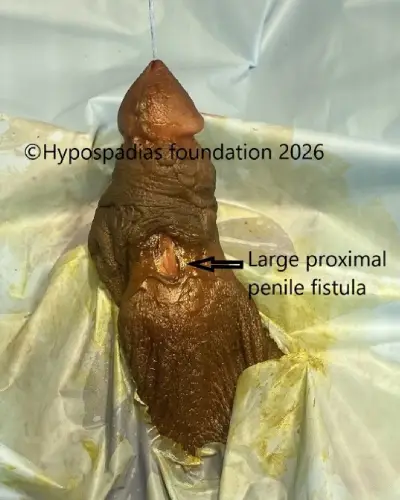
For example, a small urethrocutaneous fistula may develop after surgery. The main urethral reconstruction may otherwise be healthy, and the fistula in such cases may close by itself or it can often be corrected with a minor procedure.
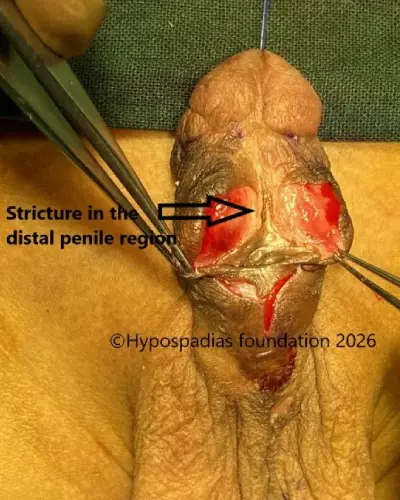
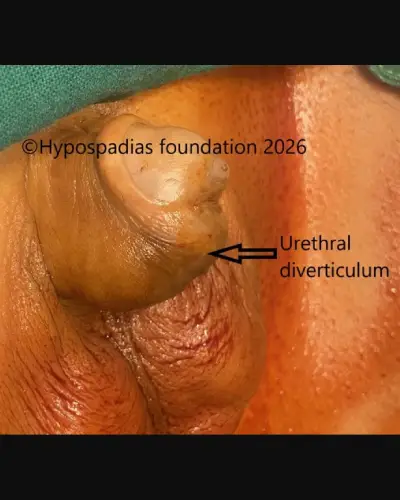
On the other hand, problems such as severe urethral stricture, significant urethral breakdown, recurrent chordee, multiple fistulas, or a large urethral diverticulum may require more extensive redo hypospadias surgery.
What causes failure of hypospadias repair?
There is no single cause of failed hypospadias surgery. Several factors can contribute.
1. Surgical technique
Hypospadias repair requires meticulous surgical technique. The appropriate procedure must be selected according to the child's anatomy. Precise dissection, preservation of tissue blood supply, fine suturing, adequate tissue coverage, and appropriate waterproofing layers are important for successful healing.
Inadequate tissue coverage, excessive tension on the repair, inappropriate technique selection, or poor tissue handling can increase the risk of complications. An experienced hypospadias surgeon understands these nuances and basic surgical dictums to provide best results of hypospadias repair.
2. Poor blood supply to the tissues
Adequate blood supply is essential for healing. During hypospadias surgery, excessive tissue handling, tissue crushing, excessive cautery, tissue ischemia, or tight sutures can compromise blood flow.
If the reconstructed tissues do not receive adequate blood supply, healing may be impaired. This can contribute to:
Wound breakdown
Urethral fistula
Urethral stenosis
Urethral stricture
Partial or complete breakdown of the repair
3. Infection after hypospadias surgery
An infection at the surgical site can interfere with normal healing. In severe cases, infection may contribute to wound breakdown or disruption of the urethral repair. Appropriate postoperative wound care and early recognition and treatment of infection are therefore important following hypospadias surgery. We generally give pre-operative antibiotic before starting the surgery and 1 dose after it to reduce the chances of infection. Secondly, with experience, our surgery times have reduced significantly. A shorter surgery time translates into lesser chances of infection.
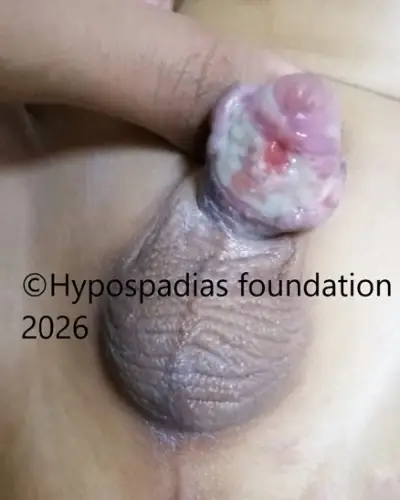
Infection after hypospadias surgery causing complete breakdown of repair
4. Patient and healing factors
The childs general health and nutritional status can influence wound healing.
Poor nutritional status may interfere with healing and increase the risk of postoperative complications. This does not mean that a complication is necessarily caused by the child or the parents. Healing is influenced by multiple factors, many of which cannot be completely controlled. We make sure that the child is in good nutritional status before surgery, is gaining weight, hemoglobin is normal and there is no intercurrent infection elsewhere in the body.
What are the common complications after hypospadias surgery?
The most important hypospadias surgery complications include:
1. Urethrocutaneous fistula
A urethrocutaneous fistula is an abnormal opening between the reconstructed urethra and the skin. The most noticeable symptom is usually urine coming out from an opening other than the normal urinary opening. A fistula may be small and isolated or may occur together with other complications.
2. Meatal stenosis
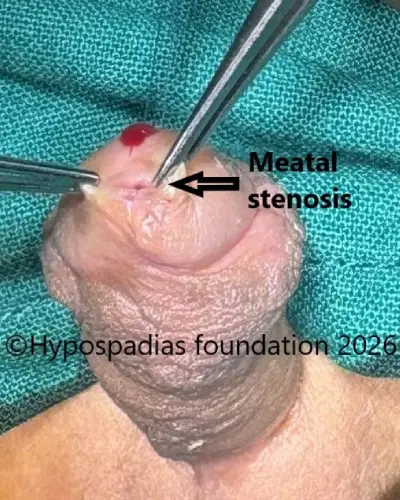
Meatal stenosis means narrowing of the urinary opening. In meatal stenosis, the child may develop a narrow urinary stream, spraying, prolonged urination, or difficulty passing urine. Depending on its severity, treatment may range from observation or minor intervention to further reconstruction.
3. Urethral stricture
A urethral stricture after hypospadias surgery is a narrowing of the reconstructed urethra. This can interfere with urinary flow and may require further treatment.
4. Urethral diverticulum
A urethral diverticulum occurs when a section of the reconstructed urethra becomes excessively wide or bulges, particularly during urination. Parents may notice a swelling or ballooning of the penis while the child passes urine.
5. Wound dehiscence
Wound dehiscence means partial or complete separation of the surgical wound. Small areas of wound separation may heal with conservative treatment, whereas significant breakdown may require another operation.
6. Recurrent or persistent chordee
One of the important goals of hypospadias repair is to achieve a straight penis. If significant chordee recurs or persists after hypospadias surgery, further assessment may be necessary. In some patients, recurrent curvature requires additional corrective surgery.
When is hypospadias surgery considered to have failed?
Not every postoperative setback should be considered a failed repair. The repair may be considered unsuccessful when a significant functional or structural problem persists, such as:
1. Persistent or recurrent penile curvature (chordee).
2. Significant urethral diverticulum.
3. Urethral stricture causing obstruction to urine flow.
4. Significant meatal stenosis.
5. Major breakdown of the reconstructed urethra.
6. Multiple or recurrent urethrocutaneous fistulas.
These problems may occur individually or in combination.
Does failed hypospadias surgery always require another operation?
No. Treatment depends on the type and severity of the complication. A small fistula, for example, may close by itself in first 3 months or may require a relatively limited corrective procedure. More complicated problems may require redo hypospadias repair, sometimes in stages.
Patients who have undergone multiple previous operations can have scarred and less vascular tissue, making subsequent reconstruction more challenging. For complex failed hypospadias, a surgeon may recommend a staged hypospadias repair rather than attempting another single-stage repair.
What is redo hypospadias surgery?
Redo hypospadias surgery refers to reconstructive surgery performed after a previous hypospadias repair has developed a complication or has not achieved the desired functional result. Redo cases can be more challenging than primary hypospadias surgery because previous surgery may have resulted in scar tissue, reduced tissue elasticity, altered anatomy, reduced tissue vascularity or loss of available local tissue. Therefore, the surgical plan for a failed hypospadias repair must be individualized.
When is staged hypospadias repair recommended?
Some complex cases are better treated using staged hypospadias reconstruction.
Staged surgery may be considered when there is extensive scarring, severe proximal hypospadias, significant chordee, inadequate local tissue, or a previously failed repair in which the available tissues are unsuitable for a reliable single-stage reconstruction.
The exact number and timing of procedures depend on the child&s anatomy and the reconstructive technique selected by the hypospadias surgeon.
Why does surgeon experience matter in hypospadias surgery?
Hypospadias surgery is a highly specialized form of pediatric reconstructive surgery.
Successful treatment requires a detailed understanding of the penile anatomy, urethral anatomy, penile curvature, tissue vascularity, urethral reconstruction, flap and graft techniques, management of complications, redo and staged reconstruction
Experience is particularly important when treating severe hypospadias with significant chordee, complex hypospadias, and failed hypospadias repair.
When choosing a surgeon, parents should look beyond the total number of surgeries performed. It is useful to ask about the surgeon's experience with cases like their child's condition, complication rates, reoperation rates, and experience with redo and complex hypospadias surgery. A detailed consultation can help parents understand both the expected benefits and the possible risks of surgery.
About Hypospadias Foundation
At the Hypospadias Foundation, children and adults with both primary and previously operated hypospadias are evaluated individually. Patients with failed hypospadias repair, fistulas, strictures, recurrent chordee, urethral diverticulum, and other complex problems require careful assessment before deciding on further reconstruction.
The surgical plan is based on the individual anatomy, severity of the hypospadias, degree of curvature, condition of the existing urethra, quality of the available tissues, and previous surgical procedures. Depending on the complexity of the case, reconstruction may be performed as a single-stage or staged procedure.
Dr. A. K. Singal has more than 20 years of experience in hypospadias surgery including primary, complex, and previously failed hypospadias repairs. He has extensive experience in the field of hypospadias with a success rate of more than 95%.
Dr. Ashwitha Shenoy, along with Dr. A. K. Singal, is involved in the assessment, counselling, investigation, and surgical management of children and adults with hypospadias.
The ultimate goal after hypospadias surgery is to achieve a straight penis, a functional urethra, good urinary function, and a satisfactory cosmetic result, while minimizing the need for additional surgery.
Conclusion
Problems such as urethrocutaneous fistula, meatal stenosis, urethral stricture, urethral diverticulum, wound breakdown, and recurrent chordee can occur after hypospadias repair. Many of these problems can be treated successfully, although complex cases may require redo or staged hypospadias reconstruction.
The best approach is to have the child assessed by a surgeon experienced in hypospadias surgery and complex redo hypospadias repair. Each case is different, and the appropriate treatment should be planned according to the childs individual anatomy and previous surgical history.
Contact Form for Hypospadias Foundation
Please fill all clinical details and upload pictures and clinical summaries (if available)